56,99 €
56,99 €
inkl. MwSt.
Sofort per Download lieferbar

0 °P sammeln
56,99 €
Als Download kaufen
56,99 €
inkl. MwSt.
Sofort per Download lieferbar
0 °P sammeln
Jetzt verschenken
Alle Infos zum eBook verschenken
56,99 €
inkl. MwSt.
Sofort per Download lieferbar
Alle Infos zum eBook verschenken
0 °P sammeln

Andere Kunden interessierten sich auch für
") Research Coproduction in Healthcare (eBook, PDF)50,99 €
Research Coproduction in Healthcare (eBook, PDF)50,99 €") Qualitative Research in Nursing and Healthcare (eBook, PDF)35,99 €
Qualitative Research in Nursing and Healthcare (eBook, PDF)35,99 €") Person-Centred Healthcare Research (eBook, PDF)48,99 €
Person-Centred Healthcare Research (eBook, PDF)48,99 €") Qualitative Research in Nursing and Healthcare (eBook, PDF)33,99 €
Qualitative Research in Nursing and Healthcare (eBook, PDF)33,99 €") Fundamentals of Qualitative Phenomenological Nursing Research (eBook, ePUB)56,99 €
Fundamentals of Qualitative Phenomenological Nursing Research (eBook, ePUB)56,99 €") Critical Appraisal Skills for Healthcare Students (eBook, PDF)33,99 €
Critical Appraisal Skills for Healthcare Students (eBook, PDF)33,99 €") The Research Process in Nursing (eBook, PDF)34,99 €
The Research Process in Nursing (eBook, PDF)34,99 €
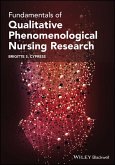

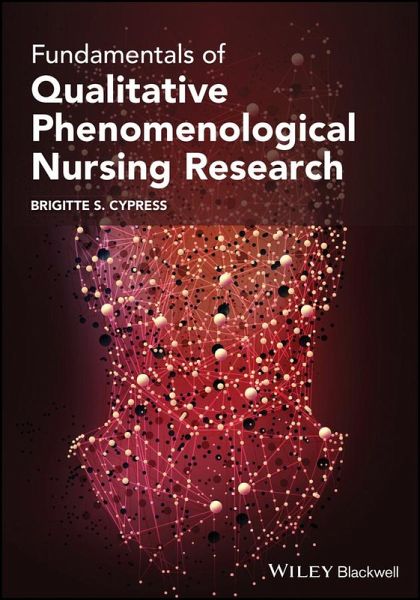
Fundamentals of Qualitative Phenomenological Nursing Research Fundamentals of Qualitative Phenomenological Nursing Research is the first book of its kind to specifically link the findings of qualitative research to evidence-based practice, policy, theory, and theory development. Designed for novice researchers, graduate students, and experienced practitioners alike, this comprehensive resource provides up-to-date coverage of research methods and techniques, the use of data analysis software, phenomenological writing and publishing, and more. The text opens with a general introduction to qualitative research and its components, followed by detailed description of the philosophical, paradigmatic, and conceptual aspects of phenomenological inquiry. Subsequent sections address topics including the practical aspects of phenomenological investigations, the concepts of rigor and validity in qualitative studies, and the methods of phenomenological data, collection, reduction, analysis, interpretation, and presentation. Throughout the book, author Brigitte S. Cypress offers expert guidance and real-world tips regarding the challenges researchers encounter when conducting a qualitative study. * Provides simple, straightforward descriptions of qualitative research methods with actual phenomenological examples * Features numerous in-depth exemplars of the philosophical and paradigmatic aspects of qualitative research from the author's own studies * Includes practical advice on teamwork, mentoring relationships, data organization, and reporting phenomenological studies * Presents approaches for dealing with ethical issues, methods for collecting, recording, and storing data, and techniques for analyzing and interpreting findings * Examines the role of computer-assisted qualitative data analysis software Fundamentals of Qualitative Phenomenological Nursing Research is a must-have guide for qualitative researchers from any discipline, academics and faculty members, and undergraduate and graduate nursing students wanting to learn more about phenomenology as a research approach.
Dieser Download kann aus rechtlichen Gründen nur mit Rechnungsadresse in D ausgeliefert werden.
The textbook Fundamentals of Qualitative Phenomenological Nursing Research by Dr. Brigitte Cypress is a great resource for not only novice researchers, but also anyone who is interested in conducting phenomenological qualitative research. Phenomenological research requires expertise, and this textbook provides a systematic approach from conception to dissemination of a phenomenological qualitative research. Dr. Brigitte Cypress, who has extensive experience in conducting this phenomenological research, has written the textbook in a simple and accessible way.
Dr. Brigitte Cypress' was a professor of mine when I was studying for my PhD in Nursing at the Graduate Center City University of New York. Her passion for philosophy and phenomenological research was evident then, and it shows in her scholarly works. Her vast knowledge and expertise of phenomenological research makes her an authority in this method. Great job Dr. Cypress!
Meriam Caboral-Stevens, PhD, RN, NP-C
Associate Professor
School of Nursing
Eastern Michigan University
Dr. Brigitte Cypress is a mentor and educator to PhD students. When I embarked on using phenomenology as the philosophical approach for my dissertation, I called upon her scholarly expertise, and I am honored to have her on my committee. She is an expert when it comes to deciphering and explaining the nuances between all of the different philosophical and phenomenological paradigms, which this textbook so aptly covers.
Dr. Cypress established my foundation as a PhD student and piqued my interest in philosophy and using phenomenology to answer my research question. She was my first professor when I commenced my PhD journey at Pace University. Thank you, Dr Cypress, for all of your patience as I stumble through learning the complicated material, finding my way as a scholar, and for writing this book.
Cindy Paradiso MA, RN-BC, CNE
PhD candidate
Pace University
Adjunct Clinical Professor
Dr. Brigitte Cypress' was a professor of mine when I was studying for my PhD in Nursing at the Graduate Center City University of New York. Her passion for philosophy and phenomenological research was evident then, and it shows in her scholarly works. Her vast knowledge and expertise of phenomenological research makes her an authority in this method. Great job Dr. Cypress!
Meriam Caboral-Stevens, PhD, RN, NP-C
Associate Professor
School of Nursing
Eastern Michigan University
Dr. Brigitte Cypress is a mentor and educator to PhD students. When I embarked on using phenomenology as the philosophical approach for my dissertation, I called upon her scholarly expertise, and I am honored to have her on my committee. She is an expert when it comes to deciphering and explaining the nuances between all of the different philosophical and phenomenological paradigms, which this textbook so aptly covers.
Dr. Cypress established my foundation as a PhD student and piqued my interest in philosophy and using phenomenology to answer my research question. She was my first professor when I commenced my PhD journey at Pace University. Thank you, Dr Cypress, for all of your patience as I stumble through learning the complicated material, finding my way as a scholar, and for writing this book.
Cindy Paradiso MA, RN-BC, CNE
PhD candidate
Pace University
Adjunct Clinical Professor