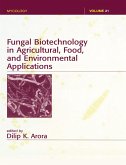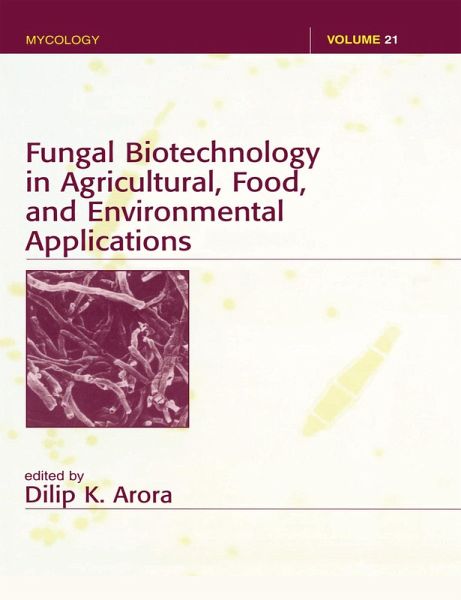
Fungal Biotechnology in Agricultural, Food, and Environmental Applications (eBook, ePUB)
Redaktion: Arora, Dilip K.
344,95 €
344,95 €
inkl. MwSt.
Sofort per Download lieferbar

172 °P sammeln
344,95 €
Als Download kaufen
344,95 €
inkl. MwSt.
Sofort per Download lieferbar
172 °P sammeln
Jetzt verschenken
Alle Infos zum eBook verschenken
344,95 €
inkl. MwSt.
Sofort per Download lieferbar
Alle Infos zum eBook verschenken
172 °P sammeln

Fungal Biotechnology in Agricultural, Food, and Environmental Applications (eBook, ePUB)
Redaktion: Arora, Dilip K.
- Format: ePub
- Merkliste
- Auf die Merkliste
- Bewerten Bewerten
- Teilen
- Produkt teilen
- Produkterinnerung
- Produkterinnerung

Bitte loggen Sie sich zunächst in Ihr Kundenkonto ein oder registrieren Sie sich bei
bücher.de, um das eBook-Abo tolino select nutzen zu können.
Hier können Sie sich einloggen
Sie sind bereits eingeloggt. Klicken Sie auf 2. tolino select Abo, um fortzufahren.

Bitte loggen Sie sich zunächst in Ihr Kundenkonto ein oder registrieren Sie sich bei bücher.de, um das eBook-Abo tolino select nutzen zu können.
Contributions from 80 world-renowned authorities representing a broad international background lend Fungal Biotechnology in Agricultural, Food, and Environmental Applications first-class information on the biotechnological potential of entomopathogenic fungi and ergot alkaloids, applications of Trichoderma in disease control, and the d
- Geräte: eReader
- mit Kopierschutz
- eBook Hilfe
Andere Kunden interessierten sich auch für
Fungal Biotechnology in Agricultural, Food, and Environmental Applications (eBook, PDF)344,95 €
Using the Agricultural, Environmental, and Food Literature (eBook, ePUB)211,95 €
Cultivation for Climate Change Resilience, Volume 2 (eBook, ePUB)46,95 €
Microorganisms in Sustainable Agriculture, Food, and the Environment (eBook, ePUB)103,95 €
P. VidhyasekaranFungal Pathogenesis in Plants and Crops (eBook, ePUB)236,95 €
Plant-Microbial Interactions and Smart Agricultural Biotechnology (eBook, ePUB)45,95 €
Vir SinghEnvironmental Plant Physiology (eBook, ePUB)52,95 €-
-
-
Contributions from 80 world-renowned authorities representing a broad international background lend Fungal Biotechnology in Agricultural, Food, and Environmental Applicationsfirst-class information on the biotechnological potential of entomopathogenic fungi and ergot alkaloids, applications of Trichoderma in disease control, and the d
Dieser Download kann aus rechtlichen Gründen nur mit Rechnungsadresse in A, B, BG, CY, CZ, D, DK, EW, E, FIN, F, GR, HR, H, IRL, I, LT, L, LR, M, NL, PL, P, R, S, SLO, SK ausgeliefert werden.
Produktdetails
- Produktdetails
- Verlag: Taylor & Francis eBooks
- Seitenzahl: 524
- Erscheinungstermin: 17. Dezember 2003
- Englisch
- ISBN-13: 9781135520113
- Artikelnr.: 58765503
- Verlag: Taylor & Francis eBooks
- Seitenzahl: 524
- Erscheinungstermin: 17. Dezember 2003
- Englisch
- ISBN-13: 9781135520113
- Artikelnr.: 58765503
- Herstellerkennzeichnung Die Herstellerinformationen sind derzeit nicht verfügbar.
Dilip K. Arora is a Director with the National Bureau of Agriculturally Important Microorganisms, New Delhi, India, as well as Professor of Microbiology and Mycology at the Centre of Advanced Study in Botany, Banaras Hindu University, Varanasi, India. The author or coauthor of over 90 research papers, review articles and book chapters in international scientific journals and books, he serves on the editorial boards of more than a half dozen journals and has helped organize numerous conferences and symposia worldwide. Dr. Arora is the coeditor of Chemical Fungal Taxonomy; Handbook of Applied Mycology, V.1: Soils and Plants; V.2: Humans, Animals and Insects; V.3: Foods and Feeds and V.5: Mycotoxins in Ecological Systems (all titles, Marcel Dekker, Inc.). His current research interests include molecular interaction between fungi and molecular detection of plant pathogenic fungi. Dr Arora received the M.Sc. (1974) and Ph.D. (1977) degrees in botany from Banaras Hindu University, Varanasi, India.
Agricultural biotechnology: a biotechnological approach to plant protection with fungi
chemical identification of fungi - metabolite profiling and metabolomics
isozyme analysis in fungal taxonomy, genetics and population biology
molecular methods for identification of plant pathogenic fungi
the application of molecular markers in the epidemiology of plant pathogenic fungi
molecular biology in the control of mycotoxigenic fungi
biotechnological potential of entomopathogenic fungi
biotechnological potential of ergot alkaloids
fungi as plant growth promoter and disease suppressor
challenges and strategies for development of mycoherbicides
biofungicides from microbial metabolites
molecular biology of biocontrol trichoderma
the biological control agent trichoderma - fundamentals to applications
biotechnological strategies to control fungal diseases of vegetables
control of postharvest fruits using microbes
arbuscular mycorrhizal fungi in plant disease control
commercialization of arbuscular mycorrhizal biofertilizer
control of nematodes by fungi. Food and feeds: fungi in food technology - an overview
role of fungi in fermented foods
production of edible fungi
mycoprotein and related high-value products from yeasts and fungi
diversity and genetic variability of yeasts involved in wine fermentation
yeast in the dairy industy
flavours and aroma
antifungal food additives
molecular detection of fungi in foods and feeds
the role of spoilage fungi in seed deterioration
mycotoxin chapter
genetics and biochemistry of toxin synthesis. Environmental biotechnology: cellulose degradation by fungi
the importance of wood decay fungi in forest ecosystems
the biodegradation of lignocellulose by white rot fungi
biomineralization of heavy metals
decolouration of industrial waste and degradation of dye water
bioconversion of distillery waste by fungi
degradation of hydrocarbons by yeasts and filamentous fungi
biodegradation of azo dyes by fungi
fungal degradation of explosives
restoration of mycorrhizae in disturbed arid ecosystems.
chemical identification of fungi - metabolite profiling and metabolomics
isozyme analysis in fungal taxonomy, genetics and population biology
molecular methods for identification of plant pathogenic fungi
the application of molecular markers in the epidemiology of plant pathogenic fungi
molecular biology in the control of mycotoxigenic fungi
biotechnological potential of entomopathogenic fungi
biotechnological potential of ergot alkaloids
fungi as plant growth promoter and disease suppressor
challenges and strategies for development of mycoherbicides
biofungicides from microbial metabolites
molecular biology of biocontrol trichoderma
the biological control agent trichoderma - fundamentals to applications
biotechnological strategies to control fungal diseases of vegetables
control of postharvest fruits using microbes
arbuscular mycorrhizal fungi in plant disease control
commercialization of arbuscular mycorrhizal biofertilizer
control of nematodes by fungi. Food and feeds: fungi in food technology - an overview
role of fungi in fermented foods
production of edible fungi
mycoprotein and related high-value products from yeasts and fungi
diversity and genetic variability of yeasts involved in wine fermentation
yeast in the dairy industy
flavours and aroma
antifungal food additives
molecular detection of fungi in foods and feeds
the role of spoilage fungi in seed deterioration
mycotoxin chapter
genetics and biochemistry of toxin synthesis. Environmental biotechnology: cellulose degradation by fungi
the importance of wood decay fungi in forest ecosystems
the biodegradation of lignocellulose by white rot fungi
biomineralization of heavy metals
decolouration of industrial waste and degradation of dye water
bioconversion of distillery waste by fungi
degradation of hydrocarbons by yeasts and filamentous fungi
biodegradation of azo dyes by fungi
fungal degradation of explosives
restoration of mycorrhizae in disturbed arid ecosystems.
Agricultural biotechnology: a biotechnological approach to plant protection with fungi
chemical identification of fungi - metabolite profiling and metabolomics
isozyme analysis in fungal taxonomy, genetics and population biology
molecular methods for identification of plant pathogenic fungi
the application of molecular markers in the epidemiology of plant pathogenic fungi
molecular biology in the control of mycotoxigenic fungi
biotechnological potential of entomopathogenic fungi
biotechnological potential of ergot alkaloids
fungi as plant growth promoter and disease suppressor
challenges and strategies for development of mycoherbicides
biofungicides from microbial metabolites
molecular biology of biocontrol trichoderma
the biological control agent trichoderma - fundamentals to applications
biotechnological strategies to control fungal diseases of vegetables
control of postharvest fruits using microbes
arbuscular mycorrhizal fungi in plant disease control
commercialization of arbuscular mycorrhizal biofertilizer
control of nematodes by fungi. Food and feeds: fungi in food technology - an overview
role of fungi in fermented foods
production of edible fungi
mycoprotein and related high-value products from yeasts and fungi
diversity and genetic variability of yeasts involved in wine fermentation
yeast in the dairy industy
flavours and aroma
antifungal food additives
molecular detection of fungi in foods and feeds
the role of spoilage fungi in seed deterioration
mycotoxin chapter
genetics and biochemistry of toxin synthesis. Environmental biotechnology: cellulose degradation by fungi
the importance of wood decay fungi in forest ecosystems
the biodegradation of lignocellulose by white rot fungi
biomineralization of heavy metals
decolouration of industrial waste and degradation of dye water
bioconversion of distillery waste by fungi
degradation of hydrocarbons by yeasts and filamentous fungi
biodegradation of azo dyes by fungi
fungal degradation of explosives
restoration of mycorrhizae in disturbed arid ecosystems.
chemical identification of fungi - metabolite profiling and metabolomics
isozyme analysis in fungal taxonomy, genetics and population biology
molecular methods for identification of plant pathogenic fungi
the application of molecular markers in the epidemiology of plant pathogenic fungi
molecular biology in the control of mycotoxigenic fungi
biotechnological potential of entomopathogenic fungi
biotechnological potential of ergot alkaloids
fungi as plant growth promoter and disease suppressor
challenges and strategies for development of mycoherbicides
biofungicides from microbial metabolites
molecular biology of biocontrol trichoderma
the biological control agent trichoderma - fundamentals to applications
biotechnological strategies to control fungal diseases of vegetables
control of postharvest fruits using microbes
arbuscular mycorrhizal fungi in plant disease control
commercialization of arbuscular mycorrhizal biofertilizer
control of nematodes by fungi. Food and feeds: fungi in food technology - an overview
role of fungi in fermented foods
production of edible fungi
mycoprotein and related high-value products from yeasts and fungi
diversity and genetic variability of yeasts involved in wine fermentation
yeast in the dairy industy
flavours and aroma
antifungal food additives
molecular detection of fungi in foods and feeds
the role of spoilage fungi in seed deterioration
mycotoxin chapter
genetics and biochemistry of toxin synthesis. Environmental biotechnology: cellulose degradation by fungi
the importance of wood decay fungi in forest ecosystems
the biodegradation of lignocellulose by white rot fungi
biomineralization of heavy metals
decolouration of industrial waste and degradation of dye water
bioconversion of distillery waste by fungi
degradation of hydrocarbons by yeasts and filamentous fungi
biodegradation of azo dyes by fungi
fungal degradation of explosives
restoration of mycorrhizae in disturbed arid ecosystems.