34,95 €
34,95 €
inkl. MwSt.
Sofort per Download lieferbar

17 °P sammeln
34,95 €
Als Download kaufen
34,95 €
inkl. MwSt.
Sofort per Download lieferbar
17 °P sammeln
Jetzt verschenken
Alle Infos zum eBook verschenken
34,95 €
inkl. MwSt.
Sofort per Download lieferbar
Alle Infos zum eBook verschenken
17 °P sammeln

Andere Kunden interessierten sich auch für
") Future Oil Demands of China, India, and Japan (eBook, ePUB)34,95 €
Future Oil Demands of China, India, and Japan (eBook, ePUB)34,95 €") Eurasia's Regional Powers Compared - China, India, Russia (eBook, PDF)49,95 €
Eurasia's Regional Powers Compared - China, India, Russia (eBook, PDF)49,95 €") China, Oil and Global Politics (eBook, PDF)51,95 €
China, Oil and Global Politics (eBook, PDF)51,95 €") China and North Africa since World War II (eBook, PDF)34,95 €
China and North Africa since World War II (eBook, PDF)34,95 €") American and Chinese Energy Security (eBook, PDF)25,95 €
American and Chinese Energy Security (eBook, PDF)25,95 €") India, China and the Strategic Himalayas (eBook, PDF)42,95 €
India, China and the Strategic Himalayas (eBook, PDF)42,95 €") The International Political Economy of Oil and Gas (eBook, PDF)80,95 €
The International Political Economy of Oil and Gas (eBook, PDF)80,95 €

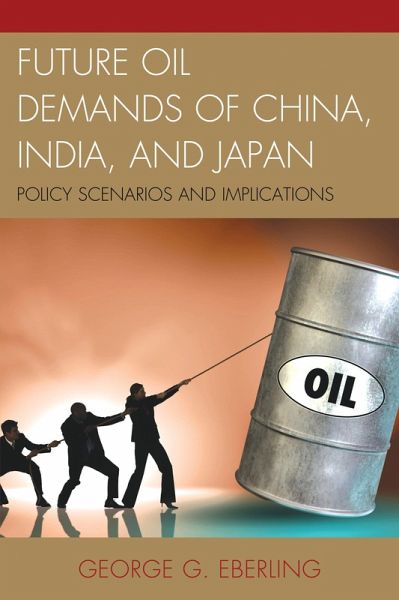
Future Oil Demands of China, India, and Japan examines how Chinese oil energy will likely shape future Sino-Indian and Sino-Japanese relations under conditions of dependency and non-dependency, and whether competition or cooperation for scarce energy resources will result. The author lists and describes three possible Chinese oil energy futures or scenarios (Competitive Dependency, Competitive Surplus, and Cooperative Surplus) using Scenario Analysis and the PRINCE Method to subsequently estimate their associated likelihoods. Further, this book discusses and evaluates their strategic implications for India and Japan and estimates the most likely oil energy future. This book argues that China's rising dependence on imported oil, along with its adroit use of soft power, economic prowess, strategic engagement of the world as an alternative model of political and economic development, military modernization, and rapid economic growth can only mean that it will alter the global status quo and become the dominant actor in world affairs in the near future. India and Japan will be less influential economically because China is skillfully harnessing and strategically exercising the elements of national power (diplomatic, informational, military, and economic) to acquire scarce oil energy resources in the Near East, Western Hemisphere, and Sub-Saharan Africa.