31,95 €
inkl. MwSt.
Sofort per Download lieferbar
16 °P sammeln

Andere Kunden interessierten sich auch für
") Gender (eBook, ePUB)31,95 €
Gender (eBook, ePUB)31,95 €") Maternal Narratives in Public Contexts (eBook, PDF)71,95 €
Maternal Narratives in Public Contexts (eBook, PDF)71,95 €") Developing Difference (eBook, PDF)35,95 €
Developing Difference (eBook, PDF)35,95 €") Social Psychology and Everyday Life (eBook, PDF)45,95 €
Social Psychology and Everyday Life (eBook, PDF)45,95 €") Critical Social Psychology (eBook, PDF)36,95 €
Critical Social Psychology (eBook, PDF)36,95 €") Cyberspace Romance (eBook, PDF)35,95 €
Cyberspace Romance (eBook, PDF)35,95 €") Cyberpsychology (eBook, PDF)35,95 €
Cyberpsychology (eBook, PDF)35,95 €



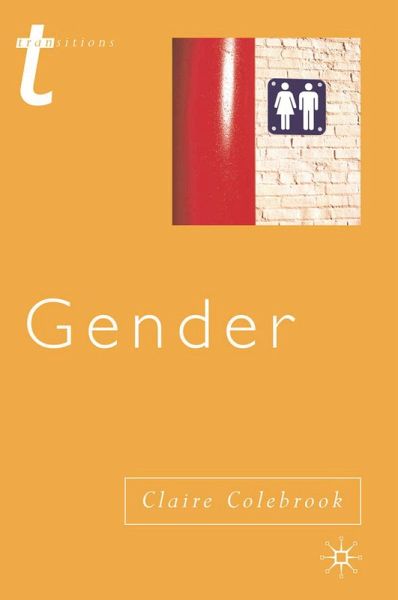
Why has Western thought been so persistent in its organisation of human bodies, and other categories, in terms of the binary opposition male and female? Is gender nothing more than an ideology, or does it have its basis in sexual difference?
This invaluable introductory guide offers a clear overview of the concept, and problem, of gender. Claire Colebrook places the term in its historical contexts and traces its development from the Enlightenment to the present, before moving on to the evolution of the concept of gender from within the various stances of feminist criticism, and exploring recent developments in queer theory and post-feminism. Close analysis of key literary texts, including Frankenstein, Paradise Lost and A Midsummer Night's Dream, shows how specific styles of literature enable reflection on gender.
This invaluable introductory guide offers a clear overview of the concept, and problem, of gender. Claire Colebrook places the term in its historical contexts and traces its development from the Enlightenment to the present, before moving on to the evolution of the concept of gender from within the various stances of feminist criticism, and exploring recent developments in queer theory and post-feminism. Close analysis of key literary texts, including Frankenstein, Paradise Lost and A Midsummer Night's Dream, shows how specific styles of literature enable reflection on gender.