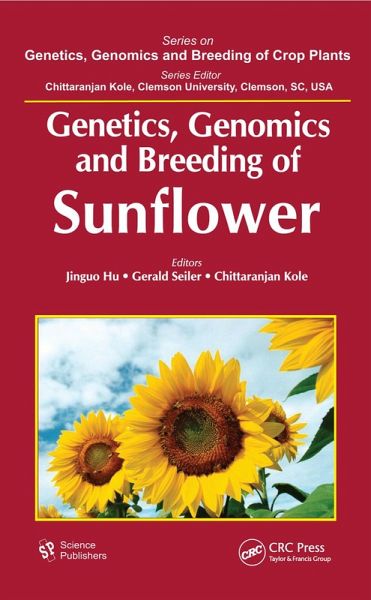
Genetics, Genomics and Breeding of Sunflower (eBook, PDF)
Redaktion: Hu, Jinguo; Kole, C.; Seiler, Gerald
73,95 €
73,95 €
inkl. MwSt.
Sofort per Download lieferbar

37 °P sammeln
73,95 €
Als Download kaufen
73,95 €
inkl. MwSt.
Sofort per Download lieferbar
37 °P sammeln
Jetzt verschenken
Alle Infos zum eBook verschenken
73,95 €
inkl. MwSt.
Sofort per Download lieferbar
Alle Infos zum eBook verschenken
37 °P sammeln

Genetics, Genomics and Breeding of Sunflower (eBook, PDF)
Redaktion: Hu, Jinguo; Kole, C.; Seiler, Gerald
- Format: PDF
- Merkliste
- Auf die Merkliste
- Bewerten Bewerten
- Teilen
- Produkt teilen
- Produkterinnerung
- Produkterinnerung

Bitte loggen Sie sich zunächst in Ihr Kundenkonto ein oder registrieren Sie sich bei
bücher.de, um das eBook-Abo tolino select nutzen zu können.
Hier können Sie sich einloggen
Sie sind bereits eingeloggt. Klicken Sie auf 2. tolino select Abo, um fortzufahren.

Bitte loggen Sie sich zunächst in Ihr Kundenkonto ein oder registrieren Sie sich bei bücher.de, um das eBook-Abo tolino select nutzen zu können.
The sunflower has fascinated mankind for centuries. The oilseed sunflower contributes approximately ten percent of the world's plant-derived edible oil and the confection type sunflower holds a considerable share of the directly consumed snacks market. In addition, sunflower is also grown as an ornamental for cut flowers, as well as in home ga
- Geräte: PC
- mit Kopierschutz
- eBook Hilfe
Andere Kunden interessierten sich auch für
Genetics, Genomics and Breeding of Sugarcane (eBook, PDF)63,95 €
Genetics, Genomics and Breeding of Cucurbits (eBook, PDF)185,95 €
Genetics, Genomics and Breeding of Peanuts (eBook, PDF)51,95 €
Genetics, Genomics and Breeding of Maize (eBook, PDF)157,95 €
Genetics, Genomics and Breeding of Eucalypts (eBook, PDF)51,95 €
Genetics, Genomics and Breeding of Oilseed Brassicas (eBook, PDF)186,95 €
Genetics, Genomics and Breeding of Peppers and Eggplants (eBook, PDF)51,95 €-
-
-
The sunflower has fascinated mankind for centuries. The oilseed sunflower contributes approximately ten percent of the world's plant-derived edible oil and the confection type sunflower holds a considerable share of the directly consumed snacks market. In addition, sunflower is also grown as an ornamental for cut flowers, as well as in home ga
Dieser Download kann aus rechtlichen Gründen nur mit Rechnungsadresse in A, B, BG, CY, CZ, D, DK, EW, E, FIN, F, GR, HR, H, IRL, I, LT, L, LR, M, NL, PL, P, R, S, SLO, SK ausgeliefert werden.
Produktdetails
- Produktdetails
- Verlag: Taylor & Francis eBooks
- Seitenzahl: 360
- Erscheinungstermin: 8. April 2010
- Englisch
- ISBN-13: 9781439840498
- Artikelnr.: 57532616
- Verlag: Taylor & Francis eBooks
- Seitenzahl: 360
- Erscheinungstermin: 8. April 2010
- Englisch
- ISBN-13: 9781439840498
- Artikelnr.: 57532616
- Herstellerkennzeichnung Die Herstellerinformationen sind derzeit nicht verfügbar.
Editors: Jinguo Hu: USDA-Agricultural Research Service, Washington State University, Pullman, Washington, USA Gerald Seiler: USDA, Northern Crop Science Laboratory, Fargo, North Dakota, USA Chittaranjan Kole: Department of Genetics and Biochemistry, Clemson University, South Carolina, USA
Basic Information: Economic Importance
Crop History
Botanical Description
Genetic Resources
Importance as a Model Plant
Conclusions
Classic Genetics and Breeding: Hybrids
Breeding Methods
Breeding Objectives
Classic Genetic Mapping and Cytogenetics
Interest of Molecular Maps and Knowledge of Genomics for Conventional Genetics and Breeding
The Introduction of Genomics in Breeding since 1995
Genetic Linkage Maps: Strategies, Resources and Achievements: Brief History of Mapping Efforts: Morphological and Biochemical Markers
DNA-based Marker Techniques
Mapping Populations and Tools
Achievement
Published Sunflower Linkage Maps
Challenges
Mapping and Tagging of Simply Inherited Traits: Disease Resistances
Herbicide Resistance
Male Sterility
Morphological Traits
Seed Quality
Molecular Mapping of Complex Traits: Identification Trait Loci Quantitative
Conclusion
Gene Cloning and Characterization: Map-based Cloning Approaches in Sunflower
Candidate Gene Approaches based on Homology to Genes of Other Species
Verification of Candidate Genes and Functional Analyses of Genes
Conclusion
Molecular Breeding: Overview of Components and Objectives for Molecular Breeding
Germplasm Characterization
Molecular Strategies to Create and Identify Novel Variation
Marker-assisted Selection
Molecular Breeding in Private Sector Breeding Programs
Limitations and Prospects of MAS
Oil Composition Variations: Mutations Leading to One Main Fatty Acid Accumulated in Oil
Tocopherols
Phytosterols
Acknowledgements
Transgenic Sunflower: Released Transgenic Crops
Transgenic Sunflower
Overcoming of Crop Constraints through Transgenic Sunflower and New Products
Debate about Transgenic Sunflower
Prospective View on Transgenic Sunflower Release. Future Prospects: The Past
Future Potential to Increase Productivity
Impact of Advances in Sunflower Genomics
Future Potential to Expand into Other Geographical Areas
New Uses
Outlook. Each section includes an Introduction and References.
Crop History
Botanical Description
Genetic Resources
Importance as a Model Plant
Conclusions
Classic Genetics and Breeding: Hybrids
Breeding Methods
Breeding Objectives
Classic Genetic Mapping and Cytogenetics
Interest of Molecular Maps and Knowledge of Genomics for Conventional Genetics and Breeding
The Introduction of Genomics in Breeding since 1995
Genetic Linkage Maps: Strategies, Resources and Achievements: Brief History of Mapping Efforts: Morphological and Biochemical Markers
DNA-based Marker Techniques
Mapping Populations and Tools
Achievement
Published Sunflower Linkage Maps
Challenges
Mapping and Tagging of Simply Inherited Traits: Disease Resistances
Herbicide Resistance
Male Sterility
Morphological Traits
Seed Quality
Molecular Mapping of Complex Traits: Identification Trait Loci Quantitative
Conclusion
Gene Cloning and Characterization: Map-based Cloning Approaches in Sunflower
Candidate Gene Approaches based on Homology to Genes of Other Species
Verification of Candidate Genes and Functional Analyses of Genes
Conclusion
Molecular Breeding: Overview of Components and Objectives for Molecular Breeding
Germplasm Characterization
Molecular Strategies to Create and Identify Novel Variation
Marker-assisted Selection
Molecular Breeding in Private Sector Breeding Programs
Limitations and Prospects of MAS
Oil Composition Variations: Mutations Leading to One Main Fatty Acid Accumulated in Oil
Tocopherols
Phytosterols
Acknowledgements
Transgenic Sunflower: Released Transgenic Crops
Transgenic Sunflower
Overcoming of Crop Constraints through Transgenic Sunflower and New Products
Debate about Transgenic Sunflower
Prospective View on Transgenic Sunflower Release. Future Prospects: The Past
Future Potential to Increase Productivity
Impact of Advances in Sunflower Genomics
Future Potential to Expand into Other Geographical Areas
New Uses
Outlook. Each section includes an Introduction and References.
Basic Information: Economic Importance
Crop History
Botanical Description
Genetic Resources
Importance as a Model Plant
Conclusions
Classic Genetics and Breeding: Hybrids
Breeding Methods
Breeding Objectives
Classic Genetic Mapping and Cytogenetics
Interest of Molecular Maps and Knowledge of Genomics for Conventional Genetics and Breeding
The Introduction of Genomics in Breeding since 1995
Genetic Linkage Maps: Strategies, Resources and Achievements: Brief History of Mapping Efforts: Morphological and Biochemical Markers
DNA-based Marker Techniques
Mapping Populations and Tools
Achievement
Published Sunflower Linkage Maps
Challenges
Mapping and Tagging of Simply Inherited Traits: Disease Resistances
Herbicide Resistance
Male Sterility
Morphological Traits
Seed Quality
Molecular Mapping of Complex Traits: Identification Trait Loci Quantitative
Conclusion
Gene Cloning and Characterization: Map-based Cloning Approaches in Sunflower
Candidate Gene Approaches based on Homology to Genes of Other Species
Verification of Candidate Genes and Functional Analyses of Genes
Conclusion
Molecular Breeding: Overview of Components and Objectives for Molecular Breeding
Germplasm Characterization
Molecular Strategies to Create and Identify Novel Variation
Marker-assisted Selection
Molecular Breeding in Private Sector Breeding Programs
Limitations and Prospects of MAS
Oil Composition Variations: Mutations Leading to One Main Fatty Acid Accumulated in Oil
Tocopherols
Phytosterols
Acknowledgements
Transgenic Sunflower: Released Transgenic Crops
Transgenic Sunflower
Overcoming of Crop Constraints through Transgenic Sunflower and New Products
Debate about Transgenic Sunflower
Prospective View on Transgenic Sunflower Release. Future Prospects: The Past
Future Potential to Increase Productivity
Impact of Advances in Sunflower Genomics
Future Potential to Expand into Other Geographical Areas
New Uses
Outlook. Each section includes an Introduction and References.
Crop History
Botanical Description
Genetic Resources
Importance as a Model Plant
Conclusions
Classic Genetics and Breeding: Hybrids
Breeding Methods
Breeding Objectives
Classic Genetic Mapping and Cytogenetics
Interest of Molecular Maps and Knowledge of Genomics for Conventional Genetics and Breeding
The Introduction of Genomics in Breeding since 1995
Genetic Linkage Maps: Strategies, Resources and Achievements: Brief History of Mapping Efforts: Morphological and Biochemical Markers
DNA-based Marker Techniques
Mapping Populations and Tools
Achievement
Published Sunflower Linkage Maps
Challenges
Mapping and Tagging of Simply Inherited Traits: Disease Resistances
Herbicide Resistance
Male Sterility
Morphological Traits
Seed Quality
Molecular Mapping of Complex Traits: Identification Trait Loci Quantitative
Conclusion
Gene Cloning and Characterization: Map-based Cloning Approaches in Sunflower
Candidate Gene Approaches based on Homology to Genes of Other Species
Verification of Candidate Genes and Functional Analyses of Genes
Conclusion
Molecular Breeding: Overview of Components and Objectives for Molecular Breeding
Germplasm Characterization
Molecular Strategies to Create and Identify Novel Variation
Marker-assisted Selection
Molecular Breeding in Private Sector Breeding Programs
Limitations and Prospects of MAS
Oil Composition Variations: Mutations Leading to One Main Fatty Acid Accumulated in Oil
Tocopherols
Phytosterols
Acknowledgements
Transgenic Sunflower: Released Transgenic Crops
Transgenic Sunflower
Overcoming of Crop Constraints through Transgenic Sunflower and New Products
Debate about Transgenic Sunflower
Prospective View on Transgenic Sunflower Release. Future Prospects: The Past
Future Potential to Increase Productivity
Impact of Advances in Sunflower Genomics
Future Potential to Expand into Other Geographical Areas
New Uses
Outlook. Each section includes an Introduction and References.