42,95 €
42,95 €
inkl. MwSt.
Sofort per Download lieferbar

21 °P sammeln
42,95 €
Als Download kaufen
42,95 €
inkl. MwSt.
Sofort per Download lieferbar
21 °P sammeln
Jetzt verschenken
Alle Infos zum eBook verschenken
42,95 €
inkl. MwSt.
Sofort per Download lieferbar
Alle Infos zum eBook verschenken
21 °P sammeln

Andere Kunden interessierten sich auch für
") Gentrification in Helsinki (eBook, PDF)42,95 €
Gentrification in Helsinki (eBook, PDF)42,95 €") Planning and Urban Design for Attractive Arctic Cities (eBook, ePUB)36,95 €
Planning and Urban Design for Attractive Arctic Cities (eBook, ePUB)36,95 €") Athens (eBook, ePUB)21,95 €
Athens (eBook, ePUB)21,95 €") Urban Density Contextualized (eBook, ePUB)35,95 €
Urban Density Contextualized (eBook, ePUB)35,95 €") Effective Urban Densification (eBook, ePUB)31,95 €
Effective Urban Densification (eBook, ePUB)31,95 €") Designing Therapeutic Environments (eBook, ePUB)39,95 €
Designing Therapeutic Environments (eBook, ePUB)39,95 €") Global City Typologies (eBook, ePUB)41,95 €
Global City Typologies (eBook, ePUB)41,95 €







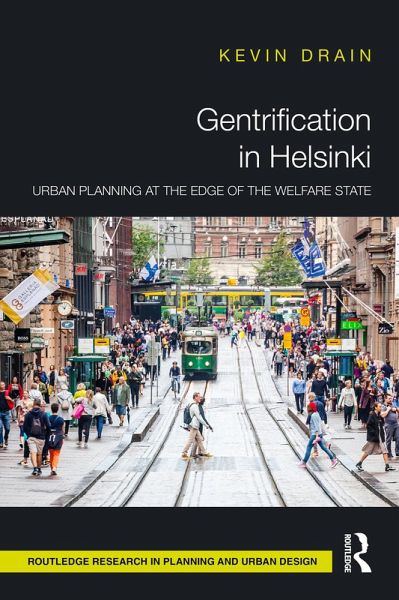
This book unravels the paradox of gentrification in Helsinki, Finland. Here, housing and welfare policies work well under certain conditions to prevent the worst outcomes of residential gentrification. Yet other forms of gentrification have proliferated in recent years, and local urban planning has gained a momentum in efforts to remake the urban landscape for business and tourism.
Through a range of methods, each chapter approaches a different aspect of gentrification: the effectiveness of welfare policies against residential gentrification, the importance of retail gentrification and symbolic changes, the role of media and state-led tourism campaigns in promoting gentrification, the rise of vibrancy and sustainability as concepts driving regeneration, and the question of planning principles like participation in confronting gentrification. The reader will find a state system that supports a delicate balance in housing, but a local planning regime related to a more "generalized" gentrification. The results raise questions about the limits of the welfare state in an age of global competition.
While new readers of gentrification will benefit from a deep engagement with the literature, the case of Helsinki is relevant to all students of planning, social sciences, and urban studies, as well as professionals in related fields.
Through a range of methods, each chapter approaches a different aspect of gentrification: the effectiveness of welfare policies against residential gentrification, the importance of retail gentrification and symbolic changes, the role of media and state-led tourism campaigns in promoting gentrification, the rise of vibrancy and sustainability as concepts driving regeneration, and the question of planning principles like participation in confronting gentrification. The reader will find a state system that supports a delicate balance in housing, but a local planning regime related to a more "generalized" gentrification. The results raise questions about the limits of the welfare state in an age of global competition.
While new readers of gentrification will benefit from a deep engagement with the literature, the case of Helsinki is relevant to all students of planning, social sciences, and urban studies, as well as professionals in related fields.
Dieser Download kann aus rechtlichen Gründen nur mit Rechnungsadresse in A, B, BG, CY, CZ, D, DK, EW, E, FIN, F, GR, HR, H, IRL, I, LT, L, LR, M, NL, PL, P, R, S, SLO, SK ausgeliefert werden.