Sie sind bereits eingeloggt. Klicken Sie auf 2. tolino select Abo, um fortzufahren.
Bitte loggen Sie sich zunächst in Ihr Kundenkonto ein oder registrieren Sie sich bei bücher.de, um das eBook-Abo tolino select nutzen zu können.
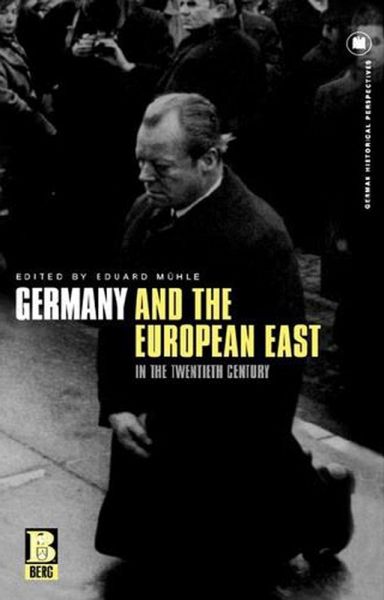
How did German society perceive the European East during the short twentieth century? What were the mental maps Germans constructed as their images of the European East? How did these images alter over time due to changing political systems and to what extent did those mental perceptions influence political action and the relationship between Germany and Eastern Europe?Tackling questions such as these, this book looks at the complicated relationship between Germany and the European East. Politically significant, this relationship was often fraught with tension, always delicate and never easy.…mehr
How did German society perceive the European East during the short twentieth century? What were the mental maps Germans constructed as their images of the European East? How did these images alter over time due to changing political systems and to what extent did those mental perceptions influence political action and the relationship between Germany and Eastern Europe?Tackling questions such as these, this book looks at the complicated relationship between Germany and the European East. Politically significant, this relationship was often fraught with tension, always delicate and never easy. The book looks at the social, cultural and political contexts that shaped the German image of the East during the Weimar Republic, the Third Reich and the Federal Republic. In addition, it charts the mental maps that German society constructed with respect to single constituent parts of Eastern Europe, such as Czechoslovakia, Poland, the Baltic States and the Soviet Union.The contributors consider how the relationship was transformed from one of hostility to one more conciliatory in character by the end of the twentieth century.
Die Herstellerinformationen sind derzeit nicht verfügbar.
Autorenporträt
Eduard Mühle Director of the Herder-Institut,Marburg, and Lecturer in East European History, Marburg University
Inhaltsangabe
Contents Editorial Preface Gerhard A. Ritter and Timothy Garton Ash Notes on Contributors Introduction Eduard Mühle The European East and Weimar Germany Peter Krüger Germany and the Soviet Union Manfred Hildermeier Germany and the Baltic Region in the Short Twentieth Century Gert von Pistohlkors Nazi Germany and Eastern Europe Gerhard Hirschfeld Poland and Germany from Interwar Period through to Time of Détente Michael G. Müller The European East on the Mental Map of German Ostforschung Eduard Mühle The Mutual Perception of Czechs and Germans from the Interwar Period until the Prague Spring Hans Lemberg Mending Fences: The Federal Republic of Germany and Eastern Europe Axel Schildt Notes on Contributors Manfred Hildermeier is Professor of East European History at the University of Göttingen; he was Fellow of the Historische Kolleg in Munich and Wissenschaftskolleg in Berlin and is currently Chairman of the Association of German Historians; among his extensive writings on Russian and Soviet history are the books Die Russische Revolution 1905@1920 (1989), Geschichte der Sowjetunion 1917@1991. Aufstieg und Niedergang des ersten sozialistischen Staates (1998), Die Sowjetunion 1917@1991 (2001) and the collective volumes Stalinismus vor dem Zweiten Weltkrieg. Neue Wege der Forschung (1998), Europäische Zivilgesellschaft in Ost und West: Begriff, Geschichte, Chancen (2000). Gerhard Hirschfeld is Director of the Library of Contemporary History in Stuttgart and Professor of History at the University of Stuttgart. He was a researcher at the German Historical Institute in London (1978@89), Fellow of the Netherlands Institute for Advanced Study in the Humanities and Social Sciences (1996@7) and is currently President of the Comité International d'Histoire de la Deuxième Guerre Mondiale. His publications include the book Nazi Rule and Dutch Collaboration: The Netherlands under German Occupation, 1940@1945 (1988) and the collective volumes Der 'Führerstaat'. Mythos und Realität. Studien zur Struktur und Politik des Dritten Reiches (1981), The Politics of Genocide: Jews and Soviet Prisoners of War in Nazi Germany (1986), Lager, Zwangsarbeit, Vertreibung und Deportation. Dimensionen der Massenverbrechen in der Sowjetunion und in Deutschland (1999). Peter Krüger is Professor of Modern History at the University of Marburg. He was Fellow of the Historische Kolleg in Munich and has published on sixteenth-, nineteenth- and twentieth-century European history. His research interests include the history of international relations, constitutional and intellectual history. Among his publications are the books Deutschland und die Reparationen (1973), Versailles. Deutsche Außenpolitik zwischen Revisionismus und Friedenssicherung (1986), Die Außenpolitik der Weimarer Republik (2nd edition, 1993), and the collective volumes Deutschland, deutscher Staat, deutsche Nation (1993), Ethnicity and Nationalism (1993), Wege und Widersprüche der europäischen Integration (1995), Das europäische Staatensystem im Wandel (1996). Hans Lemberg was Professor of East European History at the University of Düsseldorf (1973@81) and Marburg (1981@98). He is Chairman of the German@Czech and German@Slovak Commissions of Historians. His numerous publications concentrate on Bohemian and Czechoslovak history during the nineteenth and twentieth centuries, Russian history and on relations between Germany and East Central Europe. A selection of his publications has been published under the title Mit unbestechlichem Blick (1998) and Poruzmeni. Ce?i @ Nemci @ wychodní Evropa 1848@1948 (1999). He is editor of Ostmitteleuropa zwischen den beiden Weltkriegen (1997), Grenzen in Ostmitteleuropa im
Contents Editorial Preface Gerhard A. Ritter and Timothy Garton Ash Notes on Contributors Introduction Eduard Mühle The European East and Weimar Germany Peter Krüger Germany and the Soviet Union Manfred Hildermeier Germany and the Baltic Region in the Short Twentieth Century Gert von Pistohlkors Nazi Germany and Eastern Europe Gerhard Hirschfeld Poland and Germany from Interwar Period through to Time of Détente Michael G. Müller The European East on the Mental Map of German Ostforschung Eduard Mühle The Mutual Perception of Czechs and Germans from the Interwar Period until the Prague Spring Hans Lemberg Mending Fences: The Federal Republic of Germany and Eastern Europe Axel Schildt Notes on Contributors Manfred Hildermeier is Professor of East European History at the University of Göttingen; he was Fellow of the Historische Kolleg in Munich and Wissenschaftskolleg in Berlin and is currently Chairman of the Association of German Historians; among his extensive writings on Russian and Soviet history are the books Die Russische Revolution 1905@1920 (1989), Geschichte der Sowjetunion 1917@1991. Aufstieg und Niedergang des ersten sozialistischen Staates (1998), Die Sowjetunion 1917@1991 (2001) and the collective volumes Stalinismus vor dem Zweiten Weltkrieg. Neue Wege der Forschung (1998), Europäische Zivilgesellschaft in Ost und West: Begriff, Geschichte, Chancen (2000). Gerhard Hirschfeld is Director of the Library of Contemporary History in Stuttgart and Professor of History at the University of Stuttgart. He was a researcher at the German Historical Institute in London (1978@89), Fellow of the Netherlands Institute for Advanced Study in the Humanities and Social Sciences (1996@7) and is currently President of the Comité International d'Histoire de la Deuxième Guerre Mondiale. His publications include the book Nazi Rule and Dutch Collaboration: The Netherlands under German Occupation, 1940@1945 (1988) and the collective volumes Der 'Führerstaat'. Mythos und Realität. Studien zur Struktur und Politik des Dritten Reiches (1981), The Politics of Genocide: Jews and Soviet Prisoners of War in Nazi Germany (1986), Lager, Zwangsarbeit, Vertreibung und Deportation. Dimensionen der Massenverbrechen in der Sowjetunion und in Deutschland (1999). Peter Krüger is Professor of Modern History at the University of Marburg. He was Fellow of the Historische Kolleg in Munich and has published on sixteenth-, nineteenth- and twentieth-century European history. His research interests include the history of international relations, constitutional and intellectual history. Among his publications are the books Deutschland und die Reparationen (1973), Versailles. Deutsche Außenpolitik zwischen Revisionismus und Friedenssicherung (1986), Die Außenpolitik der Weimarer Republik (2nd edition, 1993), and the collective volumes Deutschland, deutscher Staat, deutsche Nation (1993), Ethnicity and Nationalism (1993), Wege und Widersprüche der europäischen Integration (1995), Das europäische Staatensystem im Wandel (1996). Hans Lemberg was Professor of East European History at the University of Düsseldorf (1973@81) and Marburg (1981@98). He is Chairman of the German@Czech and German@Slovak Commissions of Historians. His numerous publications concentrate on Bohemian and Czechoslovak history during the nineteenth and twentieth centuries, Russian history and on relations between Germany and East Central Europe. A selection of his publications has been published under the title Mit unbestechlichem Blick (1998) and Poruzmeni. Ce?i @ Nemci @ wychodní Evropa 1848@1948 (1999). He is editor of Ostmitteleuropa zwischen den beiden Weltkriegen (1997), Grenzen in Ostmitteleuropa im
Es gelten unsere Allgemeinen Geschäftsbedingungen: www.buecher.de/agb
Impressum
www.buecher.de ist ein Internetauftritt der buecher.de internetstores GmbH
Geschäftsführung: Monica Sawhney | Roland Kölbl | Günter Hilger
Sitz der Gesellschaft: Batheyer Straße 115 - 117, 58099 Hagen
Postanschrift: Bürgermeister-Wegele-Str. 12, 86167 Augsburg
Amtsgericht Hagen HRB 13257
Steuernummer: 321/5800/1497
USt-IdNr: DE450055826