14,83 €
inkl. MwSt.
Sofort per Download lieferbar
0 °P sammeln

Andere Kunden interessierten sich auch für
") Arabian Satire (eBook, ePUB)9,95 €
Arabian Satire (eBook, ePUB)9,95 €") Love, Death, Fame (eBook, ePUB)9,95 €
Love, Death, Fame (eBook, ePUB)9,95 €") Arabian Satire (eBook, ePUB)20,95 €
Arabian Satire (eBook, ePUB)20,95 €") Bedouin Poets of the Nafud Desert (eBook, ePUB)15,95 €
Bedouin Poets of the Nafud Desert (eBook, ePUB)15,95 €") Arabian Romantic (eBook, ePUB)20,95 €
Arabian Romantic (eBook, ePUB)20,95 €") The Doctors' Dinner Party (eBook, ePUB)9,95 €
The Doctors' Dinner Party (eBook, ePUB)9,95 €") In Deadly Embrace (eBook, ePUB)17,95 €
In Deadly Embrace (eBook, ePUB)17,95 €


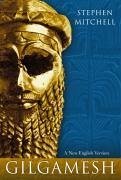
Gilgamesh is considered one of the masterpieces of world literature, and although previously there have been competent scholarly translations of it, until now there has not been a version that is a superlative literary text in its own right. Acclaimed translator Stephen Mitchell's lithe, muscular rendering allows us to enter an ancient masterpiece as if for the first time, to see how startlingly beautiful, intelligent, and alive it is. His insightful introduction provides a historical, spiritual, and cultural context for this ancient epic, showing that Gilgamesh is more potent and fascinating than ever.
Gilgamesh dates from as early as 1700 BCE -- a thousand years before the Iliad. Lost for almost two millennia, the eleven clay tablets on which the epic was inscribed were discovered in 1853 in the ruins of Nineveh, and the text was not deciphered and fully translated until the end of the century. When the great poet Rainer Maria Rilke first read Gilgamesh in 1916, he was awestruck. "Gilgamesh is stupendous," he wrote. "I consider it to be among the greatest things that can happen to a person."
The epic is the story of literature's first hero -- the king of Uruk in what is present-day Iraq -- and his journey of self-discovery. Along the way, Gilgamesh discovers that friendship can bring peace to a whole city, that a preemptive attack on a monster can have dire consequences, and that wisdom can be found only when the quest for it is abandoned. In giving voice to grief and the fear of death -- perhaps more powerfully than any book written after it -- in portraying love and vulnerability and the ego's hopeless striving for immortality, the epic has become a personal testimony for millions of readers in dozens of languages.
Gilgamesh dates from as early as 1700 BCE -- a thousand years before the Iliad. Lost for almost two millennia, the eleven clay tablets on which the epic was inscribed were discovered in 1853 in the ruins of Nineveh, and the text was not deciphered and fully translated until the end of the century. When the great poet Rainer Maria Rilke first read Gilgamesh in 1916, he was awestruck. "Gilgamesh is stupendous," he wrote. "I consider it to be among the greatest things that can happen to a person."
The epic is the story of literature's first hero -- the king of Uruk in what is present-day Iraq -- and his journey of self-discovery. Along the way, Gilgamesh discovers that friendship can bring peace to a whole city, that a preemptive attack on a monster can have dire consequences, and that wisdom can be found only when the quest for it is abandoned. In giving voice to grief and the fear of death -- perhaps more powerfully than any book written after it -- in portraying love and vulnerability and the ego's hopeless striving for immortality, the epic has become a personal testimony for millions of readers in dozens of languages.
Dieser Download kann aus rechtlichen Gründen nur mit Rechnungsadresse in A, B, BG, CZ, D, DK, EW, E, FIN, F, GR, HR, H, I, LT, L, LR, NL, PL, P, R, S, SLO, SK ausgeliefert werden.