14,95 €
14,95 €
inkl. MwSt.
Sofort per Download lieferbar

7 °P sammeln
14,95 €
Als Download kaufen
14,95 €
inkl. MwSt.
Sofort per Download lieferbar
7 °P sammeln
Jetzt verschenken
Alle Infos zum eBook verschenken
14,95 €
inkl. MwSt.
Sofort per Download lieferbar
Alle Infos zum eBook verschenken
7 °P sammeln

Andere Kunden interessierten sich auch für
") Glass Walls (eBook, PDF)14,95 €
Glass Walls (eBook, PDF)14,95 €") What's Your Zip Code Story? (eBook, ePUB)21,95 €
What's Your Zip Code Story? (eBook, ePUB)21,95 €") Create a Gender-Balanced Workplace (eBook, ePUB)8,49 €
Create a Gender-Balanced Workplace (eBook, ePUB)8,49 €") Workplace Bullying (eBook, ePUB)19,95 €
Workplace Bullying (eBook, ePUB)19,95 €") Closing the Gap (eBook, ePUB)16,95 €
Closing the Gap (eBook, ePUB)16,95 €") What's Your Zip Code Story? (eBook, PDF)21,95 €
What's Your Zip Code Story? (eBook, PDF)21,95 €") Beyond Bias (eBook, ePUB)3,99 €
Beyond Bias (eBook, ePUB)3,99 €






"The practicality and clarity make this a valuable contribution to collections in academic and public libraries." - Booklist, Starred Review
A new, important, and richly detailed guide to understanding gender bias with practical solutions for leaders, workplace allies, and individual women.
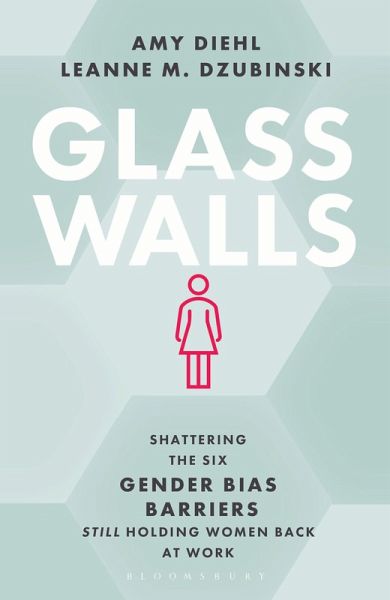
Gender bias is a powerful but hidden force that is still holding women back, keeping them from achieving their full potential and limiting organizations from achieving the creativity, problem solving, and growth that are possible with a diverse workforce.
In this revealing new book, Amy Diehl and Leanne Dzubinski shine a new light on gender bias in the workplace, uncovering the barriers that work like glass walls surrounding women. Through their original research, they have discovered six core factors and multiple subfactors of bias, giving names to some elements for the first time ever.
Their findings and analysis present a new, important, and richly detailed guidebook to understanding gender bias. They reveal:
How male privilege, the bedrock on which gender bias is built, results in a workplace created by men and for men How women encounter disproportionate constraints in that workplace, being expected to play supportive roles to menThe surprising ways in which women experience insufficient support based on genderThe concept of devaluation, and how it tells women they don't belong at workThe troubling ways women face hostility to keep them in their supposed place, merely because of their gender How the combined weight of these barriers leads to acquiescence, when women internalize the obstacles and adapt to the limitationsThe barriers identified, and the subcomponents of each, are destined to become the framework for understanding gender bias. Glass Walls provides a roadmap to shatter barriers holding women back once and for all.
A new, important, and richly detailed guide to understanding gender bias with practical solutions for leaders, workplace allies, and individual women.
Gender bias is a powerful but hidden force that is still holding women back, keeping them from achieving their full potential and limiting organizations from achieving the creativity, problem solving, and growth that are possible with a diverse workforce.
In this revealing new book, Amy Diehl and Leanne Dzubinski shine a new light on gender bias in the workplace, uncovering the barriers that work like glass walls surrounding women. Through their original research, they have discovered six core factors and multiple subfactors of bias, giving names to some elements for the first time ever.
Their findings and analysis present a new, important, and richly detailed guidebook to understanding gender bias. They reveal:
How male privilege, the bedrock on which gender bias is built, results in a workplace created by men and for men How women encounter disproportionate constraints in that workplace, being expected to play supportive roles to menThe surprising ways in which women experience insufficient support based on genderThe concept of devaluation, and how it tells women they don't belong at workThe troubling ways women face hostility to keep them in their supposed place, merely because of their gender How the combined weight of these barriers leads to acquiescence, when women internalize the obstacles and adapt to the limitationsThe barriers identified, and the subcomponents of each, are destined to become the framework for understanding gender bias. Glass Walls provides a roadmap to shatter barriers holding women back once and for all.
Focused on shifting workplace gender bias, Diehl and Dzubinski base organizational behavior on "equalist" concepts replacing the allegedly controversial "feminist." To support the work that creating gender-equitable environments demands, chapters are based on six clear types of gender bias and contain examples of that bias to illuminate the obstacles for even sheltered or reluctant leaders. An instance in the chapter on male privilege illuminates the two-person career structure most clearly witnessed in the expectations tied to first-lady- and clergy-spouse roles. The authors contribute to reader understanding, expanding the use of their work to make it actionable as they conclude each chapter with a segment outlining strategies to guide three types of team members—leaders, allies, self—in creating a sustainably equitable workplace. For example, in the "Devaluation" chapter, the assignment of office "housework" encourages the employee (self) to prepare and then speak up, providing alternatives to the situation. The practicality and clarity make this a valuable contribution to collections in academic and public libraries.