34,99 €
34,99 €
inkl. MwSt.
Sofort per Download lieferbar

0 °P sammeln
34,99 €
Als Download kaufen
34,99 €
inkl. MwSt.
Sofort per Download lieferbar
0 °P sammeln
Jetzt verschenken
Alle Infos zum eBook verschenken
34,99 €
inkl. MwSt.
Sofort per Download lieferbar
Alle Infos zum eBook verschenken
0 °P sammeln

Andere Kunden interessierten sich auch für
") Climate Change (eBook, PDF)45,99 €
Climate Change (eBook, PDF)45,99 €") Global Climate Change and Human Life (eBook, ePUB)34,99 €
Global Climate Change and Human Life (eBook, ePUB)34,99 €") Climate Adaptation Governance in Cities and Regions (eBook, PDF)116,99 €
Climate Adaptation Governance in Cities and Regions (eBook, PDF)116,99 €") The Evolution of Meteorology (eBook, PDF)75,99 €
The Evolution of Meteorology (eBook, PDF)75,99 €") Paleoclimatology (eBook, PDF)73,99 €
Paleoclimatology (eBook, PDF)73,99 €") Boron Proxies in Paleoceanography and Paleoclimatology (eBook, PDF)106,99 €
Boron Proxies in Paleoceanography and Paleoclimatology (eBook, PDF)106,99 €") Advances in Remote Sensing Technology and the Three Poles (eBook, PDF)160,99 €
Advances in Remote Sensing Technology and the Three Poles (eBook, PDF)160,99 €




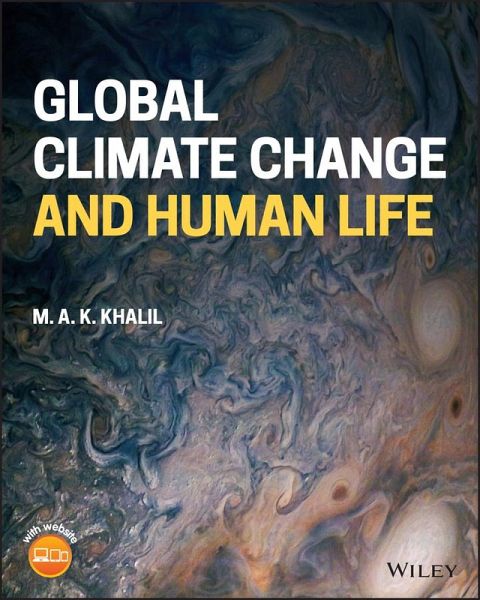
In our time, the global population has become large enough to cause perceptible environmental changes all over the world. With it, a new science of global change has emerged, mostly as a practical matter to understand and manage the earth's habitability and create a sustainable environment for some time to come - one which balances the benefits of technological and societal advances with their potential, less desirable side effects. These concerns began with the depletion of the ozone layer and its possible adverse consequences on human health, and have, in recent decades, shifted to climate change driven by ongoing global warming.
Why are these global changes occurring? How will they affect our lives? If we find the effects undesirable, what should we do? This book will attempt to answer these questions. It will show how to accomplish the goal of managing our climate, what it will take, and when it needs to be done. Such a management process has to be dynamic, making it more complex and less didactic, requiring changes in strategy to achieve a longer-term goal as our knowledge advances.
Global Climate Change and Human Life is a comprehensive and cohesive look at the emerging field of global change science. Using models that take the theoretical or conceptual understanding and translate them into mathematical forms, the book lays out a holistic view of the science that develops and teaches the main principles, concepts and conclusions. In the end, readers will be empowered to use science and the scientific method to decide how important and timely climate change is as a social issue and which solutions can succeed.
Why are these global changes occurring? How will they affect our lives? If we find the effects undesirable, what should we do? This book will attempt to answer these questions. It will show how to accomplish the goal of managing our climate, what it will take, and when it needs to be done. Such a management process has to be dynamic, making it more complex and less didactic, requiring changes in strategy to achieve a longer-term goal as our knowledge advances.
Global Climate Change and Human Life is a comprehensive and cohesive look at the emerging field of global change science. Using models that take the theoretical or conceptual understanding and translate them into mathematical forms, the book lays out a holistic view of the science that develops and teaches the main principles, concepts and conclusions. In the end, readers will be empowered to use science and the scientific method to decide how important and timely climate change is as a social issue and which solutions can succeed.
Dieser Download kann aus rechtlichen Gründen nur mit Rechnungsadresse in D ausgeliefert werden.