80,95 €
80,95 €
inkl. MwSt.
Sofort per Download lieferbar

40 °P sammeln
80,95 €
Als Download kaufen
80,95 €
inkl. MwSt.
Sofort per Download lieferbar
40 °P sammeln
Jetzt verschenken
Alle Infos zum eBook verschenken
80,95 €
inkl. MwSt.
Sofort per Download lieferbar
Alle Infos zum eBook verschenken
40 °P sammeln

Andere Kunden interessierten sich auch für
") Media, Politics and Environment (eBook, PDF)120,95 €
Media, Politics and Environment (eBook, PDF)120,95 €") Media, Sustainability and Everyday Life (eBook, PDF)96,95 €
Media, Sustainability and Everyday Life (eBook, PDF)96,95 €") Leadership and the Construction of Environmental Concern (eBook, PDF)72,95 €
Leadership and the Construction of Environmental Concern (eBook, PDF)72,95 €") The Local and the Digital in Environmental Communication (eBook, PDF)72,95 €
The Local and the Digital in Environmental Communication (eBook, PDF)72,95 €") Mediascapes of Ruined Geographies in the Global South (eBook, PDF)112,95 €
Mediascapes of Ruined Geographies in the Global South (eBook, PDF)112,95 €") Under Pressure (eBook, PDF)88,95 €
Under Pressure (eBook, PDF)88,95 €") Environmental Debates in Albania (eBook, PDF)96,95 €
Environmental Debates in Albania (eBook, PDF)96,95 €






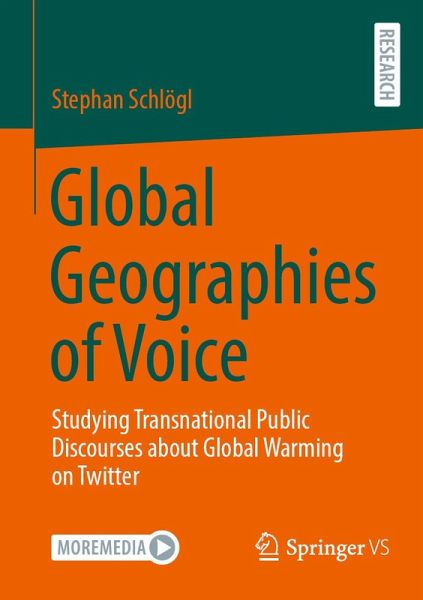
This book examines climate change communication on Twitter (now X) through the lens of transnational public sphere theory. Building on contributions from Nancy Fraser and Iris Marion Young, it argues that the concept of a transnational public sphere is useful if two questions are addressed: legitimacy-who should be part of it-and effectiveness-who can be reached by transnational discourse. Both are treated as questions of voice, understood as the opportunity to influence the thinking of others. The study explores whether participants from the Global Southgain international visibility (legitimacy) and under what conditions they reach audiences in the Global North, where the greatest scope for ambitious climate change mitigation policies currently exists (effectiveness). An analysis of global retweet networks shows that users from the Global South are significantly underrepresented and that higher climate vulnerability is negatively associated with visibility. Civil society organizations emerge as crucial brokers of information across regions, amplifying voices otherwise excluded from international debate. The findings are set against the normative assumptions of public sphere theory and the principles of climate justice.
Dieser Download kann aus rechtlichen Gründen nur mit Rechnungsadresse in A, B, BG, CY, CZ, D, DK, EW, E, FIN, F, GR, HR, H, IRL, I, LT, L, LR, M, NL, PL, P, R, S, SLO, SK ausgeliefert werden.