
0,00 €
0,00 €
inkl. MwSt.
Sofort per Download lieferbar

0 °P sammeln
0,00 €
Als Download kaufen
0,00 €
inkl. MwSt.
Sofort per Download lieferbar
0 °P sammeln
Jetzt verschenken
Alle Infos zum eBook verschenken
0,00 €
inkl. MwSt.
Sofort per Download lieferbar
Alle Infos zum eBook verschenken
0 °P sammeln

Andere Kunden interessierten sich auch für
") Globalizing the Soybean (eBook, PDF)0,00 €
Globalizing the Soybean (eBook, PDF)0,00 €") A Global History of the Developing World (eBook, ePUB)56,95 €
A Global History of the Developing World (eBook, ePUB)56,95 €") The Routledge Handbook of the Global 1980s (eBook, ePUB)47,95 €
The Routledge Handbook of the Global 1980s (eBook, ePUB)47,95 €") The Political Coexistence of the United States with Cuba, 1961-1975 (eBook, ePUB)42,95 €
The Political Coexistence of the United States with Cuba, 1961-1975 (eBook, ePUB)42,95 €") A Global History of Ginseng (eBook, ePUB)37,95 €
A Global History of Ginseng (eBook, ePUB)37,95 €") Globalizing Human Rights (eBook, ePUB)42,95 €
Globalizing Human Rights (eBook, ePUB)42,95 €") The Grand Strategies of Great Powers (eBook, ePUB)42,95 €
The Grand Strategies of Great Powers (eBook, ePUB)42,95 €
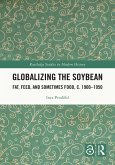






Globalizing the Soybean asks how the soybean conquered the West and analyzes why and how the crop gained entry into agriculture and industry in regions beyond Asia in the first half of the twentieth century.
Historian Ines Prodöhl describes the soybean's journey centered on three hubs: Northeast China, as the crop's main growing area up to the Second World War; Germany, to where most of the beans in the interwar period were shipped; and the United States, which became the leading cultivator of soy worldwide during the 1940s. This book explores the German and U.S. adoption of the soybean being closely tied to global economic and political changes, such as the two world wars and the Great Depression. The attraction of the soybean to stakeholders on both sides of the Atlantic was linked to a need for cheap alternatives to butter and lard and a desire for greater quantities of meat, which led to the soybean becoming a cheap resource for fat and fodder. Only occasionally was it also used as food.
This volume is useful for anyone who is studying or interested in economic history and commodity trading in the twentieth century. It is also connected to the histories of capitalism, globalization, imperialism, and materiality.
The Open Access version of this book, available at www.taylorfrancis.com, has been made available under a Creative Commons Attribution-Non Commercial-No Derivatives 4.0 license
Historian Ines Prodöhl describes the soybean's journey centered on three hubs: Northeast China, as the crop's main growing area up to the Second World War; Germany, to where most of the beans in the interwar period were shipped; and the United States, which became the leading cultivator of soy worldwide during the 1940s. This book explores the German and U.S. adoption of the soybean being closely tied to global economic and political changes, such as the two world wars and the Great Depression. The attraction of the soybean to stakeholders on both sides of the Atlantic was linked to a need for cheap alternatives to butter and lard and a desire for greater quantities of meat, which led to the soybean becoming a cheap resource for fat and fodder. Only occasionally was it also used as food.
This volume is useful for anyone who is studying or interested in economic history and commodity trading in the twentieth century. It is also connected to the histories of capitalism, globalization, imperialism, and materiality.
The Open Access version of this book, available at www.taylorfrancis.com, has been made available under a Creative Commons Attribution-Non Commercial-No Derivatives 4.0 license
Dieser Download kann aus rechtlichen Gründen nur mit Rechnungsadresse in A, B, BG, CY, CZ, D, DK, EW, E, FIN, F, GR, HR, H, IRL, I, LT, L, LR, M, NL, PL, P, R, S, SLO, SK ausgeliefert werden.