
7,99 €
inkl. MwSt.
Sofort per Download lieferbar
4 °P sammeln

Andere Kunden interessierten sich auch für
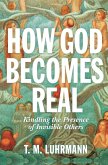
") How God Becomes Real (eBook, ePUB)12,95 €
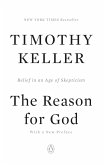
How God Becomes Real (eBook, ePUB)12,95 €") The Reason for God (eBook, ePUB)6,99 €
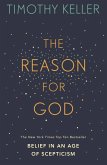
The Reason for God (eBook, ePUB)6,99 €") The Reason for God (eBook, ePUB)6,49 €
The Reason for God (eBook, ePUB)6,49 €") The Case for God (eBook, ePUB)10,99 €
The Case for God (eBook, ePUB)10,99 €") God Against the Gods (eBook, ePUB)3,99 €
God Against the Gods (eBook, ePUB)3,99 €") Religion (eBook, ePUB)5,49 €
Religion (eBook, ePUB)5,49 €") Conversations With God (eBook, ePUB)3,99 €
Conversations With God (eBook, ePUB)3,99 €




A highly original new book that challenges the underlying assumption of both believers and atheists that their arguments depend on proof that God either exists or that God doesn't exist
God as Nothing challenges the underlying assumption of both believers and atheists that their arguments depend on proof that God either exists or that God doesn't exist. Gilbert Márkus demonstrates a long tradition in Jewish and Christian writings of viewing 'God' not as a particular entity, but as the mystery which underlies all that exists. This may develop into a way of talking about God which allows fruitful dialogue and - perhaps above all - a shared engagement in seeking 'the things of God': justice, peace and compassion.
- Deftly underscores a long tradition in Jewish and Christian writings of viewing 'God' not as a particular entity, but as the mystery which underlies all that exists
- Allows a more fruitful dialogue when talking about God cantered around justice, peace and compassion
God as Nothing challenges the underlying assumption of both believers and atheists that their arguments depend on proof that God either exists or that God doesn't exist. Gilbert Márkus demonstrates a long tradition in Jewish and Christian writings of viewing 'God' not as a particular entity, but as the mystery which underlies all that exists. This may develop into a way of talking about God which allows fruitful dialogue and - perhaps above all - a shared engagement in seeking 'the things of God': justice, peace and compassion.
Dieser Download kann aus rechtlichen Gründen nur mit Rechnungsadresse in A, B, BG, CY, CZ, D, DK, EW, E, FIN, F, GR, HR, H, IRL, I, LT, L, LR, M, NL, PL, P, R, S, SLO, SK ausgeliefert werden.