Sie sind bereits eingeloggt. Klicken Sie auf 2. tolino select Abo, um fortzufahren.
Bitte loggen Sie sich zunächst in Ihr Kundenkonto ein oder registrieren Sie sich bei bücher.de, um das eBook-Abo tolino select nutzen zu können.
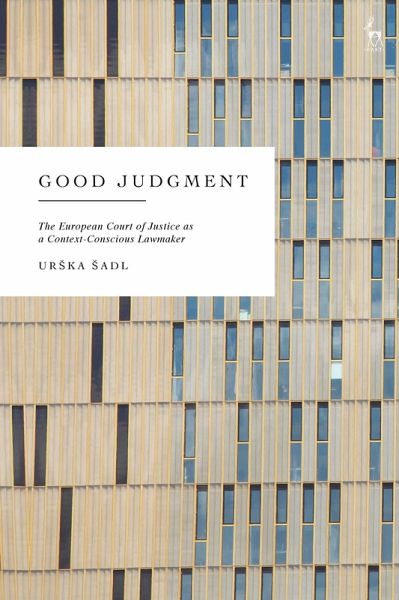
Courts are context-conscious. They solve legal disputes with societal impact in mind, using interpretive tools and procedural means. This book develops concepts and methods for a systematic and legally informative analysis of this complex process. The evidence delivered prompts a conversation about the authority courts have to change the law. The analysis focuses on the European Court of Justice and its free movement case law. The framework and theory, however, are relevant to courts and case law everywhere. This is a compelling and intriguing examination of the ECJ and its shaping of a key tenet of EU law.…mehr
Courts are context-conscious. They solve legal disputes with societal impact in mind, using interpretive tools and procedural means. This book develops concepts and methods for a systematic and legally informative analysis of this complex process. The evidence delivered prompts a conversation about the authority courts have to change the law. The analysis focuses on the European Court of Justice and its free movement case law. The framework and theory, however, are relevant to courts and case law everywhere. This is a compelling and intriguing examination of the ECJ and its shaping of a key tenet of EU law.
Die Herstellerinformationen sind derzeit nicht verfügbar.
Autorenporträt
UrSka sadl is Part-time Professor at the European University Institute, Italy, and Associate Professor at the Faculty of Law, University of Copenhagen, Denmark.
Inhaltsangabe
1. Introduction a. The Main Claim b. The Structure i. The Premise ii. Contribution c. The Outline d. In Sum Part One: The Analytical Framework 2. Context Conscious Judging a. Four Perspectives on Context Conscious Judging i. Maximising Legal Values with Sound Legal Arguments ii. Maximising Power with Strategic Solutions iii. Maintaining Authority iv. Minimising Conflict by Muddling Through b. The Court's Context Conscious Reasoning and Political Power 3. Good Judgement a. From Context Conscious Judging to Good Judgment i. The Baseline: Model Application of Law and the Structure of Typical Justification ii. Non-binary Decisions: An Illustration iii. Conflicting Interests iv. Distinctions b. Three Types of Good Judgment c. Conclusion 4. Operationalising Good Judgment a. Three Steps of the Analysis b. The Parameters of Case Law i. Legal Characteristics ii. Case Characteristics c. Annotation of Judgments Conclusion to Part One Part Two: The Mechanics of Good Judgment 5. Persons a. Introduction b. The Rules Governing the Free Movement of Persons and European Citizens i. Treaty Rights, Legislative Acts, and the Competence to Regulate Free Movement ii. Citizenship Rights Directive: Consolidating Legislative Instruments, Case Law and Conflict c. Free Movement Disputes: Legal Issues d. The Parameters of Good Judgement i. Non-sanctioning Europeanisation of National Policies through the Prism of Proportionality, Discrimination and Compatibility Review ii. Individual Protection and Deferral of Authority in Judgments Upholding European Rights and Principles iii. Preserving State Autonomy in Judgments Advancing Free Movement of Persons Law iv. Relevant Information About Free Movement of Persons Cases e. Emblematic Judgments: Facts, Justification, Context, Implications i. Non-sanctioning Europeanisation of National Policies ii. Deferential Upholding of European Rights iii. Bounded Undesirable Interpretation f. Upholding Conflicting Interests - The Long Term 1954 - 2022 6. Goods a. Introduction b. The Legal Framework of Free Movement of Goods i. The Ambiguous Heart of the System ii. Rights at Stake and Interests at Play in the Case-law c. Free Movement Judgments: An Overview of Legal Questions d. The Parameters of Good Judgment i. Non-sanctioning Europeanisation of National Policies through the Prism of Proportionality, Discrimination and Compatibility Review ii. Deferral of Authority in Judgments Upholding Free Movement Rights and Principles iii. Preserving State Autonomy in Judgments Advancing Free Movement of Goods: Bounded Undesirable Interpretation iv. Relevant Information about Free Movement of Good Cases e. Emblematic Judgments: A Close Up i. The Non-sanctioning Europeanisation of National Policies ii. The Deferential Upholding of Free Movement Rights iii. The Bounded Undesirable Interpretation f. Upholding Conflicting Interests: The Long Term Part Three: The Mechanisms of Good Judgment Introduction i. Main Finding ii. Unpacking the Findings: The Roadmap a. Case Motivated Good Judgment i. The Applicants ii. The Case iii. The Institution (Idiosyncratic Good Judgment) b. Context-Motivated Good Judgment i. Recognising the Stakes ii. Honouring Fragile Consensus/Equilibrium iii. Adjusting to the Climate c. Alternative Tools of Context Conscious Judging i. Reframing Disputes ii. Mixed Signals iii. Low Stakes/Waiting for the Tide to Turn d. Appraisal 8. Conclusion a. Summary of the Argument b. Contribution c. Is Good Judgment a Good Idea?
1. Introduction a. The Main Claim b. The Structure i. The Premise ii. Contribution c. The Outline d. In Sum Part One: The Analytical Framework 2. Context Conscious Judging a. Four Perspectives on Context Conscious Judging i. Maximising Legal Values with Sound Legal Arguments ii. Maximising Power with Strategic Solutions iii. Maintaining Authority iv. Minimising Conflict by Muddling Through b. The Court's Context Conscious Reasoning and Political Power 3. Good Judgement a. From Context Conscious Judging to Good Judgment i. The Baseline: Model Application of Law and the Structure of Typical Justification ii. Non-binary Decisions: An Illustration iii. Conflicting Interests iv. Distinctions b. Three Types of Good Judgment c. Conclusion 4. Operationalising Good Judgment a. Three Steps of the Analysis b. The Parameters of Case Law i. Legal Characteristics ii. Case Characteristics c. Annotation of Judgments Conclusion to Part One Part Two: The Mechanics of Good Judgment 5. Persons a. Introduction b. The Rules Governing the Free Movement of Persons and European Citizens i. Treaty Rights, Legislative Acts, and the Competence to Regulate Free Movement ii. Citizenship Rights Directive: Consolidating Legislative Instruments, Case Law and Conflict c. Free Movement Disputes: Legal Issues d. The Parameters of Good Judgement i. Non-sanctioning Europeanisation of National Policies through the Prism of Proportionality, Discrimination and Compatibility Review ii. Individual Protection and Deferral of Authority in Judgments Upholding European Rights and Principles iii. Preserving State Autonomy in Judgments Advancing Free Movement of Persons Law iv. Relevant Information About Free Movement of Persons Cases e. Emblematic Judgments: Facts, Justification, Context, Implications i. Non-sanctioning Europeanisation of National Policies ii. Deferential Upholding of European Rights iii. Bounded Undesirable Interpretation f. Upholding Conflicting Interests - The Long Term 1954 - 2022 6. Goods a. Introduction b. The Legal Framework of Free Movement of Goods i. The Ambiguous Heart of the System ii. Rights at Stake and Interests at Play in the Case-law c. Free Movement Judgments: An Overview of Legal Questions d. The Parameters of Good Judgment i. Non-sanctioning Europeanisation of National Policies through the Prism of Proportionality, Discrimination and Compatibility Review ii. Deferral of Authority in Judgments Upholding Free Movement Rights and Principles iii. Preserving State Autonomy in Judgments Advancing Free Movement of Goods: Bounded Undesirable Interpretation iv. Relevant Information about Free Movement of Good Cases e. Emblematic Judgments: A Close Up i. The Non-sanctioning Europeanisation of National Policies ii. The Deferential Upholding of Free Movement Rights iii. The Bounded Undesirable Interpretation f. Upholding Conflicting Interests: The Long Term Part Three: The Mechanisms of Good Judgment Introduction i. Main Finding ii. Unpacking the Findings: The Roadmap a. Case Motivated Good Judgment i. The Applicants ii. The Case iii. The Institution (Idiosyncratic Good Judgment) b. Context-Motivated Good Judgment i. Recognising the Stakes ii. Honouring Fragile Consensus/Equilibrium iii. Adjusting to the Climate c. Alternative Tools of Context Conscious Judging i. Reframing Disputes ii. Mixed Signals iii. Low Stakes/Waiting for the Tide to Turn d. Appraisal 8. Conclusion a. Summary of the Argument b. Contribution c. Is Good Judgment a Good Idea?
Es gelten unsere Allgemeinen Geschäftsbedingungen: www.buecher.de/agb
Impressum
www.buecher.de ist ein Internetauftritt der buecher.de internetstores GmbH
Geschäftsführung: Monica Sawhney | Roland Kölbl | Günter Hilger
Sitz der Gesellschaft: Batheyer Straße 115 - 117, 58099 Hagen
Postanschrift: Bürgermeister-Wegele-Str. 12, 86167 Augsburg
Amtsgericht Hagen HRB 13257
Steuernummer: 321/5800/1497
USt-IdNr: DE450055826