41,95 €
41,95 €
inkl. MwSt.
Sofort per Download lieferbar

21 °P sammeln
41,95 €
Als Download kaufen
41,95 €
inkl. MwSt.
Sofort per Download lieferbar
21 °P sammeln
Jetzt verschenken
Alle Infos zum eBook verschenken
41,95 €
inkl. MwSt.
Sofort per Download lieferbar
Alle Infos zum eBook verschenken
21 °P sammeln

Andere Kunden interessierten sich auch für
") Indonesia, Islam, and the International Political Economy (eBook, PDF)45,95 €
Indonesia, Islam, and the International Political Economy (eBook, PDF)45,95 €") Understanding India's New Political Economy (eBook, PDF)55,95 €
Understanding India's New Political Economy (eBook, PDF)55,95 €") China's Education Aid to Africa (eBook, PDF)39,95 €
China's Education Aid to Africa (eBook, PDF)39,95 €") A Microcredit Alternative in South Asia (eBook, PDF)41,95 €
A Microcredit Alternative in South Asia (eBook, PDF)41,95 €") China's Changing Economy (eBook, PDF)29,95 €
China's Changing Economy (eBook, PDF)29,95 €") Economic Successes in South Asia (eBook, PDF)41,95 €
Economic Successes in South Asia (eBook, PDF)41,95 €") A New Development Model and China's Future (eBook, PDF)47,95 €
A New Development Model and China's Future (eBook, PDF)47,95 €





The study of the political economy of development in India is significant as India has emerged as one of the fastest-growing countries during the last three decades and the rate of economic growth and poverty reduction have not been matched in India's subnational states. Although the Union Government has introduced and implemented several economic reforms since 1991 to enhance the economic development, the results of implantation have varied.
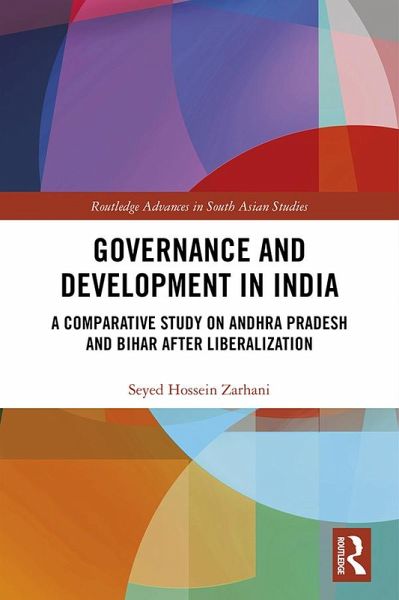
Governance and Development in India compares two Indian subnational states, Andhra Pradesh and Bihar. The book does not consider the state as an aggregate entity; rather, it disaggregates the state relationally and spatially. Concentrating on the micro-institutional variables and the role of regional elites, the author investigates the political roots of the divergence of development trajectories among India's subnational states since liberalization, as an essential aspect of the political economy of development in India. The book explores the black box of the multi-layered state of India and interactions among the Central Government, the states, regional leaders and other stakeholders and explains why the regional leaders have pursued divergent economic strategies using the analytical narrative research method and the subnational comparative research method.
Firmly based on the theoretical foundations of the neo-institutional rational choice model of governance, polycentric hierarchy theory and the strategies for regional elite strategy analysis, combined with empirical research, this book is a valuable contribution to the fields of comparative political economy, state politics in India, governance and development in developing countries, and South Asian comparative politics.
Governance and Development in India compares two Indian subnational states, Andhra Pradesh and Bihar. The book does not consider the state as an aggregate entity; rather, it disaggregates the state relationally and spatially. Concentrating on the micro-institutional variables and the role of regional elites, the author investigates the political roots of the divergence of development trajectories among India's subnational states since liberalization, as an essential aspect of the political economy of development in India. The book explores the black box of the multi-layered state of India and interactions among the Central Government, the states, regional leaders and other stakeholders and explains why the regional leaders have pursued divergent economic strategies using the analytical narrative research method and the subnational comparative research method.
Firmly based on the theoretical foundations of the neo-institutional rational choice model of governance, polycentric hierarchy theory and the strategies for regional elite strategy analysis, combined with empirical research, this book is a valuable contribution to the fields of comparative political economy, state politics in India, governance and development in developing countries, and South Asian comparative politics.
Dieser Download kann aus rechtlichen Gründen nur mit Rechnungsadresse in A, B, BG, CY, CZ, D, DK, EW, E, FIN, F, GR, HR, H, IRL, I, LT, L, LR, M, NL, PL, P, R, S, SLO, SK ausgeliefert werden.