20,95 €
20,95 €
inkl. MwSt.
Sofort per Download lieferbar

10 °P sammeln
20,95 €
Als Download kaufen
20,95 €
inkl. MwSt.
Sofort per Download lieferbar
10 °P sammeln
Jetzt verschenken
Alle Infos zum eBook verschenken
20,95 €
inkl. MwSt.
Sofort per Download lieferbar
Alle Infos zum eBook verschenken
10 °P sammeln

Andere Kunden interessierten sich auch für
") Veiled Visions (eBook, ePUB)20,95 €
Veiled Visions (eBook, ePUB)20,95 €") Beyond Integration (eBook, ePUB)14,95 €
Beyond Integration (eBook, ePUB)14,95 €") The Jim Crow Routine (eBook, ePUB)14,95 €
The Jim Crow Routine (eBook, ePUB)14,95 €") Battling the Plantation Mentality (eBook, ePUB)22,95 €
Battling the Plantation Mentality (eBook, ePUB)22,95 €") Crossroads at Clarksdale (eBook, ePUB)14,95 €
Crossroads at Clarksdale (eBook, ePUB)14,95 €") This Ain't Chicago (eBook, ePUB)18,95 €
This Ain't Chicago (eBook, ePUB)18,95 €") Joining Places (eBook, ePUB)15,95 €
Joining Places (eBook, ePUB)15,95 €

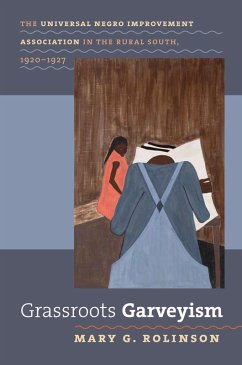
The black separatist movement led by Marcus Garvey has long been viewed as a phenomenon of African American organization in the urban North. But as Mary Rolinson demonstrates, the largest number of Universal Negro Improvement Association (UNIA) divisions and Garvey’s most devoted and loyal followers were found in the southern Black Belt. Tracing the path of organizers from northern cities to Virginia, and then from the Upper to the Deep South, Rolinson remaps the movement to include this vital but overlooked region. Rolinson shows how Garvey’s southern constituency sprang from cities, countryside churches, and sharecropper cabins. Southern Garveyites adopted pertinent elements of the movement’s ideology and developed strategies for community self-defense and self-determination. These southern African Americans maintained a spiritual attachment to their African identities and developed a fiercely racial nationalism, building on the rhetoric and experiences of black organizers from the nineteenth-century South. Garveyism provided a common bond during the upheaval of the Great Migration, Rolinson contends, and even after the UNIA had all but disappeared in the South in the 1930s, the movement’s tenets of race organization, unity, and pride continued to flourish in other forms of black protest for generations.
Dieser Download kann aus rechtlichen Gründen nur mit Rechnungsadresse in A, D ausgeliefert werden.