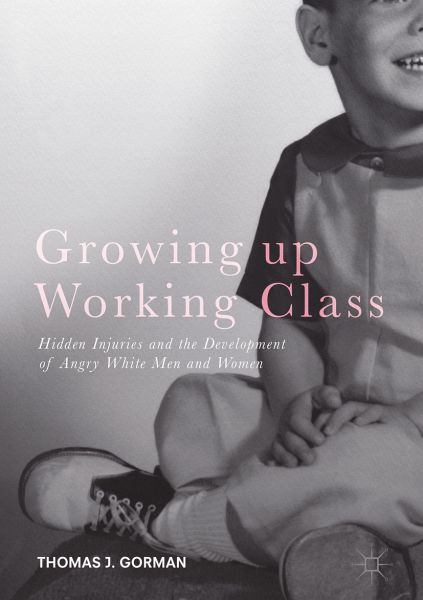
20,95 €
20,95 €
inkl. MwSt.
Sofort per Download lieferbar

10 °P sammeln
20,95 €
Als Download kaufen
20,95 €
inkl. MwSt.
Sofort per Download lieferbar
10 °P sammeln
Jetzt verschenken
Alle Infos zum eBook verschenken
20,95 €
inkl. MwSt.
Sofort per Download lieferbar
Alle Infos zum eBook verschenken
10 °P sammeln

Andere Kunden interessierten sich auch für
") Everyday Post-Socialism (eBook, PDF)96,95 €
Everyday Post-Socialism (eBook, PDF)96,95 €") Handbuch Biographieforschung (eBook, PDF)62,99 €
Handbuch Biographieforschung (eBook, PDF)62,99 €") Austerity & Democracy in Athens (eBook, PDF)72,95 €
Austerity & Democracy in Athens (eBook, PDF)72,95 €") Disability and Difference in Global Contexts (eBook, PDF)40,95 €
Disability and Difference in Global Contexts (eBook, PDF)40,95 €") Social Games and Identity in the Higher Education Workplace (eBook, PDF)40,95 €
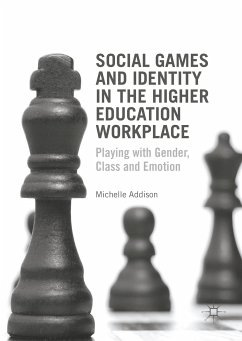
Social Games and Identity in the Higher Education Workplace (eBook, PDF)40,95 €") Poverty, Riches and Social Citizenship (eBook, PDF)40,95 €
Poverty, Riches and Social Citizenship (eBook, PDF)40,95 €") Handbuch Diskriminierung (eBook, PDF)139,99 €
Handbuch Diskriminierung (eBook, PDF)139,99 €



Presents a rich, engaging, and vulnerable personal narrative from an author who grew up in the milieu he seeks to investigate
Speaks to a timely topic - in the face of rising populism, white nationalism, and disenchantment with the status quo political order and a globalized, modernizing world
Engages with sociological and social-psychological theory and strengthened by census tract data, social media data, and the author's lifelong research on social class, education, families, and sports
Dieser Download kann aus rechtlichen Gründen nur mit Rechnungsadresse in A, B, BG, CY, CZ, D, DK, EW, E, FIN, F, GR, HR, H, IRL, I, LT, L, LR, M, NL, PL, P, R, S, SLO, SK ausgeliefert werden.
"The book provides rich potential to explore the nuances of racially homogenous class experiences and related perspectives around self-esteem, education, relationship formation, family trauma (e.g., alcoholism), and other hidden injuries of class." (Meghan Burke, Contemporary Sociology, Vol. 48 (5), September, 2019)
"Nostalgia rolled back to me faster than the B-express train as I read Queens College sociologist Thomas J. Gorman's Growing Up Working Class. ... the book is erected around a compelling thesis: How the 'hidden injuries of class' follow working-class kids into adulthood ... . what I admire most in Gorman's book are his astute autobiographical observations. He successfully evokes the claustrophobic, frustrating, exhilarating, painful, sometimes menacing, and just plain loud world of working-class New York." (Alfred Lubrano, Journal of Working Class Studies, Vol. 3 (2), December, 2018)
"Gorman's book ... is an autoethnography embedded in sociological theories and concepts (including Sennett and Cobb's [1972] hidden injuries of class). The premise of this well-written book is simple: the author shows how sociology has allowed him to look back and understand what happened in his life. ... Gorman gathered rich and differentiated material which comprises memories, informal interviews, social media hangouts, and biographical materials, such as a letter cited in full and a complete study program." (Kamil Luczaj, Acta Sociologica, 2018)
"Nostalgia rolled back to me faster than the B-express train as I read Queens College sociologist Thomas J. Gorman's Growing Up Working Class. ... the book is erected around a compelling thesis: How the 'hidden injuries of class' follow working-class kids into adulthood ... . what I admire most in Gorman's book are his astute autobiographical observations. He successfully evokes the claustrophobic, frustrating, exhilarating, painful, sometimes menacing, and just plain loud world of working-class New York." (Alfred Lubrano, Journal of Working Class Studies, Vol. 3 (2), December, 2018)
"Gorman's book ... is an autoethnography embedded in sociological theories and concepts (including Sennett and Cobb's [1972] hidden injuries of class). The premise of this well-written book is simple: the author shows how sociology has allowed him to look back and understand what happened in his life. ... Gorman gathered rich and differentiated material which comprises memories, informal interviews, social media hangouts, and biographical materials, such as a letter cited in full and a complete study program." (Kamil Luczaj, Acta Sociologica, 2018)
Es gelten unsere Allgemeinen Geschäftsbedingungen: www.buecher.de/agb
Impressum
www.buecher.de ist ein Internetauftritt der buecher.de internetstores GmbH
Geschäftsführung: Monica Sawhney | Roland Kölbl | Günter Hilger
Sitz der Gesellschaft: Batheyer Straße 115 - 117, 58099 Hagen
Postanschrift: Bürgermeister-Wegele-Str. 12, 86167 Augsburg
Amtsgericht Hagen HRB 13257
Steuernummer: 321/5800/1497
USt-IdNr: DE450055826
Bitte wählen Sie Ihr Anliegen aus.
Rechnungen
Retourenschein anfordern
Bestellstatus
Storno