Hefziba Lifshitz
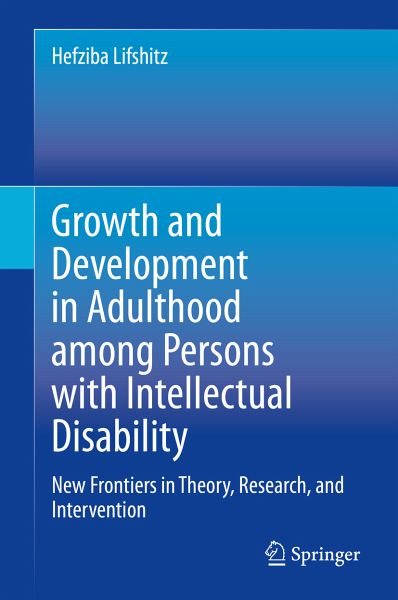
Growth and Development in Adulthood among Persons with Intellectual Disability (eBook, PDF)
New Frontiers in Theory, Research, and Intervention
72,95 €
inkl. MwSt.
Sofort per Download lieferbar

36 °P sammeln

Hefziba Lifshitz
Growth and Development in Adulthood among Persons with Intellectual Disability (eBook, PDF)
New Frontiers in Theory, Research, and Intervention
- Format: PDF
- Merkliste
- Auf die Merkliste
- Bewerten Bewerten
- Teilen
- Produkt teilen
- Produkterinnerung
- Produkterinnerung

Bitte loggen Sie sich zunächst in Ihr Kundenkonto ein oder registrieren Sie sich bei
bücher.de, um das eBook-Abo tolino select nutzen zu können.
Hier können Sie sich einloggen
Sie sind bereits eingeloggt. Klicken Sie auf 2. tolino select Abo, um fortzufahren.

Bitte loggen Sie sich zunächst in Ihr Kundenkonto ein oder registrieren Sie sich bei bücher.de, um das eBook-Abo tolino select nutzen zu können.
The first book to discuss Emotional Intelligence of individuals with ID Covers the implementation of the CAB triple model through adulthood and old age in individuals with ID Supported by theoretical resources drawn from both special education and theories designed for the general population adapted for individuals with ID
- Geräte: PC
- ohne Kopierschutz
- eBook Hilfe
- Größe: 5.11MB
Andere Kunden interessierten sich auch für
Emerging Adulthood in the COVID-19 Pandemic and Other Crises: Individual and Relational Resources (eBook, PDF)112,95 €
Behavior Safety and Clinical Practice in Intellectual and Developmental Disabilities (eBook, PDF)80,95 €
Trends and Prospects in Metacognition Research across the Life Span (eBook, PDF)104,95 €
Kendall Cotton BronkPurpose in Life (eBook, PDF)72,95 €
Mihaly CsikszentmihalyiApplications of Flow in Human Development and Education (eBook, PDF)80,95 €
End of Life and People with Intellectual and Developmental Disability (eBook, PDF)120,95 €
Development of Self-Determination Through the Life-Course (eBook, PDF)136,95 €-
-
-
The first book to discuss Emotional Intelligence of individuals with ID
Covers the implementation of the CAB triple model through adulthood and old age in individuals with ID
Supported by theoretical resources drawn from both special education and theories designed for the general population adapted for individuals with ID
Dieser Download kann aus rechtlichen Gründen nur mit Rechnungsadresse in A, B, BG, CY, CZ, D, DK, EW, E, FIN, F, GR, HR, H, IRL, I, LT, L, LR, M, NL, PL, P, R, S, SLO, SK ausgeliefert werden.
Produktdetails
- Produktdetails
- Verlag: Springer Nature Switzerland
- Seitenzahl: 332
- Erscheinungstermin: 23. März 2020
- Englisch
- ISBN-13: 9783030383527
- Artikelnr.: 58881288
- Verlag: Springer Nature Switzerland
- Seitenzahl: 332
- Erscheinungstermin: 23. März 2020
- Englisch
- ISBN-13: 9783030383527
- Artikelnr.: 58881288
- Herstellerkennzeichnung Die Herstellerinformationen sind derzeit nicht verfügbar.
Hefziba Lifshitz is an Associate Professor at the School of Education of Bar-Ilan University, Israel, where she heads the master's program in intellectual disability (ID). Lifshitz holds the Lois Machado Chair for Cognitive Modifiability and Human Development and also chairs the Baker Research and Developmental Center for Young Children with ID. In these roles, she became aware of the need for research oriented to cognitive educational rehabilitation, relating specifically to the developmental potential inherent in the adulthood period among populations with ID. To date, she has focused her body of research on empirically examining her compensation age theory (CAT) and evaluating the triple CAB (cognition-affect-behavior) intervention programs that she designed for persons with all ID severity levels and etiologies. The Otzmot Empowerment Project that she initiated now includes multiple stages of inclusion in the academic world for adults with ID. Six such post-secondary students who are currently fully included in regular academic courses are expected to complete their BA degree in 2022.
Part 1: Theories and Models of Growth, Development, and Intervention for Adults with Intellectual Disability.- Chapter 1. Compensation Age Theory (CAT): Effects of Chronological Age on Cognitive Ability in Individuals with Intellectual Disability.- Chapter 2. The Triple CAB Model: Enhancing Cognition, Affect, and Behavior in Adults with Intellectual Disability.- PART II: Implementation of the Triple Cab Model for Adults with Mild to Moderate Intellectual Disability.- Chapter 3. Post-Secondary Academic Programs for Adults with Mild and Moderate Intellectual Disability.- Chapter 4. Leisure and Cognitively Stimulating Activities as Means for Improving Cognitive Performance in Persons with Intellectual Disability during Adulthood.- PART III: Implementation of the Triple Cab Model for Adults with Severe To Profound Intellectual Disability.- Chapter 5. The Triple CAB Intervention for Adults with Severe/Profound Intellectual Disability to Enhance Opportunities for Growth and Life Quality.-Chapter 6. Cognitive Rehabilitation to Enhance Life Quality and Daily Functioning in Elderly Persons with Intellectual Disability and Alzheimer's Disease: The Triple CAB-E Intervention Model.- PART IV: The Adult with Intellectual Disability as a Whole Human Being.- Chapter 7. Affect and Emotional Intelligence in Populations with Intellectual Disability.- Chapter 8. Epilogue: Conclusions and Future Directions.