39,95 €
inkl. MwSt.
Sofort per Download lieferbar
20 °P sammeln

Andere Kunden interessierten sich auch für
") Guidebook to Academic Writing (eBook, PDF)39,95 €
Guidebook to Academic Writing (eBook, PDF)39,95 €") Academic Writing with Corpora (eBook, ePUB)38,95 €
Academic Writing with Corpora (eBook, ePUB)38,95 €") Writing Using Sources for Academic Purposes (eBook, ePUB)41,95 €
Writing Using Sources for Academic Purposes (eBook, ePUB)41,95 €") Linguistic Description in English for Academic Purposes (eBook, ePUB)19,95 €
Linguistic Description in English for Academic Purposes (eBook, ePUB)19,95 €") Presenting in English (eBook, ePUB)40,95 €
Presenting in English (eBook, ePUB)40,95 €") Mentoring and Co-Writing for Research Publication Purposes (eBook, ePUB)41,95 €
Mentoring and Co-Writing for Research Publication Purposes (eBook, ePUB)41,95 €") English for IT Communication (eBook, ePUB)37,95 €
English for IT Communication (eBook, ePUB)37,95 €

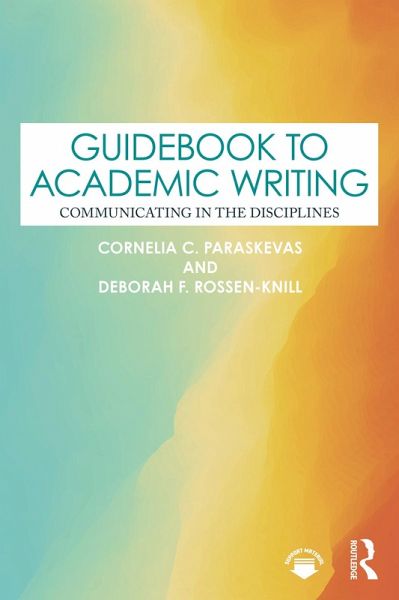
This innovative guidebook is an accessible and concise introduction to discipline-specific academic language. Using authentic texts written by both novice and expert writers and 'translating' current, corpus-based research of academic language into a practical guide, the book gives students the tools to navigate the linguistic features of various disciplines, emphasizing the humanities and sciences, but also discussing example texts from the social sciences.
Organised as 11 self-contained questions that are critical to any discussion of academic language, this guide:
With exercises and additional online resources, this guidebook provides students with a range of tools they can choose from in order to create effective texts that meet discipline and reader expectations. Accessibly written, it is an essential guide for all students in humanities and sciences writing academic texts in English.
Organised as 11 self-contained questions that are critical to any discussion of academic language, this guide:
- provides specific information and detail regarding the language 'demands' of each discipline
- explains the principles underlying punctuation, the range of choices writers have and the effects of these choices on readers
- includes detailed linguistic guidance on how to construct effective paragraphs
- discusses the multiple ways attitude is expressed in academic texts
- includes information on citation practices
With exercises and additional online resources, this guidebook provides students with a range of tools they can choose from in order to create effective texts that meet discipline and reader expectations. Accessibly written, it is an essential guide for all students in humanities and sciences writing academic texts in English.
Dieser Download kann aus rechtlichen Gründen nur mit Rechnungsadresse in A, B, BG, CY, CZ, D, DK, EW, E, FIN, F, GR, HR, H, IRL, I, LT, L, LR, M, NL, PL, P, R, S, SLO, SK ausgeliefert werden.
At last - a book on academic writing which not only shows how to write academically but also explains why these choices are often made. It is a highly-accessible, well-structured book which will support the academic writer in understanding the expectations of this genre, at the same time as retaining agency as an author.
Debra Myhill, University of Exeter, UK
Paraskevas and Rossen-Knill's Guidebook to Academic Writing is like a set of secret language keys: it decodes discipline-specific academic writing. Thanks to their well-chosen, accessible and authentic examples, Guidebook to Academic Writing offers essential reading for instructors and students hoping to make and to support informed choices about writing.
Laura Aull, University of Michigan, USA
Debra Myhill, University of Exeter, UK
Paraskevas and Rossen-Knill's Guidebook to Academic Writing is like a set of secret language keys: it decodes discipline-specific academic writing. Thanks to their well-chosen, accessible and authentic examples, Guidebook to Academic Writing offers essential reading for instructors and students hoping to make and to support informed choices about writing.
Laura Aull, University of Michigan, USA