22,95 €
inkl. MwSt.
Sofort per Download lieferbar
11 °P sammeln

Andere Kunden interessierten sich auch für
") Habermas and Giddens on Praxis and Modernity (eBook, ePUB)22,95 €
Habermas and Giddens on Praxis and Modernity (eBook, ePUB)22,95 €") Extractivism and Universality (eBook, PDF)39,95 €
Extractivism and Universality (eBook, PDF)39,95 €") Reading Adorno (eBook, PDF)64,95 €
Reading Adorno (eBook, PDF)64,95 €") Post-Philosophical Sociology (eBook, PDF)39,95 €
Post-Philosophical Sociology (eBook, PDF)39,95 €") Max Weber and Postmodern Theory (eBook, PDF)72,95 €
Max Weber and Postmodern Theory (eBook, PDF)72,95 €") Rethinking the Normative Content of Critical Theory (eBook, PDF)40,95 €
Rethinking the Normative Content of Critical Theory (eBook, PDF)40,95 €") Macht und Effizienz (eBook, PDF)62,99 €
Macht und Effizienz (eBook, PDF)62,99 €


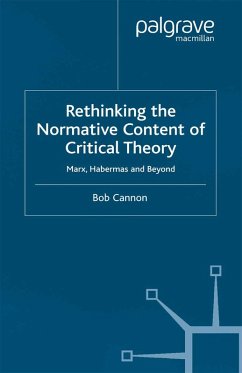

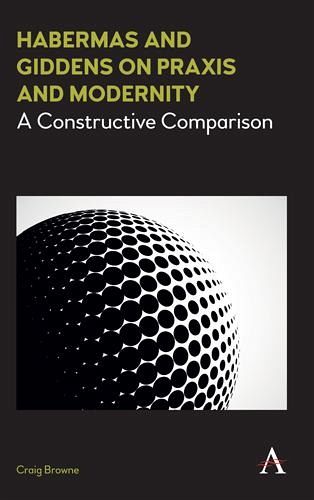
'Habermas and Giddens on Modernity: A Constructive Comparison' investigates how two of the most important and influential contemporary social theorists have sought to develop the modernist visions of the constitution of society through the autonomous actions of subjects. It compares Habermas and Giddens' conceptions of the constitution of society, interpretations of the social-structural impediments to subjects' autonomy, and their attempts to delineate potentials for progressive social change within contemporary society. Habermas and Giddens are shown to have initiated new paradigms and perspectives that seek to address the foundational problems of social theory and consolidate the modernist vision of an autonomous society. The book traces the core intuitions of Habermas and Giddens' theories back to their endeavours to incorporate, satisfy and rework the intentions of the Marxian perspective of the philosophy of praxis. It is argued that the philosophy of praxis conceptualizes the social as the outcome of the intersection of the subject and history. For this perspective, the altering of the relationship of the subject and history is the precondition of an autonomous society. Habermas and Giddens accept the theoretical and practical challenges that are contained in this conception of the social, whilst contending that the basic assumptions of the philosophy of praxis need to be reformulated and that its interpretation of the constraints upon autonomy should be rethought in light of the developments associated with contemporary capitalist modernisation and the dilemmas of the institution of the welfare state.
This book explores how the two theorists argue that the contemporary period represents a new phase of modernity, rather than a transition to a postmodern social order. Habermas depicts the present period as one conditioned by the fracturing of the class compromise of the welfare state and argues that contemporary postmodernism is more a symptom of an exhausting of the utopian energies previously associated with labour. Whereas Giddens considers that the contemporary period is one of late-modernity or reflexive modernization, that is, it represents a fuller realisation of the tendencies of modernity. Yet, it likewise undermines some the emancipatory aspirations of the modernist vision, owing to the predominance of risk and uncertainty. The book then compares the ensuing critical diagnoses that Habermas and Giddens derive from these positions on contemporary society, such as Habermas' conception of the internal colonisation of the lifeworld and Giddens' vision of the runaway world of intensifying globalization. These arguments are located in relation to the long-term historical perspectives that the two theorists developed and the respective methodological approaches to history that underpin them. In particular, a number of key contrasts in Habermas and Giddens' respective accounts of the historical institutionalization of modernity are highlighted. Habermas' attempt to reconstruct historical materialism, the importance he attributes to cultural rationalisation in explaining change, and his assumption of a logic of evolutionary development are contrasted with Giddens' proposed deconstruction of historical materialism, the centrality of domination to his depiction of different historical forms of society, and how his opposition to evolutionary conceptions leads to his contention that modern capitalist societies are radically discontinuous.
Furthermore, the book examines how Habermas and Giddens have sought to relate their theories to political practice and the capacities or competences of subjects. Both have applied their perspectives to the potentials for progressive social change and they have had a major impact on public debates, especially those over the future of the European Union, social democracy, new social movements, human rights, and democracy. Giddens is the most important theorist of the Third Way political program and Habermas is most important Critical Theorist since the Frankfurt School. The significance of these two theorists' practical-political arguments is outlined and the different implications of their respective positions, especially with respect to the future of social democracy, assessed. The constructive approach of the book is continued in its critique of these two theories. The respective strengths of aspects of each theorist's perspective are highlighted in comparison to the other, for instance, Habermas' theories' superior normative grounding is contrasted with Giddens' more developed perspective on power. Similarly, the book overviews those contemporary social theory initiatives that developed from critical dialogues with the work of Habermas' and Giddens' approaches to modernity, such as some of the theories associated with the perspectives of global modernity and multiple modernities. Finally, the book draws on the author's own work, which has extended aspects of Habermas' and Giddens' approach to modernity. Despite the criticisms that are developed over the course of the book, Habermas and Giddens are found to be two of the most important theorists of democratization and social democracy, the dynamics of capitalist modernity and their paradoxes, social practices and reflexivity, and the foundations of social theory in the problem of the relationship of social action and social structure.
This book explores how the two theorists argue that the contemporary period represents a new phase of modernity, rather than a transition to a postmodern social order. Habermas depicts the present period as one conditioned by the fracturing of the class compromise of the welfare state and argues that contemporary postmodernism is more a symptom of an exhausting of the utopian energies previously associated with labour. Whereas Giddens considers that the contemporary period is one of late-modernity or reflexive modernization, that is, it represents a fuller realisation of the tendencies of modernity. Yet, it likewise undermines some the emancipatory aspirations of the modernist vision, owing to the predominance of risk and uncertainty. The book then compares the ensuing critical diagnoses that Habermas and Giddens derive from these positions on contemporary society, such as Habermas' conception of the internal colonisation of the lifeworld and Giddens' vision of the runaway world of intensifying globalization. These arguments are located in relation to the long-term historical perspectives that the two theorists developed and the respective methodological approaches to history that underpin them. In particular, a number of key contrasts in Habermas and Giddens' respective accounts of the historical institutionalization of modernity are highlighted. Habermas' attempt to reconstruct historical materialism, the importance he attributes to cultural rationalisation in explaining change, and his assumption of a logic of evolutionary development are contrasted with Giddens' proposed deconstruction of historical materialism, the centrality of domination to his depiction of different historical forms of society, and how his opposition to evolutionary conceptions leads to his contention that modern capitalist societies are radically discontinuous.
Furthermore, the book examines how Habermas and Giddens have sought to relate their theories to political practice and the capacities or competences of subjects. Both have applied their perspectives to the potentials for progressive social change and they have had a major impact on public debates, especially those over the future of the European Union, social democracy, new social movements, human rights, and democracy. Giddens is the most important theorist of the Third Way political program and Habermas is most important Critical Theorist since the Frankfurt School. The significance of these two theorists' practical-political arguments is outlined and the different implications of their respective positions, especially with respect to the future of social democracy, assessed. The constructive approach of the book is continued in its critique of these two theories. The respective strengths of aspects of each theorist's perspective are highlighted in comparison to the other, for instance, Habermas' theories' superior normative grounding is contrasted with Giddens' more developed perspective on power. Similarly, the book overviews those contemporary social theory initiatives that developed from critical dialogues with the work of Habermas' and Giddens' approaches to modernity, such as some of the theories associated with the perspectives of global modernity and multiple modernities. Finally, the book draws on the author's own work, which has extended aspects of Habermas' and Giddens' approach to modernity. Despite the criticisms that are developed over the course of the book, Habermas and Giddens are found to be two of the most important theorists of democratization and social democracy, the dynamics of capitalist modernity and their paradoxes, social practices and reflexivity, and the foundations of social theory in the problem of the relationship of social action and social structure.
Dieser Download kann aus rechtlichen Gründen nur mit Rechnungsadresse in A, D ausgeliefert werden.