Sie sind bereits eingeloggt. Klicken Sie auf 2. tolino select Abo, um fortzufahren.
Bitte loggen Sie sich zunächst in Ihr Kundenkonto ein oder registrieren Sie sich bei bücher.de, um das eBook-Abo tolino select nutzen zu können.
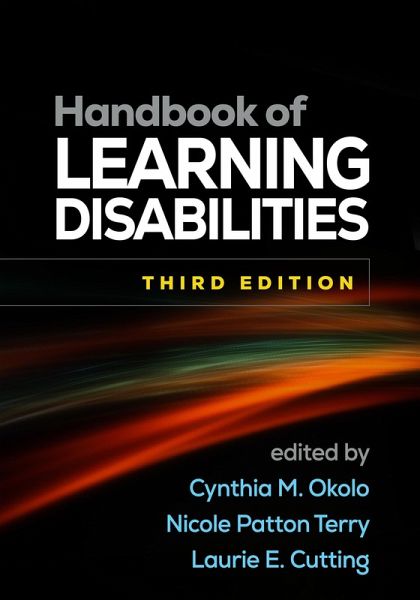
This definitive handbook is now in an extensively revised third edition, including many all-new chapters and new topics. Foremost experts review the breadth of current knowledge about learning disabilities (LD), from core psychological and neurobiological processes to evidence-based instruction. Chapters describe best practices in identifying and supporting students with difficulties in reading, writing, math, and other content areas. Service delivery models that support differentiated instruction and data-based decision making are examined, and ways to meet the needs of specific populations,…mehr
This definitive handbook is now in an extensively revised third edition, including many all-new chapters and new topics. Foremost experts review the breadth of current knowledge about learning disabilities (LD), from core psychological and neurobiological processes to evidence-based instruction. Chapters describe best practices in identifying and supporting students with difficulties in reading, writing, math, and other content areas. Service delivery models that support differentiated instruction and data-based decision making are examined, and ways to meet the needs of specific populations, including English learners with LD, are explored. Prior edition editors: H. Lee Swanson, Karen R. Harris, and Steve Graham. New to This Edition
Reflects a decade of advances in research, policy, and educational practice.
Most chapters are new or extensively updated.
Chapters on language development and reading disabilities, LD in English learners, social-emotional learning, comorbidity with LD, dyslexia legislation, cultural and equity issues, the use of technology to support differentiated instruction, state-of-the-art research methods, teacher preparation, integrated multi-tiered systems of support, and other timely topics.
Dieser Download kann aus rechtlichen Gründen nur mit Rechnungsadresse in A, D ausgeliefert werden.
Die Herstellerinformationen sind derzeit nicht verfügbar.
Autorenporträt
Cynthia M. Okolo, PhD, is Professor Emeritus of Counseling, Educational Psychology, and Special Education at Michigan State University. Her research focuses on technology and literacy for students with mild disabilities, universal design for learning, and history instruction for students with learning challenges. Dr. Okolo is a former special education teacher, and her scholarship is rooted in applied issues related to instruction in inclusive classrooms. She has played a leadership role in numerous state, regional, and national boards and organizations, has directed undergraduate, master's, and doctoral programs, and has been a frequent contributor to the scholarly literature as an author and editor. Dr. Okolo is a recipient of the Lifetime Achievement Award from the Council for Exceptional Children. Laurie E. Cutting, PhD, is the Patricia and Rodes Hart Professor of Neuroscience in the Departments of Special Education, Psychology and Human Development, Radiology, Pediatrics, and Electrical and Computer Engineering at Vanderbilt University. She is also Associate Director of the Vanderbilt Kennedy Center, a member of the Vanderbilt Brain Institute, and training faculty for Vanderbilt's Neuroscience PhD program, and was the recipient of the 2017-2018 Joe B. Wyatt Distinguished University Professorship. Dr. Cutting is currently serving a two-year term as Associate Provost in the Office of the Vice Provost for Research and Innovation. Her work focuses on brain-behavior relations in children and adolescents, with a particular emphasis on academic and cognitive development. Nicole Patton Terry, PhD, is the Olive and Manuel Bordas Professor of Education in the School of Teacher Education and Director of the Florida Center for Reading Research (FCRR) at Florida State University. She is the founding director of The Urban Child Study Center at Georgia State University and The Village at FCRR, two research entities where researchers collaborate with school and community partners to promote student success. Dr. Patton Terry's work focuses on young learners who are vulnerable to experiencing difficulty with language and literacy achievement in school, in particular, African American children, children growing up in poverty, and children with disabilities. A former special education teacher, she currently serves as president of the Society for the Scientific Study of Reading and is a Fellow of the American Speech-Language-Hearing Association and the American Educational Research Association.
Inhaltsangabe
I. Causes Correlates and Manifestations of Learning Disabilities 1. Classification and Definition of Learning Disabilities: A Hybrid Approach to Identification Jeremy Miciak & Jack M. Fletcher 2. Representational Quality in Children with Dyslexia: Issues of Precision and Redundancy That Affect Long-Term Word Reading and Decoding Development Donald L. Compton Laura M. Steacy Valeria M. Rigobon Ashley A. Edwards Nuria Gutiérrez Nancy C. Marencin & Rebecca M. Vasile 3. Mathematics Learning Difficulties Nancy C. Jordan Dana Miller-Cotto & Kelly-Ann Gesuelli 4. Social and Emotional Learning and Learning Disabilities Laura Larissa Feuerborn Barbara A. Gueldner & Ashli D. Tyre 5. Cognitive Processes Neuroscience and Learning Disabilities Emily M. Harriott & Laurie E. Cutting 6. Genetics Learning Abilities and Disabilities Stephen A. Petrill & Alexa Levison 7. Executive Functions and Learning Disabilities Marcia A. Barnes & Peng Peng 8. Memory Difficulties in Children with Specific Learning Disabilities (An Update) H. Lee Swanson & Jennifer E. Kong 9. Language Development Developmental Language Disorder and Reading Disabilities Suzanne M. Adlof & Lesly Wade-Woolley 10. Learning Disabilities and Comorbidity: Prevalence Etiology and Implications Erik G. Willcutt II. Instructional Interventions 11. Effective Instruction and Intervention for Word-Level Reading for Students with and At Risk for Learning Disabilities Stephanie Al Otaiba Dayna Russell-Freudenthal & Mai W. Zaru 12. Reading Comprehension Instruction and Students with Learning Disabilities in the Twenty-First Century Jeanne Wanzek Katherine Sargent & Sally K. Fluhler 13. Direct and Extended Vocabulary Instruction and Intervention for Students with Learning Disabilities Michael D. Coyne & Susan M. Loftus-Rattan 14. Intervention to Address the Needs of Students with Mathematics Learning Disabilities Lynn S. Fuchs Pamela M. Seethaler Douglas Fuchs & Daniel Espinas 15. Writing and Students with Learning Disabilities Steve Graham & Karen R. Harris 16. Social Studies and History Instruction for Students with Learning Disabilities Susan De La Paz Daniel R. Wissinger & Josue Otarola 17. Science Education for Students with Learning Disabilities Delinda van Garderen William Romine Heba Abdelnaby Cassandra Smith & Rachel Juergensen 18. Key Practices for Preventing and Ameliorating Reading Disabilities among English Learners Philip Capin Tim T. Andress & Sharon Vaughn III. Future Directions in Learning Disabilities 19. Recent Trends in Dyslexia Legislation Timothy N. Odegard Emily A. Farris Anna E. Middleton Sheryl Rimrodt-Frierson & Julie A. Washington 20. Advances in Assessment to Monitor Progress and Performance Matthew K. Burns Monica E. Romero McKinzie D. Duesenberg-Marshall Hoi Ting Wan & Heba Abdelnaby 21. Child X Instruction Interactions: Using Technology to Support Differentiated Instruction Ashley Adams Sanabria & Sarah Siegal 22. Trends in Research Methods in the Learning Disabilities Field Bryan G. Cook Jesse I. Fleming William J. Therrien & Vivian C. Wong 23. Beyond Demography: Integrating Mind Culture and Equity in LD Research Amy L. Ferrell & Alfredo J. Artiles 24. Integrated Multi-Tiered Systems of Support (I-MTSS): New Directions for Supporting Students with or At Risk for Learning Disabilities Allison Gruner Gandhi Nathan Clemens Michael Coyne Steve Goodman Kathleen Lynne Lane Erica Lembke & Brandi Simonsen 25. Understanding and Developing Expert Teachers for Students with Learning Disabilities Mary T. Brownell Melinda M. Leko & Amber E. Benedict
I. Causes Correlates and Manifestations of Learning Disabilities 1. Classification and Definition of Learning Disabilities: A Hybrid Approach to Identification Jeremy Miciak & Jack M. Fletcher 2. Representational Quality in Children with Dyslexia: Issues of Precision and Redundancy That Affect Long-Term Word Reading and Decoding Development Donald L. Compton Laura M. Steacy Valeria M. Rigobon Ashley A. Edwards Nuria Gutiérrez Nancy C. Marencin & Rebecca M. Vasile 3. Mathematics Learning Difficulties Nancy C. Jordan Dana Miller-Cotto & Kelly-Ann Gesuelli 4. Social and Emotional Learning and Learning Disabilities Laura Larissa Feuerborn Barbara A. Gueldner & Ashli D. Tyre 5. Cognitive Processes Neuroscience and Learning Disabilities Emily M. Harriott & Laurie E. Cutting 6. Genetics Learning Abilities and Disabilities Stephen A. Petrill & Alexa Levison 7. Executive Functions and Learning Disabilities Marcia A. Barnes & Peng Peng 8. Memory Difficulties in Children with Specific Learning Disabilities (An Update) H. Lee Swanson & Jennifer E. Kong 9. Language Development Developmental Language Disorder and Reading Disabilities Suzanne M. Adlof & Lesly Wade-Woolley 10. Learning Disabilities and Comorbidity: Prevalence Etiology and Implications Erik G. Willcutt II. Instructional Interventions 11. Effective Instruction and Intervention for Word-Level Reading for Students with and At Risk for Learning Disabilities Stephanie Al Otaiba Dayna Russell-Freudenthal & Mai W. Zaru 12. Reading Comprehension Instruction and Students with Learning Disabilities in the Twenty-First Century Jeanne Wanzek Katherine Sargent & Sally K. Fluhler 13. Direct and Extended Vocabulary Instruction and Intervention for Students with Learning Disabilities Michael D. Coyne & Susan M. Loftus-Rattan 14. Intervention to Address the Needs of Students with Mathematics Learning Disabilities Lynn S. Fuchs Pamela M. Seethaler Douglas Fuchs & Daniel Espinas 15. Writing and Students with Learning Disabilities Steve Graham & Karen R. Harris 16. Social Studies and History Instruction for Students with Learning Disabilities Susan De La Paz Daniel R. Wissinger & Josue Otarola 17. Science Education for Students with Learning Disabilities Delinda van Garderen William Romine Heba Abdelnaby Cassandra Smith & Rachel Juergensen 18. Key Practices for Preventing and Ameliorating Reading Disabilities among English Learners Philip Capin Tim T. Andress & Sharon Vaughn III. Future Directions in Learning Disabilities 19. Recent Trends in Dyslexia Legislation Timothy N. Odegard Emily A. Farris Anna E. Middleton Sheryl Rimrodt-Frierson & Julie A. Washington 20. Advances in Assessment to Monitor Progress and Performance Matthew K. Burns Monica E. Romero McKinzie D. Duesenberg-Marshall Hoi Ting Wan & Heba Abdelnaby 21. Child X Instruction Interactions: Using Technology to Support Differentiated Instruction Ashley Adams Sanabria & Sarah Siegal 22. Trends in Research Methods in the Learning Disabilities Field Bryan G. Cook Jesse I. Fleming William J. Therrien & Vivian C. Wong 23. Beyond Demography: Integrating Mind Culture and Equity in LD Research Amy L. Ferrell & Alfredo J. Artiles 24. Integrated Multi-Tiered Systems of Support (I-MTSS): New Directions for Supporting Students with or At Risk for Learning Disabilities Allison Gruner Gandhi Nathan Clemens Michael Coyne Steve Goodman Kathleen Lynne Lane Erica Lembke & Brandi Simonsen 25. Understanding and Developing Expert Teachers for Students with Learning Disabilities Mary T. Brownell Melinda M. Leko & Amber E. Benedict
Es gelten unsere Allgemeinen Geschäftsbedingungen: www.buecher.de/agb
Impressum
www.buecher.de ist ein Internetauftritt der buecher.de internetstores GmbH
Geschäftsführung: Monica Sawhney | Roland Kölbl | Günter Hilger
Sitz der Gesellschaft: Batheyer Straße 115 - 117, 58099 Hagen
Postanschrift: Bürgermeister-Wegele-Str. 12, 86167 Augsburg
Amtsgericht Hagen HRB 13257
Steuernummer: 321/5800/1497
USt-IdNr: DE450055826