127,95 €
inkl. MwSt.
Sofort per Download lieferbar
64 °P sammeln

Andere Kunden interessierten sich auch für
") Gold Nanoparticles in Analytical Chemistry (eBook, ePUB)142,95 €
Gold Nanoparticles in Analytical Chemistry (eBook, ePUB)142,95 €") Solid-Phase Extraction (eBook, ePUB)124,95 €
Solid-Phase Extraction (eBook, ePUB)124,95 €") Analytical Sample Preparation With Nano- and Other High-Performance Materials (eBook, ePUB)146,95 €
Analytical Sample Preparation With Nano- and Other High-Performance Materials (eBook, ePUB)146,95 €") Paper-Based Analytical Devices for Chemical Analysis and Diagnostics (eBook, ePUB)138,95 €
Paper-Based Analytical Devices for Chemical Analysis and Diagnostics (eBook, ePUB)138,95 €") The Handbook of Metabolic Phenotyping (eBook, ePUB)160,95 €
The Handbook of Metabolic Phenotyping (eBook, ePUB)160,95 €") Green Extraction Techniques: Principles, Advances and Applications (eBook, ePUB)201,95 €
Green Extraction Techniques: Principles, Advances and Applications (eBook, ePUB)201,95 €") Analytical Methods for Biomass Characterization and Conversion (eBook, ePUB)79,95 €
Analytical Methods for Biomass Characterization and Conversion (eBook, ePUB)79,95 €

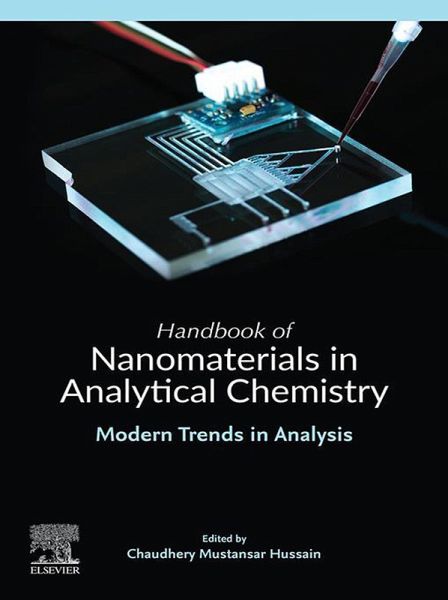
Handbook of Nanomaterials in Analytical Chemistry: Modern Trends in Analysis explores the recent advancements in a variety of analytical chemistry techniques due to nanotechnology. It also devotes several chapters to the analytical techniques that have proven useful for the analysis of nanomaterials. As conventional analytical chemistry methods become insufficient in terms of accuracy, selectivity, sensitivity, reproducibility, and speed, recent advances have opened up new horizons for chemical analysis and detection methods. Chapters are authored by experts in their respective fields and include up-to-date reference materials, such as websites of interest and suggested reading lists on the latest research. - Summarizes recent progress in micro-fabrication using nanomaterials for analytical chemistry techniques-among the most modernized and fast ways of performing these tasks - Pays special attention to greener approaches that reduce the environmental impact and cost of the analysis process, both in terms of chemicals used and time and resource consumption - Discusses many types of nanomaterials for analytical chemistry techniques, including those that are well established, such as carbon nanomaterials, as well as those that are newly trending, such as functionalized nanomaterials
Dieser Download kann aus rechtlichen Gründen nur mit Rechnungsadresse in A, B, BG, CY, CZ, D, DK, EW, E, FIN, F, GR, HR, H, IRL, I, LT, L, LR, M, NL, PL, P, R, S, SLO, SK ausgeliefert werden.