17,49 €
17,49 €
inkl. MwSt.
Sofort per Download lieferbar

0 °P sammeln
17,49 €
Als Download kaufen
17,49 €
inkl. MwSt.
Sofort per Download lieferbar
0 °P sammeln
Jetzt verschenken
Alle Infos zum eBook verschenken
17,49 €
inkl. MwSt.
Sofort per Download lieferbar
Alle Infos zum eBook verschenken
0 °P sammeln

Andere Kunden interessierten sich auch für
") The February 2015 Assassination of Boris Nemtsov and the Flawed Trial of his Alleged Killers (eBook, ePUB)22,99 €
The February 2015 Assassination of Boris Nemtsov and the Flawed Trial of his Alleged Killers (eBook, ePUB)22,99 €") Dead on Arrival: President John F. Kennedy's Assassination in Dallas, Texas (eBook, ePUB)0,00 €
Dead on Arrival: President John F. Kennedy's Assassination in Dallas, Texas (eBook, ePUB)0,00 €") Ungoverning (eBook, ePUB)14,95 €
Ungoverning (eBook, ePUB)14,95 €") The Worldview and Philosophical Methodology of Marxism-Leninism (eBook, ePUB)7,99 €
The Worldview and Philosophical Methodology of Marxism-Leninism (eBook, ePUB)7,99 €") Command and Persuade (eBook, ePUB)15,95 €
Command and Persuade (eBook, ePUB)15,95 €") Machiavelli's Legacy (eBook, ePUB)40,95 €
Machiavelli's Legacy (eBook, ePUB)40,95 €") Ungoverning (eBook, ePUB)19,95 €
Ungoverning (eBook, ePUB)19,95 €


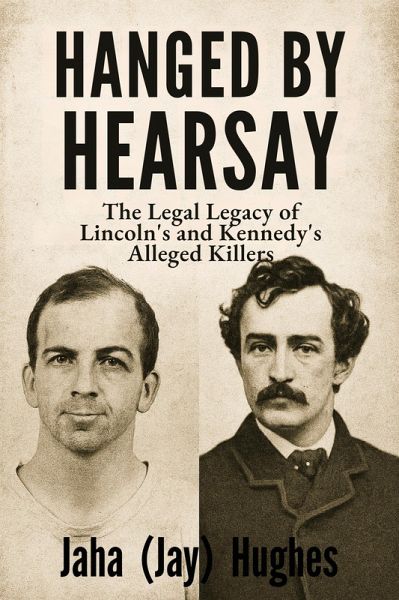
Two presidents were slain. Two assassins were killed before they could face justice. But what if the history books convicted men that the law never did?
John Wilkes Booth and Lee Harvey Oswald exist in the American consciousness as the ultimate villains, their guilt accepted as historical fact. Yet, the foundational principle of the U.S. legal systemthe presumption of innocencedied with both men. Neither was convicted by a jury of peers; neither received the due process guaranteed by the Constitution. Legally, they were unconvicted men.
In Unproven, this fundamental legal void is transformed into a powerful constitutional challenge. The book dissects the chaos of two eras, arguing that the failure to secure a lawful trial compromised both the integrity of the state and the legitimacy of history's verdict.
You will explore:
This is not a conspiracy theory; it is a direct confrontation with the law. By holding America's most pivotal assassinations to the standard of due process, Unproven forces us to consider a devastating question: If the state fails to meet its burden of proof, can societyor historycondemn anyone?
A trial was the one thing both Booth and Oswald were owed, and the one thing they were both denied.
John Wilkes Booth and Lee Harvey Oswald exist in the American consciousness as the ultimate villains, their guilt accepted as historical fact. Yet, the foundational principle of the U.S. legal systemthe presumption of innocencedied with both men. Neither was convicted by a jury of peers; neither received the due process guaranteed by the Constitution. Legally, they were unconvicted men.
In Unproven, this fundamental legal void is transformed into a powerful constitutional challenge. The book dissects the chaos of two eras, arguing that the failure to secure a lawful trial compromised both the integrity of the state and the legitimacy of history's verdict.
You will explore:
- The volatile legal landscape of Reconstruction, where a military tribunalnot a civil courtwas used to swiftly execute Booth's alleged co-conspirators, setting a dangerous precedent for bypassing justice.
- The rush to judgment in 1963 Dallas, where Oswald's brief arraignment was cut short by Jack Ruby's bullet, preventing any public defense, cross-examination, or transparent presentation of evidence.
- How the decades of newly declassified JFK filesrevealing obscured intelligence operations and investigative flawsonly deepen the legal doubt surrounding the official conclusion.
This is not a conspiracy theory; it is a direct confrontation with the law. By holding America's most pivotal assassinations to the standard of due process, Unproven forces us to consider a devastating question: If the state fails to meet its burden of proof, can societyor historycondemn anyone?
A trial was the one thing both Booth and Oswald were owed, and the one thing they were both denied.
Dieser Download kann aus rechtlichen Gründen nur mit Rechnungsadresse in A, B, CY, CZ, D, DK, EW, E, FIN, F, GR, H, IRL, I, LT, L, LR, M, NL, PL, P, R, S, SLO, SK ausgeliefert werden.