
44,95 €
inkl. MwSt.
Sofort per Download lieferbar
22 °P sammeln

Andere Kunden interessierten sich auch für
") Artistic Migration (eBook, PDF)42,95 €
Artistic Migration (eBook, PDF)42,95 €") The Production Sites of Architecture (eBook, PDF)39,95 €
The Production Sites of Architecture (eBook, PDF)39,95 €") Hans Hollein and Postmodernism (eBook, ePUB)44,95 €
Hans Hollein and Postmodernism (eBook, ePUB)44,95 €") New Narratives of Russian and East European Art (eBook, PDF)32,95 €
New Narratives of Russian and East European Art (eBook, PDF)32,95 €") The Ideal of Total Environmental Control (eBook, PDF)43,95 €
The Ideal of Total Environmental Control (eBook, PDF)43,95 €") Architecture as Civil Commitment: Lucio Costa's Modernist Project for Brazil (eBook, PDF)44,95 €
Architecture as Civil Commitment: Lucio Costa's Modernist Project for Brazil (eBook, PDF)44,95 €") The Meaning of Modern Architecture (eBook, PDF)49,95 €
The Meaning of Modern Architecture (eBook, PDF)49,95 €
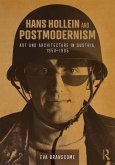
Set within the broader context of post-war Austria and the re-education initiatives set up by the Allied forces, particularly the US, this book investigates the art and architecture scene in Vienna to ask how this can inform our broader understanding of architectural Postmodernism.
The book focuses on the outputs of the Austrian artist and architect, Hans Hollein, and on his appropriation as a Postmodernist figure. In Vienna, the circles of radical art and architecture were not distinct, and Hollein's claim that 'Everything is Architecture' was symptomatic of this intermixing of creative practices. Austria's proximity to the so-called 'Iron Curtain' and its post-war history of four-power occupation gave a heightened sense of menace that emerged strongly in Viennese art in the Cold War era. Seen as a collective entity, Hans Hollein's works across architecture, art, writing, exhibition design and publishing clearly require a more diverse, complex and culturally nuanced account of architectural Postmodernism than that offered by critics at the time.
Across the five chapters, Hollein's outputs are viewed not as individual projects, but as symptomatic of Austria's attempts to come to terms with its Nazi past and to establish a post-war identity.
The book focuses on the outputs of the Austrian artist and architect, Hans Hollein, and on his appropriation as a Postmodernist figure. In Vienna, the circles of radical art and architecture were not distinct, and Hollein's claim that 'Everything is Architecture' was symptomatic of this intermixing of creative practices. Austria's proximity to the so-called 'Iron Curtain' and its post-war history of four-power occupation gave a heightened sense of menace that emerged strongly in Viennese art in the Cold War era. Seen as a collective entity, Hans Hollein's works across architecture, art, writing, exhibition design and publishing clearly require a more diverse, complex and culturally nuanced account of architectural Postmodernism than that offered by critics at the time.
Across the five chapters, Hollein's outputs are viewed not as individual projects, but as symptomatic of Austria's attempts to come to terms with its Nazi past and to establish a post-war identity.
Dieser Download kann aus rechtlichen Gründen nur mit Rechnungsadresse in A, B, BG, CY, CZ, D, DK, EW, E, FIN, F, GR, HR, H, IRL, I, LT, L, LR, M, NL, PL, P, R, S, SLO, SK ausgeliefert werden.