Sie sind bereits eingeloggt. Klicken Sie auf 2. tolino select Abo, um fortzufahren.
Bitte loggen Sie sich zunächst in Ihr Kundenkonto ein oder registrieren Sie sich bei bücher.de, um das eBook-Abo tolino select nutzen zu können.
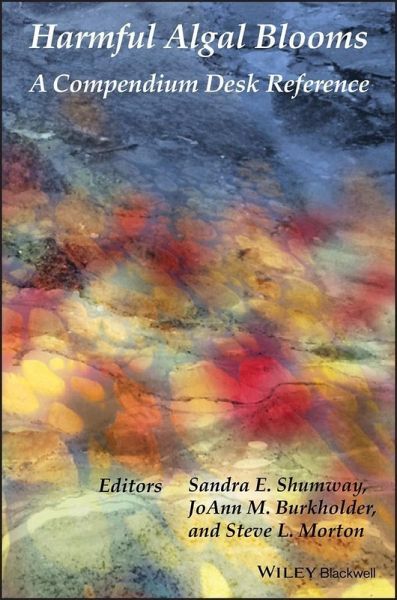
Harmful Algal Blooms: A Compendium Desk Reference provides basic information on harmful algal blooms (HAB) and references for individuals in need of technical information when faced with unexpected or unknown harmful algal events. Chapters in this volume will provide readers with information on causes of HAB, successful management and monitoring programs, control, prevention, and mitigation strategies, economic consequences of HAB, associated risks to human health, impacts of HAB on food webs and ecosystems, and detailed information on the most common HAB species. Harmful Algal Blooms: A…mehr
Harmful Algal Blooms: A Compendium Desk Reference provides basic information on harmful algal blooms (HAB) and references for individuals in need of technical information when faced with unexpected or unknown harmful algal events. Chapters in this volume will provide readers with information on causes of HAB, successful management and monitoring programs, control, prevention, and mitigation strategies, economic consequences of HAB, associated risks to human health, impacts of HAB on food webs and ecosystems, and detailed information on the most common HAB species.
Harmful Algal Blooms: A Compendium Desk Reference will be an invaluable resource to managers, newcomers to the field, those who do not have easy or affordable access to scientific literature, and individuals who simply do not know where to begin searching for the information needed, especially when faced with novel and unexpected HAB events.
Edited by three of the world's leading harmful algal bloom researchers and with contributions from leading experts, Harmful Algal Blooms: A Compendium Desk Reference will be a key source of information for this increasingly important topic.
Dieser Download kann aus rechtlichen Gründen nur mit Rechnungsadresse in D ausgeliefert werden.
Die Herstellerinformationen sind derzeit nicht verfügbar.
Autorenporträt
Sandra E. Shumway, University of Connecticut, Groton, CT, USA. JoAnn M. Burkholder, North Carolina State University, Raleigh, NC, USA. Steven L. Morton, NOAA National Ocean Service, Charleston, SC, USA.
Inhaltsangabe
List of Contributors xvii
Acknowledgments xxi
Introduction xxiii
1 Causes of Harmful Algal Blooms 1 Patricia M. Glibert and JoAnn M. Burkholder
1.1 Introduction 1
1.2 "Getting There": The Classic Perspective on Introduced Species and Links to Cultural Eutrophication 2
1.2.1 Introduced Species 2
1.2.2 Anthropogenically Introduced Nutrients 3
1.3 "Being There": Blooms and Why They Succeed 5
1.3.1 Nutrient-Related HAB 5
1.3.2 Resource Ratios, Nutrient Stoichiometry, and Optimal Nutrient Ratios 6
1.3.3 Diversity in Use of Forms of Nitrogen 9
1.3.4 Toxicity 10
1.3.5 Mixotrophy: Use of "Packaged" and Dissolved Particulate Nutrients 12
1.3.6 Other Adaptations 13
1.4 "Staying There": Links to Physical Structure and Climate 14
1.4.1 Physical Structure: Large-Scale and Small-Scale Natural Hydrological Features 14