Sie sind bereits eingeloggt. Klicken Sie auf 2. tolino select Abo, um fortzufahren.
Bitte loggen Sie sich zunächst in Ihr Kundenkonto ein oder registrieren Sie sich bei bücher.de, um das eBook-Abo tolino select nutzen zu können.
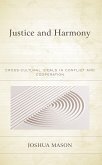
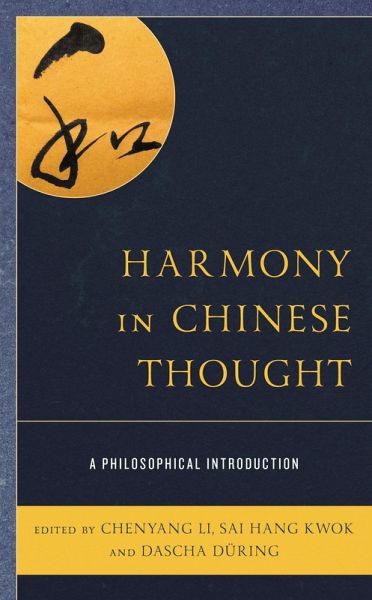
He (?), or harmony, has traditionally been a central concept in Chinese thought, and to this day continues to shape the way in which people in China and East Asia think about ethics and politics. Yet, there is no systematic and comprehensive introduction of harmony as has been variously articulated in different Chinese schools. This edited volume aims to fill this gap. The individual contributions elaborate the conceptions of harmony as these were exemplified in central Chinese schools of thought, including Daoism, Confucianism, Legalism, Mohism, Buddhism, and trace their impact on…mehr
He (?), or harmony, has traditionally been a central concept in Chinese thought, and to this day continues to shape the way in which people in China and East Asia think about ethics and politics. Yet, there is no systematic and comprehensive introduction of harmony as has been variously articulated in different Chinese schools. This edited volume aims to fill this gap. The individual contributions elaborate the conceptions of harmony as these were exemplified in central Chinese schools of thought, including Daoism, Confucianism, Legalism, Mohism, Buddhism, and trace their impact on contemporary Chinese philosophy. The volume explores the various meanings and implications of harmony so as to consider its relevance as a value and virtue in the modern world. It provides an accessible but substantial introductory work for readers interested in learning about pertinent core concepts and theories in Chinese thought, as well as engages specialists in Chinese philosophy by explicating its implications for ethical, political, epistemological, and metaphysical reflection as the basic point of reference.
Die Herstellerinformationen sind derzeit nicht verfügbar.
Autorenporträt
Chenyang Li is professor of philosophy at Nanyang Technological University, Singapore. Sai Hang Kwok is a postdoctoral fellow at the University of Macau. Dascha Düring is a postdoctoral fellow of the School of Humanities, Nanyang Technological University, Singapore.
Inhaltsangabe
Acknowledgments Introduction: In Search of Harmony Section I: Historical and Conceptual Frameworks Chapter 1: "He (?)", Concept Cluster of Harmony in Early China Chapter 2: Music and the Concept of Harmony as Seen in Unearthed Manuscripts Chapter 3: Active Harmony, Passive Harmony, Freedom, and Domination Section II: Daoism 4. Divergent Models of Harmony From the Zhuangzi Chapter 5: "Being Cool with Something (he zhi??):" Conflict Resolution in the Zhuangzi Chapter 6: Emptying the Body: The Space of Harmonization in Han Daoism Section III: Confucianism Chapter 7: Confucian Harmony as Ritual Synchronicity Chapter 8: Harmony as Hermeneutic Openness: Aesthetic Perspectives on Confucian Harmony Section IV: Contending Voices of Mohism, Legalism, and Buddhism Chapter 9: Tong: A Mohist Response to the Confucian Harmony Chapter 10: The Divergence between the Confucian and Legalist Quest for Harmony Chapter 11: Harmony and Nature: Thoughts from Laozi and Shen Dao Chapter 12. Harmony and Paradox: The Tiantai Buddhist View of the "Round/Perfect" (yuan?) Section V: Contemporary Discussions Chapter 13: Reflections on Three Challenges to a Discussion of Harmony Chapter 14: Meritocracy, Democracy, and Deep Harmony: Toward Democratic Relationality List of Contributors
Es gelten unsere Allgemeinen Geschäftsbedingungen: www.buecher.de/agb
Impressum
www.buecher.de ist ein Internetauftritt der buecher.de internetstores GmbH
Geschäftsführung: Monica Sawhney | Roland Kölbl | Günter Hilger
Sitz der Gesellschaft: Batheyer Straße 115 - 117, 58099 Hagen
Postanschrift: Bürgermeister-Wegele-Str. 12, 86167 Augsburg
Amtsgericht Hagen HRB 13257
Steuernummer: 321/5800/1497
USt-IdNr: DE450055826