42,95 €
42,95 €
inkl. MwSt.
Sofort per Download lieferbar

21 °P sammeln
42,95 €
Als Download kaufen
42,95 €
inkl. MwSt.
Sofort per Download lieferbar
21 °P sammeln
Jetzt verschenken
Alle Infos zum eBook verschenken
42,95 €
inkl. MwSt.
Sofort per Download lieferbar
Alle Infos zum eBook verschenken
21 °P sammeln

Andere Kunden interessierten sich auch für
") Hate Speech and the European Court of Human Rights (eBook, PDF)42,95 €
Hate Speech and the European Court of Human Rights (eBook, PDF)42,95 €") The European Convention on Human Rights and the COVID-19 Pandemic (eBook, ePUB)21,95 €
The European Convention on Human Rights and the COVID-19 Pandemic (eBook, ePUB)21,95 €") Hate Speech and Human Rights in Eastern Europe (eBook, ePUB)41,95 €
Hate Speech and Human Rights in Eastern Europe (eBook, ePUB)41,95 €") Personal Identity and the European Court of Human Rights (eBook, ePUB)41,95 €
Personal Identity and the European Court of Human Rights (eBook, ePUB)41,95 €") Freedom of Speech and Employment Law (eBook, ePUB)21,95 €
Freedom of Speech and Employment Law (eBook, ePUB)21,95 €") Defamation and the Right to Freedom of Speech (eBook, ePUB)42,95 €
Defamation and the Right to Freedom of Speech (eBook, ePUB)42,95 €") Disability, Sexuality, and Gender in Asia (eBook, ePUB)0,00 €
Disability, Sexuality, and Gender in Asia (eBook, ePUB)0,00 €

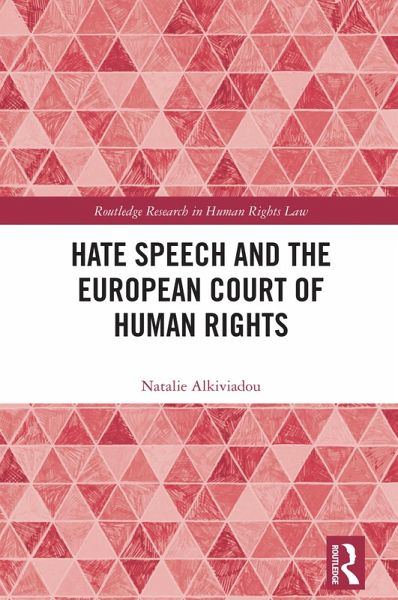
This book argues that the European Court of Human Rights (ECtHR) should reconsider its approach to hate speech cases and develop a robust protection of freedom of expression as set out in the benchmark case of Handyside v the United Kingdom. In that case, the ECtHR determined that Article 10 of the European Convention on Human Rights (ECHR), safeguarding the right to freedom of expression, extends protection not only to opinions which are well received but also to those deemed offensive, shocking, or disturbing. However, subsequent rulings by the Court have generated a significant amount of contradictory case law. Against this backdrop, this book provides an analysis of hate speech case law before the ECtHR and the now-obsolete European Commission on Human Rights. Through a jurisprudential analysis, it is argued that these institutions have adopted an overly restrictive approach to hate speech, which fails to provide adequate protection of the right to freedom of expression. It also demonstrates that there are stark inconsistencies when it comes to the treatment of some forms of 'hate speech' versus others. The study further contends that, in reaching its decisions on hate speech cases, the Court disregards empirical evidence on matters related to free speech restrictions. Viewing the ECHR as a 'living instrument,' the book places this analysis within the current state of affairs vis-à-vis the handling of hate speech, particularly online, by European countries, the European Union itself and social media platforms, actions which the author argues are contributing to a free speech demise. The book will be a valuable resource for academics, researchers and policymakers working in the area of law, political science, European studies and sociology.
Dieser Download kann aus rechtlichen Gründen nur mit Rechnungsadresse in A, B, BG, CY, CZ, D, DK, EW, E, FIN, F, GR, HR, H, IRL, I, LT, L, LR, M, NL, PL, P, R, S, SLO, SK ausgeliefert werden.
"In the coming years, important regulations for major online platforms will likely arise from Council of Europe member states. European Court of Human Rights rulings will shape a complex global jurisprudence on online speech. Natalie Alkiviadou deserves praise for pioneering scholarship in this challenging and evolving field."
- Eric Heinze, Professor of Law and Humanities, Queen Mary University of London, UK.
"This important book presents an incisive analysis of the decisions concerning hate speech under the European Convention on Human Rights, offering a constructive critique of the case law's historic trajectory. In our interconnected world, the book's insightful analysis should inform debates far beyond Europe."
- Nadine Strossen, John Marshall Harlan II Professor of Law Emerita, New York Law School, USA
- Eric Heinze, Professor of Law and Humanities, Queen Mary University of London, UK.
"This important book presents an incisive analysis of the decisions concerning hate speech under the European Convention on Human Rights, offering a constructive critique of the case law's historic trajectory. In our interconnected world, the book's insightful analysis should inform debates far beyond Europe."
- Nadine Strossen, John Marshall Harlan II Professor of Law Emerita, New York Law School, USA