20,95 €
20,95 €
inkl. MwSt.
Sofort per Download lieferbar

10 °P sammeln
20,95 €
Als Download kaufen
20,95 €
inkl. MwSt.
Sofort per Download lieferbar
10 °P sammeln
Jetzt verschenken
Alle Infos zum eBook verschenken
20,95 €
inkl. MwSt.
Sofort per Download lieferbar
Alle Infos zum eBook verschenken
10 °P sammeln

Andere Kunden interessierten sich auch für
") Hearing their Voices (eBook, ePUB)19,95 €
Hearing their Voices (eBook, ePUB)19,95 €") The Meaning of Multiraciality (eBook, PDF)62,95 €
The Meaning of Multiraciality (eBook, PDF)62,95 €") Technology Segregation (eBook, PDF)28,95 €
Technology Segregation (eBook, PDF)28,95 €") Classroom Voices on Education and Race (eBook, PDF)36,95 €
Classroom Voices on Education and Race (eBook, PDF)36,95 €") Voices of Resistance (eBook, PDF)31,95 €
Voices of Resistance (eBook, PDF)31,95 €") Innovative Voices in Education (eBook, PDF)40,95 €
Innovative Voices in Education (eBook, PDF)40,95 €") Reinventing Racism (eBook, PDF)27,95 €
Reinventing Racism (eBook, PDF)27,95 €







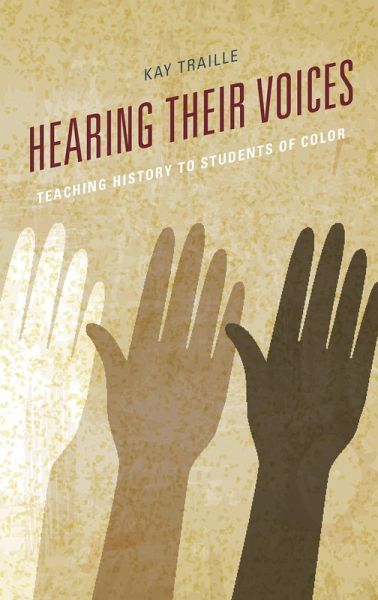
This book is about what teachers need to know before they teach history to students of color. It is a book about the 'inside feel' of these students and what they think and say history is for, based on research in the United States with reflections on the United Kingdom. It gives history teachers a better understanding of why culturally relevant pedagogy, inclusion and issues surrounding diversity are of crucial importance if we are to reach these students. We live in a world where many multicultural students think they have little connection with the histories, traditions and values in which they have grown up, some look toward groups who promise them a sense of belonging and ownership of created histories which clash with and threaten democratic societies. This book begins with the belief that it is important to understand how a subject, history, makes non-White students think and feel about themselves. At its center are assertions made by students of color who think learning history that is rich in aspects they can connect with culturally and personally, is important and necessary in gaining and holding their attention. Then I make suggestions of how we best communicate and set high expectations for these students, how as history teachers we use strategies to better engage these students, and redirect the unengaged. We need to make sure history educators provide necessary and appropriate scaffolding for students of colour to better process what they learn in history lessons, making sure they are engaged in higher-order thinking in an equitable safe environment where they see and know that their diversities are respected and valued.