40,95 €
inkl. MwSt.
Sofort per Download lieferbar
20 °P sammeln

Andere Kunden interessierten sich auch für
") Women with Cancer (eBook, PDF)40,95 €
Women with Cancer (eBook, PDF)40,95 €") Mindfulness-Based Cognitive Therapy for Cancer (eBook, PDF)45,99 €
Mindfulness-Based Cognitive Therapy for Cancer (eBook, PDF)45,99 €") Holocaust Survivors and Immigrants (eBook, PDF)72,95 €
Holocaust Survivors and Immigrants (eBook, PDF)72,95 €") Helping Families Cope With Mental Illness (eBook, PDF)34,95 €
Helping Families Cope With Mental Illness (eBook, PDF)34,95 €") Metrosexual Masculinities (eBook, PDF)40,95 €
Metrosexual Masculinities (eBook, PDF)40,95 €") Women and Health Psychology (eBook, PDF)38,95 €
Women and Health Psychology (eBook, PDF)38,95 €") Handbook of Community Psychology (eBook, PDF)432,95 €
Handbook of Community Psychology (eBook, PDF)432,95 €




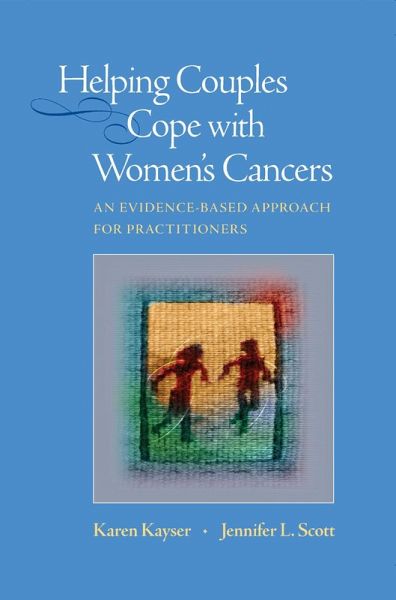
At last, here is a comprehensive guide for practitioners who work with breast cancer patients and their families. It includes a series of psychosocial interventions to be used with couples during early stage breast cancer. Chapters present information on assessing the levels of stress in these couples and on the most appropriate interventions for this problem. There is extensive evidence that emotional and social support positively influences women's abilities to cope to breast cancer. The first person that a woman with breast cancer turns to for support is her husband or intimate partner. However, as partners of breast cancer patients are struggling with their emotional distress, helplessness, and anxiety with the diagnosis, they often feel inadequate about their ability to help their wives and partners cope. It is important for practitioners to understand this concept of twofold stress.
Dieser Download kann aus rechtlichen Gründen nur mit Rechnungsadresse in A, B, BG, CY, CZ, D, DK, EW, E, FIN, F, GR, HR, H, IRL, I, LT, L, LR, M, NL, PL, P, R, S, SLO, SK ausgeliefert werden.
From the reviews:
"A family systems/cognitive behavioral approach to dealing with the stressors felt by a woman who is diagnosed with breast or gynecological cancer and her intimate partner. ... This book would make an excellent text for a graduate-level health psychology course dealing with the psychology of illness. It also would be good for a clinician ... . is a current, up-to-date refresher on the literature of how illness affects the individuals diagnosed as well as the loved ones who support and help care for them." (Leslie B. Rosen, PsycCRITIQUES, Vol. 53 (42), October, 2008)
"Helping Couples Cope with Women's Cancers is a guide that describes an approach to working with couples who are dealing with early stage breast or gynecological cancers. ... Overall, this book is a useful resource for clinicians working with women coping with breast or gynecological cancers. ... this book will serve as a helpful guide for clinicians working with this patient population." (Sharon L. Manne, Psycho-Oncology, Vol. 18, 2009)
"A family systems/cognitive behavioral approach to dealing with the stressors felt by a woman who is diagnosed with breast or gynecological cancer and her intimate partner. ... This book would make an excellent text for a graduate-level health psychology course dealing with the psychology of illness. It also would be good for a clinician ... . is a current, up-to-date refresher on the literature of how illness affects the individuals diagnosed as well as the loved ones who support and help care for them." (Leslie B. Rosen, PsycCRITIQUES, Vol. 53 (42), October, 2008)
"Helping Couples Cope with Women's Cancers is a guide that describes an approach to working with couples who are dealing with early stage breast or gynecological cancers. ... Overall, this book is a useful resource for clinicians working with women coping with breast or gynecological cancers. ... this book will serve as a helpful guide for clinicians working with this patient population." (Sharon L. Manne, Psycho-Oncology, Vol. 18, 2009)
"Kayser and Scott have written an excellent manual for mental health practitioners who care for women with cancer. To provide the best treatment for women and couples living with cancer, it is imperative for the therapist to have a thorough understanding of medical treatments as well as normal responses to the experience. Readers of this well-written, thoughtful, and practical book will have both." -Hester Hill Schnipper, LICSW, BCD, OSW-C, Chief, Oncology Social Work, BIDMC, Author, After Breast Cancer: A Commonsense Guide to Life After Treatment