
25,95 €
inkl. MwSt.
Sofort per Download lieferbar
13 °P sammeln

Andere Kunden interessierten sich auch für
") High-Conflict Parenting Post-Separation (eBook, ePUB)25,95 €
High-Conflict Parenting Post-Separation (eBook, ePUB)25,95 €") Parental Alienation (eBook, PDF)34,95 €
Parental Alienation (eBook, PDF)34,95 €") Deciding Children's Futures (eBook, PDF)30,95 €
Deciding Children's Futures (eBook, PDF)30,95 €") The Routledge International Handbook of Shared Parenting and Best Interest of the Child (eBook, PDF)46,95 €
The Routledge International Handbook of Shared Parenting and Best Interest of the Child (eBook, PDF)46,95 €") Group Therapy for High-Conflict Divorce (eBook, PDF)27,95 €
Group Therapy for High-Conflict Divorce (eBook, PDF)27,95 €") Feminist Counselling and Domestic Violence in India (eBook, PDF)49,95 €
Feminist Counselling and Domestic Violence in India (eBook, PDF)49,95 €") Parental Alienation (eBook, ePUB)34,95 €
Parental Alienation (eBook, ePUB)34,95 €
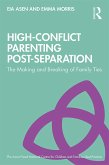


High-Conflict Parenting Post-Separation: The Making and Breaking of Family Ties describes an innovative approach for families where children are caught up in their parents' acrimonious relationship - before, during and after formal legal proceedings have been initiated and concluded.
This first book in a brand-new series by researchers and clinicians at the Anna Freud National Centre for Children and Families (AFNCCF) outlines a model of therapeutic work which involves children, their parents and the wider family and social network. The aim is to protect children from conflict between their parents and thus enable them to have healthy relationships across both 'sides' of their family network.
High-Conflict Parenting Post-Separation is written for professionals who work with high-conflict families - be that psychologists, psychiatrists, child and adult psychotherapists, family therapists, social workers, children's guardians and legal professionals including solicitors and mediators, as well as students and trainees in all these different disciplines. The book should also be of considerable interest for parents who struggle with post-separation issues that involve their children.
This first book in a brand-new series by researchers and clinicians at the Anna Freud National Centre for Children and Families (AFNCCF) outlines a model of therapeutic work which involves children, their parents and the wider family and social network. The aim is to protect children from conflict between their parents and thus enable them to have healthy relationships across both 'sides' of their family network.
High-Conflict Parenting Post-Separation is written for professionals who work with high-conflict families - be that psychologists, psychiatrists, child and adult psychotherapists, family therapists, social workers, children's guardians and legal professionals including solicitors and mediators, as well as students and trainees in all these different disciplines. The book should also be of considerable interest for parents who struggle with post-separation issues that involve their children.
Dieser Download kann aus rechtlichen Gründen nur mit Rechnungsadresse in A, B, BG, CY, CZ, D, DK, EW, E, FIN, F, GR, HR, H, IRL, I, LT, L, LR, M, NL, PL, P, R, S, SLO, SK ausgeliefert werden.
"This book is a great read. It is an essential text for all professionals who want to develop and hone their therapeutic skills with high conflict couples and their wider families. The framework is always child centred, and the parents' ability to think about the welfare of their children despite their ongoing hostility to one another, is the subject of many thoughtful examples. The text combines sound research-based knowledge and precise focussed applications with a lightness of touch that retains the readers curiosity and interest. The combination of the rigour that is required by working with the Family Court and the playfulness that keeps children and families engaged in the process of change is in balance throughout. It is a book to read as a whole in a couple of sittings and then re-read chapter by chapter to take on board the complexity that underlies the apparently straightforward advice and recommendations."
- Gill Gorell Barnes, Consultant Family Therapist and former Expert Witness to the Family Court
"Asen and Morris write with the clarity born of deep experience. Their book contains as good an analysis as I have seen of the predicament of children caught in acrimonious family breakdowns and they propose a convincing new framework for diagnosis and treatment in cases where contact has stopped. Moving beyond conventional labels, the authors offer a more hopeful prospect for families and they offer professionals, lawyers included, a solid understanding of the psychological forces at work in these extraordinarily difficult and painful cases."
- Lord Justice Peter Jackson
"This is a much-needed book by two inspired authors with rich clinical experience writing in an extraordinarily engaging way. It is an essential read for all clinicians because parenting invariably involves conflict, and its understanding and resolution is clearest and most readily appreciated in the instances beautifully described in this volume. It is the best available guide for dealing with the most complex situations in family work, which will support and guide all of us who have the task of helping families work-through differences in the management of children in the context of relationships under stress. I cannot imagine a clinician working with families or individuals who would not find a great deal in this book that they can use in their daily practice."
- Professor Peter Fonagy, Head of the Division of Psychology and Language Sciences, UCL, and Chief Executive of the Anna Freud National Centre for Children and Families
- Gill Gorell Barnes, Consultant Family Therapist and former Expert Witness to the Family Court
"Asen and Morris write with the clarity born of deep experience. Their book contains as good an analysis as I have seen of the predicament of children caught in acrimonious family breakdowns and they propose a convincing new framework for diagnosis and treatment in cases where contact has stopped. Moving beyond conventional labels, the authors offer a more hopeful prospect for families and they offer professionals, lawyers included, a solid understanding of the psychological forces at work in these extraordinarily difficult and painful cases."
- Lord Justice Peter Jackson
"This is a much-needed book by two inspired authors with rich clinical experience writing in an extraordinarily engaging way. It is an essential read for all clinicians because parenting invariably involves conflict, and its understanding and resolution is clearest and most readily appreciated in the instances beautifully described in this volume. It is the best available guide for dealing with the most complex situations in family work, which will support and guide all of us who have the task of helping families work-through differences in the management of children in the context of relationships under stress. I cannot imagine a clinician working with families or individuals who would not find a great deal in this book that they can use in their daily practice."
- Professor Peter Fonagy, Head of the Division of Psychology and Language Sciences, UCL, and Chief Executive of the Anna Freud National Centre for Children and Families