Sie sind bereits eingeloggt. Klicken Sie auf 2. tolino select Abo, um fortzufahren.
Bitte loggen Sie sich zunächst in Ihr Kundenkonto ein oder registrieren Sie sich bei bücher.de, um das eBook-Abo tolino select nutzen zu können.
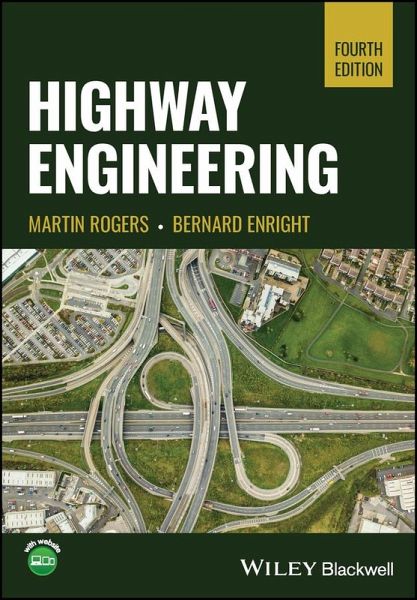
HIGHWAY ENGINEERING Understand a foundational area of civil engineering with this up-to-date textbook Highway construction is a complex discipline within civil engineering, with the potential to transform national economies and transportation infrastructures. With car infrastructure coming under both increasing demand and increasing scrutiny for its environmental impact, the challenges and complexities of highway engineering have never been a more vital subject. The future of sustainable transportation depends on an engineering profession with a solid grasp of the fundamentals of highway…mehr
HIGHWAY ENGINEERING Understand a foundational area of civil engineering with this up-to-date textbook Highway construction is a complex discipline within civil engineering, with the potential to transform national economies and transportation infrastructures. With car infrastructure coming under both increasing demand and increasing scrutiny for its environmental impact, the challenges and complexities of highway engineering have never been a more vital subject. The future of sustainable transportation depends on an engineering profession with a solid grasp of the fundamentals of highway design and construction. Highway Engineering provides a comprehensive overview of these fundamentals, preparing civil engineers and engineering students to analyze, design, and build highways. Situating its subject in the context of a broader political economy, social and ecological reality, and more, it proceeds in a logical sequence from planning to design to construction to maintenance. The result is a fully up-to-date introduction to this subject at the heart of transport engineering. Readers of the fourth edition of Highway Engineering will also find: * Strong integration of material from the UK Design Manual for Roads and Bridges, incorporating recent significant changes in the design of highway pavements * Detailed examples and case studies to cultivate deepened understanding * Increased attention to the growing importance of non-car-based modes of highway transportation--walking, cycling and public transport. Highway Engineering is essential for engineering students studying civil engineering or transport engineering, as well as for professional civil engineers looking for a reference work.
Dieser Download kann aus rechtlichen Gründen nur mit Rechnungsadresse in D ausgeliefert werden.
Die Herstellerinformationen sind derzeit nicht verfügbar.
Autorenporträt
Martin Rogers, PhD, is a Transport Planning Practitioner and Senior Lecturer in the School of Transport and Civil Engineering, Technological University Dublin, Ireland. He is a Transport Planning Professional (TPS), a Chartered Civil Engineer (ICE) and Chartered Town Planner (RTPI), with extensive experience in both the private and public sectors, including membership in the Dublin Transport Initiative Study Team that devised the Dublin city region's first integrated transportation plan.
Bernard Enright, PhD, is a Lecturer in the School of Transport and Civil Engineering, Technological University Dublin, Ireland. He has considerable experience in the engineering and information technology industries and has published extensively on highway engineering and related subjects.
Inhaltsangabe
About the Companion Website xv
1 The Transportation Planning Process 1
1.1 Why Are Highways So Important? 1
1.2 The Administration of Highway Schemes 1
1.3 Sources of Funding 2
1.4 Highway Planning 3
1.4.1 Introduction 3
1.4.2 Travel Data 4
1.4.3 Highway Planning Strategies 6
1.4.3.1 Land-Use Transportation Approach 6
1.4.3.2 The Demand Management Approach 6
1.4.3.3 The Car-Centred Approach 7
1.4.3.4 The Public Transport-Centred Approach 7
1.4.4 Transportation Studies 7
1.4.4.1 Transportation Survey 7
1.4.4.2 Production and Use of Mathematical Models 8
1.5 The Decision-Making Process in Highway and Transport Planning 8
1.5.1 Introduction 8
1.5.2 Economic Assessment 10
1.5.3 Environmental Assessment 11
1.5.4 Public Consultation 12
1.6 Summary 13
References 13
2 Forecasting Future Traffic Flows 15
2.1 Basic Principles of Traffic Demand Analysis 15
2.2 Demand Modelling 16
2.3 Land-Use Models 18
2.4 Trip Generation 18
2.4.1 TRICS (r) Database 23
2.5 Trip Distribution 24
2.5.1 Introduction 24
2.5.2 The Gravity Model 25
2.5.3 Growth Factor Models 30
2.5.4 The Furness Method 31
2.6 Modal Split 36
2.7 Traffic Assignment 41
2.8 A Full Example of the Four-Stage Transportation Modelling Process 46
2.8.1 Trip Production 46
2.8.2 Trip Distribution 47
2.8.3 Modal Split 50
2.8.4 Trip Assignment 52
2.9 'Decide and Provide' Versus 'Predict and Provide' 53
2.10 Concluding Comments 54
Additional Problems 54
References 57
3 Scheme Appraisal for Highway Projects 59
3.1 Introduction 59
3.2 Economic Appraisal of Highway Schemes 60
3.3 Cba 61
3.3.1 Introduction 61
3.3.2 Identifying the Main Project Options 61
3.3.3 Identifying all Relevant Costs and Benefits 62
3.3.3.1 Reductions in VOCs 63
3.3.3.2 Savings in Time 63
3.3.3.3 Reduction in the Frequency of Accidents 64
3.3.4 Economic Life, Residual Value, and the Discount Rate 64
3.3.5 Use of Economic Indicators to Assess Basic Economic Viability 65
3.3.6 Highway CBA Worked Example 67
3.3.6.1 Introduction 67
3.3.6.2 Computation of Discounted Benefits and Costs 68
3.3.6.3 Npv 70
3.3.6.4 Benefit-Cost Ratio 70
3.3.6.5 Irr 70
3.3.6.6 Summary 70
3.3.7 Coba 70
3.3.8 Advantages and Disadvantages of CBA 71
3.4 Payback Analysis 73
3.5 Environmental Appraisal of Highway Schemes 75
3.6 The New Approach to Appraisal 80
3.6.1 Environment 81
3.6.1.1 Noise 81
3.6.1.2 Local Air Quality 81
3.6.1.3 Landscape 82
3.6.1.4 Biodiversity 82
3.6.1.5 Heritage 82
3.6.1.6 Water 82
3.6.1.7 Safety 83
3.6.1.8 Economy 83
3.6.1.9 Journey Times and VOCs 83
3.6.1.10 Costs 83
3.6.1.11 Reliability 83
3.6.1.12 Regeneration 83
3.6.1.13 Accessibility 84
3.6.1.14 Pedestrians, Cyclists, and Equestrians 84
3.6.1.15 Access to Public Transport 85
3.6.1.16 Community Severance 85
3.6.1.17 Integration 85
3.7 NATA Refresh 86
3.7.1 Changes to the AST 86
3.7.2 Enhanced Presentation of Monetary Impacts 87