39,95 €
inkl. MwSt.
Sofort per Download lieferbar
20 °P sammeln

Andere Kunden interessierten sich auch für
") Nicole Rafter (eBook, PDF)44,95 €
Nicole Rafter (eBook, PDF)44,95 €") Criminology (eBook, PDF)48,95 €
Criminology (eBook, PDF)48,95 €") Routledge Handbook of Public Criminologies (eBook, PDF)45,95 €
Routledge Handbook of Public Criminologies (eBook, PDF)45,95 €") The Lineaments of Wrath (eBook, PDF)22,95 €
The Lineaments of Wrath (eBook, PDF)22,95 €") Routledge International Handbook of Visual Criminology (eBook, PDF)48,95 €
Routledge International Handbook of Visual Criminology (eBook, PDF)48,95 €") We Are an African People (eBook, PDF)12,95 €
We Are an African People (eBook, PDF)12,95 €") Gender and Citizenship in Historical and Transnational Perspective (eBook, PDF)27,95 €
Gender and Citizenship in Historical and Transnational Perspective (eBook, PDF)27,95 €
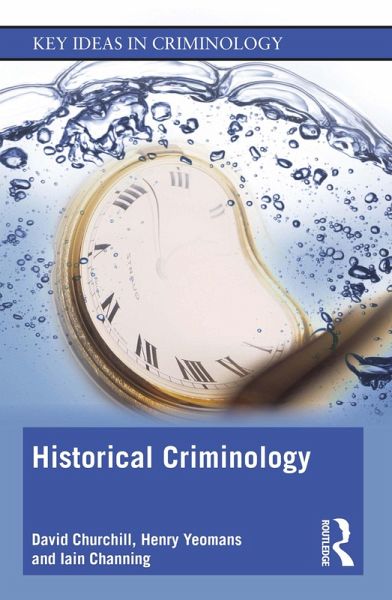
This book sets an agenda for the development of historical approaches to criminology. It defines 'historical criminology', explores its characteristic strengths and limitations, and considers its potential to enhance, revise and fundamentally challenge dominant modes of thinking about crime and social responses to crime.
It considers the following questions:
In this book, Churchill, Yeomans and Channing situate 'historical thinking' at the heart of historical criminology, reveal the value of historical research to criminology and argue that criminologists across the field have much to gain from engaging in historical thinking in a more regular and sustained way.
This book is essential reading for all criminologists, as well as students taking courses on theories, concepts and methods in criminology.
It considers the following questions:
- What is historical criminology? What does thinking historically about crime and justice entail?
- How is historical criminology currently practised? What are the advantages and disadvantages of different approaches to historical criminology?
- How can historical criminology reshape understandings of crime and social responses to crime?
- How does thinking historically bear upon major theoretical, conceptual and methodological questions in criminological research?
- What does thinking historically have to offer criminological scholarship more broadly, and the uses of criminology in the public realm?
In this book, Churchill, Yeomans and Channing situate 'historical thinking' at the heart of historical criminology, reveal the value of historical research to criminology and argue that criminologists across the field have much to gain from engaging in historical thinking in a more regular and sustained way.
This book is essential reading for all criminologists, as well as students taking courses on theories, concepts and methods in criminology.
Dieser Download kann aus rechtlichen Gründen nur mit Rechnungsadresse in A, B, BG, CY, CZ, D, DK, EW, E, FIN, F, GR, HR, H, IRL, I, LT, L, LR, M, NL, PL, P, R, S, SLO, SK ausgeliefert werden.
What does it mean to do 'historical criminology'? To put time - and therefore change, events, flows and durations - at the centre of criminological inquiry? What are the exemplary texts that have pursued that approach? And how does that enterprise fit into the larger disciplines of 'criminology' and 'history'? These questions motivate this lively, engaging, important new book: the first to organize and reflect upon a field of research that is as diverse as it is interesting.
---David Garland, New York University
The past is a foreign country, and this book is a perfect companion to navigate its unknown terrain, avoid data minefields and find the treasures awaiting the criminologist. Historical Criminology invites us to cross borders between the past, present and the future. The authors present a novel approach to connecting the past and present of crime and justice, which will have a decisive impact on the field. A book for all criminologists who know that the past never lasts but the future is forever.
---Susanne Karstedt, Griffith University
Historical Criminology demands criminologists of all persuasions ask themselves: what do they mean when they talk of the past, present, and future? Its aim is to decentre the presentism that so hampers criminological thinking. It does this extremely well. To be clear: Historical Criminology is not setting out another subfield of criminology. This book asks us all to reflect upon how we think about the process of time and in so doing will be essential reading for anyone claiming to be thinking criminologically.
---Sandra Walklate, University of Liverpool & Monash University
---David Garland, New York University
The past is a foreign country, and this book is a perfect companion to navigate its unknown terrain, avoid data minefields and find the treasures awaiting the criminologist. Historical Criminology invites us to cross borders between the past, present and the future. The authors present a novel approach to connecting the past and present of crime and justice, which will have a decisive impact on the field. A book for all criminologists who know that the past never lasts but the future is forever.
---Susanne Karstedt, Griffith University
Historical Criminology demands criminologists of all persuasions ask themselves: what do they mean when they talk of the past, present, and future? Its aim is to decentre the presentism that so hampers criminological thinking. It does this extremely well. To be clear: Historical Criminology is not setting out another subfield of criminology. This book asks us all to reflect upon how we think about the process of time and in so doing will be essential reading for anyone claiming to be thinking criminologically.
---Sandra Walklate, University of Liverpool & Monash University