17,95 €
inkl. MwSt.
Sofort per Download lieferbar
9 °P sammeln

Andere Kunden interessierten sich auch für
") Jihad of the Pen (eBook, ePUB)31,95 €
Jihad of the Pen (eBook, ePUB)31,95 €") The Ahmadiyya in the Gold Coast (eBook, ePUB)13,95 €
The Ahmadiyya in the Gold Coast (eBook, ePUB)13,95 €") Religions in South Africa, Vol.3: Buddhism (eBook, ePUB)0,00 €
Religions in South Africa, Vol.3: Buddhism (eBook, ePUB)0,00 €") Islamic Law, Gender and Social Change in Post-Abolition Zanzibar (eBook, ePUB)19,95 €
Islamic Law, Gender and Social Change in Post-Abolition Zanzibar (eBook, ePUB)19,95 €") Demystifying Shariah (eBook, ePUB)9,95 €
Demystifying Shariah (eBook, ePUB)9,95 €") The Book of Contemplation (eBook, ePUB)10,99 €
The Book of Contemplation (eBook, ePUB)10,99 € El Diablo From Holy Quran Bilingual Edition English and Spanish (eBook, ePUB)") The Meaning of Surah 72 Al-Jinn (The Jinn Race) El Diablo From Holy Quran Bilingual Edition English and Spanish (eBook, ePUB)0,99 €
The Meaning of Surah 72 Al-Jinn (The Jinn Race) El Diablo From Holy Quran Bilingual Edition English and Spanish (eBook, ePUB)0,99 €







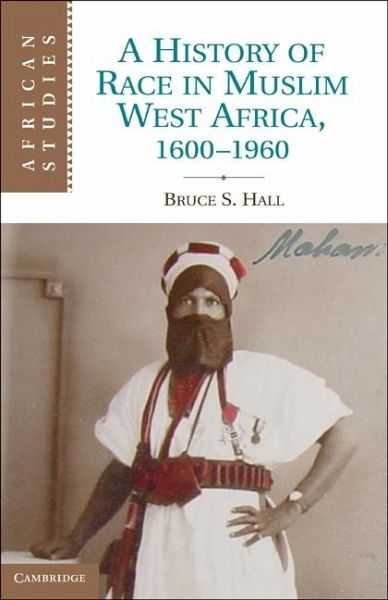
The mobilization of local ideas about racial difference has been important in generating, and intensifying, civil wars that have occurred since the end of colonial rule in all of the countries that straddle the southern edge of the Sahara Desert. From Sudan to Mauritania, the racial categories deployed in contemporary conflicts often hearken back to an older history in which blackness could be equated with slavery and non-blackness with predatory and uncivilized banditry. This book traces the development of arguments about race over a period of more than 350 years in one important place along the southern edge of the Sahara Desert: the Niger Bend in northern Mali. Using Arabic documents held in Timbuktu, as well as local colonial sources in French and oral interviews, Bruce S. Hall reconstructs an African intellectual history of race that long predated colonial conquest, and which has continued to orient inter-African relations ever since.
Dieser Download kann aus rechtlichen Gründen nur mit Rechnungsadresse in A, B, BG, CY, CZ, D, DK, EW, E, FIN, F, GR, HR, H, IRL, I, LT, L, LR, M, NL, PL, P, R, S, SLO, SK ausgeliefert werden.