41,95 €
41,95 €
inkl. MwSt.
Sofort per Download lieferbar

21 °P sammeln
41,95 €
Als Download kaufen
41,95 €
inkl. MwSt.
Sofort per Download lieferbar
21 °P sammeln
Jetzt verschenken
Alle Infos zum eBook verschenken
41,95 €
inkl. MwSt.
Sofort per Download lieferbar
Alle Infos zum eBook verschenken
21 °P sammeln

Andere Kunden interessierten sich auch für
") History, Trauma and Shame (eBook, PDF)41,95 €
History, Trauma and Shame (eBook, PDF)41,95 €") Man's Search For Meaning (eBook, ePUB)10,99 €
Man's Search For Meaning (eBook, ePUB)10,99 €") Self and Identity (eBook, ePUB)18,95 €
Self and Identity (eBook, ePUB)18,95 €") The Psychology of Political Communication (eBook, ePUB)36,95 €
The Psychology of Political Communication (eBook, ePUB)36,95 €") Selfless: A Psychologist's Journey through Identity and Social Class (eBook, ePUB)21,95 €
Selfless: A Psychologist's Journey through Identity and Social Class (eBook, ePUB)21,95 €") The Routledge International Handbook of Colorism (eBook, ePUB)47,95 €
The Routledge International Handbook of Colorism (eBook, ePUB)47,95 €") The Psychology of Politically Unstable Societies (eBook, ePUB)37,95 €
The Psychology of Politically Unstable Societies (eBook, ePUB)37,95 €



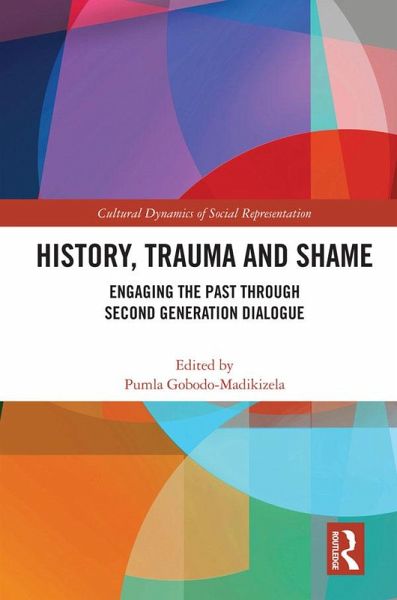
History, Trauma and Shame provides an in-depth examination of the sustained dialogue about the past between children of Holocaust survivors and descendants of families whose parents were either directly or indirectly involved in Nazi crimes.
Taking an autobiographical narrative perspective, the chapters in the book explore the intersection of history, trauma and shame, and how change and transformation unfolds over time. The analyses of the encounters described in the book provides a close examination of the process of dialogue among members of The Study Group on Intergenerational Consequences of the Holocaust (PAKH), exploring how Holocaust trauma lives in the 'everyday' lives of descendants of survivors. It goes to the heart of the issues at the forefront of contemporary transnational debates about building relationships of trust and reconciliation in societies with a history of genocide and mass political violence.
This book will be great interest for academics, researchers and postgraduate students engaged in the study of social psychology, Holocaust or genocide studies, cultural studies, reconciliation studies, historical trauma and peacebuilding. It will also appeal to clinical psychologists, psychiatrists and psychoanalysts, as well as upper-level undergraduate students interested in the above areas.
Taking an autobiographical narrative perspective, the chapters in the book explore the intersection of history, trauma and shame, and how change and transformation unfolds over time. The analyses of the encounters described in the book provides a close examination of the process of dialogue among members of The Study Group on Intergenerational Consequences of the Holocaust (PAKH), exploring how Holocaust trauma lives in the 'everyday' lives of descendants of survivors. It goes to the heart of the issues at the forefront of contemporary transnational debates about building relationships of trust and reconciliation in societies with a history of genocide and mass political violence.
This book will be great interest for academics, researchers and postgraduate students engaged in the study of social psychology, Holocaust or genocide studies, cultural studies, reconciliation studies, historical trauma and peacebuilding. It will also appeal to clinical psychologists, psychiatrists and psychoanalysts, as well as upper-level undergraduate students interested in the above areas.
Dieser Download kann aus rechtlichen Gründen nur mit Rechnungsadresse in A, B, BG, CY, CZ, D, DK, EW, E, FIN, F, GR, HR, H, IRL, I, LT, L, LR, M, NL, PL, P, R, S, SLO, SK ausgeliefert werden.
"In her introduction to History, Trauma and Shame: Engaging the Past Through Second Generation Dialogue, Pumla Gobodo-Madikizela begins with the question: 'What happens when descendants of a shameful history in one country encounter stories of dialogue about past atrocities in another country?' Furthermore, she asks: 'How might we map out the arcs of historical trauma as the nexus for the interweaving of haunting legacies from different historical pasts?'. These questions frame this work, which employs a dialogue between the children of Holocaust survivors and perpetrators to anchor an intricate, honest, and complex study that examines broader issues of historical trauma, memory, and reconciliation in a transnational context. History, Trauma and Shame: Engaging the Past through Second Generation Dialogue is a challenging and thoughtful read that makes a significant contribution both to the field of Holocaust studies and to continuously developing studies on transnational memory and trauma."
Adam Levin (2021) History, Trauma and Shame: Engaging the Past through Second Generation Dialogue, English Academy Review, 38:2, 152-154, DOI: 10.1080/10131752.2021.1997371
"The anthology History, Trauma and Shame opens up the possibility of gaining a multi-perspective insight into the dynamics to which the descendants of both the persecuted and the persecutors are exposed-both as members of their own families and as members of social (large) groups. In doing so, it becomes clear how these two levels intertwine in the subjects' inner psychological experience and interact back into the social spaces in the processes of communication with others.
...
Krondorfer emphasizes that the intercultural comparative analysis of the different ways of dealing with historical trauma and reconciliation practices opens up new insights and perspectives that not only concern German and South African society, but also have far-reaching significance for understanding how violent conflicts and their consequences are dealt with worldwide, which is why intercultural research in this field should be significantly expanded. This book makes a crucial contribution to that end."
Angela Moré, Book review: Transgenerational Transmissions and Second Generations' Dialogue on Apartheid and the Holocaust
Adam Levin (2021) History, Trauma and Shame: Engaging the Past through Second Generation Dialogue, English Academy Review, 38:2, 152-154, DOI: 10.1080/10131752.2021.1997371
"The anthology History, Trauma and Shame opens up the possibility of gaining a multi-perspective insight into the dynamics to which the descendants of both the persecuted and the persecutors are exposed-both as members of their own families and as members of social (large) groups. In doing so, it becomes clear how these two levels intertwine in the subjects' inner psychological experience and interact back into the social spaces in the processes of communication with others.
...
Krondorfer emphasizes that the intercultural comparative analysis of the different ways of dealing with historical trauma and reconciliation practices opens up new insights and perspectives that not only concern German and South African society, but also have far-reaching significance for understanding how violent conflicts and their consequences are dealt with worldwide, which is why intercultural research in this field should be significantly expanded. This book makes a crucial contribution to that end."
Angela Moré, Book review: Transgenerational Transmissions and Second Generations' Dialogue on Apartheid and the Holocaust