21,95 €
21,95 €
inkl. MwSt.
Erscheint vor. 21.04.26

11 °P sammeln
21,95 €
Als Download kaufen
21,95 €
inkl. MwSt.
Erscheint vor. 21.04.26
11 °P sammeln
Jetzt verschenken
Alle Infos zum eBook verschenken
21,95 €
inkl. MwSt.
Erscheint vor. 21.04.26
Alle Infos zum eBook verschenken
11 °P sammeln

Andere Kunden interessierten sich auch für
") Kartemquin Films (eBook, ePUB)20,95 €
Kartemquin Films (eBook, ePUB)20,95 €") Revolutionary Becomings (eBook, ePUB)26,95 €
Revolutionary Becomings (eBook, ePUB)26,95 €") The Development Film in the Americas (eBook, ePUB)22,95 €
The Development Film in the Americas (eBook, ePUB)22,95 €") Rethinking Testimonial Cinema in Postdictatorship Argentina (eBook, ePUB)14,95 €
Rethinking Testimonial Cinema in Postdictatorship Argentina (eBook, ePUB)14,95 €") Voyages of Discovery (eBook, ePUB)26,95 €
Voyages of Discovery (eBook, ePUB)26,95 €") Listening to Others (eBook, ePUB)27,95 €
Listening to Others (eBook, ePUB)27,95 €") Antifascism and the Avant-Garde (eBook, ePUB)22,95 €
Antifascism and the Avant-Garde (eBook, ePUB)22,95 €



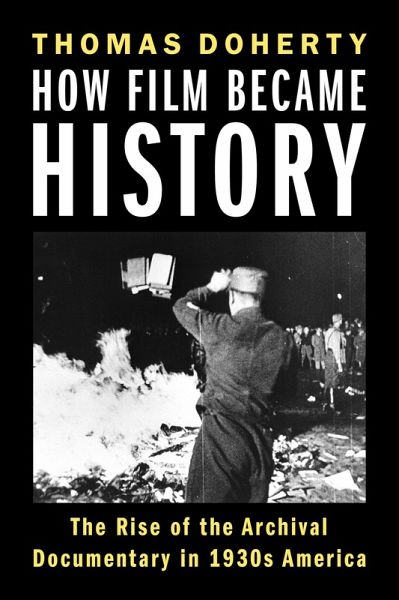
By the 1930s, filmmakers had access to a backlog of footage from around thirty years of motion pictures, allowing them to create a new kind of film stitched together from the raw material of older films. At around the same time, the transition to synchronous sound added a transformative new element to the grammar of cinema: the voiceover narration. Together, the film inventory and offscreen commentary gave rise to the archival documentary, the motion picture genre that preserves and rewinds history.
Thomas Doherty tells the story of the archival documentary, spotlighting the first films that set out deliberately to preserve history on screen. He shows how newsreels and documentaries challenged the era's restrictive censorship and how film began to engage with the great political issues of the day. Doherty considers a range of films-some well-known, others obscure-including J. Stuart Blackton's The Film Parade (1933), Laurence Stallings and Truman Talley's The First World War (1934), Cornelius Vanderbilt Jr.'s Hitler's Reign of Terror (1934), Max Eastman and Herbert Axelbank's Tsar to Lenin (1937), and the March of Time screen magazine. Tracing the creation of the archival documentary, How Film Became History illuminates how motion pictures have come to shape our vision of the past.
Thomas Doherty tells the story of the archival documentary, spotlighting the first films that set out deliberately to preserve history on screen. He shows how newsreels and documentaries challenged the era's restrictive censorship and how film began to engage with the great political issues of the day. Doherty considers a range of films-some well-known, others obscure-including J. Stuart Blackton's The Film Parade (1933), Laurence Stallings and Truman Talley's The First World War (1934), Cornelius Vanderbilt Jr.'s Hitler's Reign of Terror (1934), Max Eastman and Herbert Axelbank's Tsar to Lenin (1937), and the March of Time screen magazine. Tracing the creation of the archival documentary, How Film Became History illuminates how motion pictures have come to shape our vision of the past.
Dieser Download kann aus rechtlichen Gründen nur mit Rechnungsadresse in A, D ausgeliefert werden.