19,95 €
inkl. MwSt.
Sofort per Download lieferbar
10 °P sammeln

Andere Kunden interessierten sich auch für
") Straight Talk on Trade (eBook, ePUB)12,95 €
Straight Talk on Trade (eBook, ePUB)12,95 €") China and the WTO (eBook, ePUB)14,95 €
China and the WTO (eBook, ePUB)14,95 €") The Euro (eBook, ePUB)9,49 €
The Euro (eBook, ePUB)9,49 €") Inflation (eBook, ePUB)15,95 €
Inflation (eBook, ePUB)15,95 € (eBook, ePUB)") Central Bank Digital Currencies (CBDCs) (eBook, ePUB)0,00 €
Central Bank Digital Currencies (CBDCs) (eBook, ePUB)0,00 €") EU Law and Economics (eBook, ePUB)64,95 €
EU Law and Economics (eBook, ePUB)64,95 €") Trade and Poverty Reduction in the Asia-Pacific Region (eBook, ePUB)27,95 €
Trade and Poverty Reduction in the Asia-Pacific Region (eBook, ePUB)27,95 €




A powerful new understanding of global currency trends, including the rise of the Chinese yuan
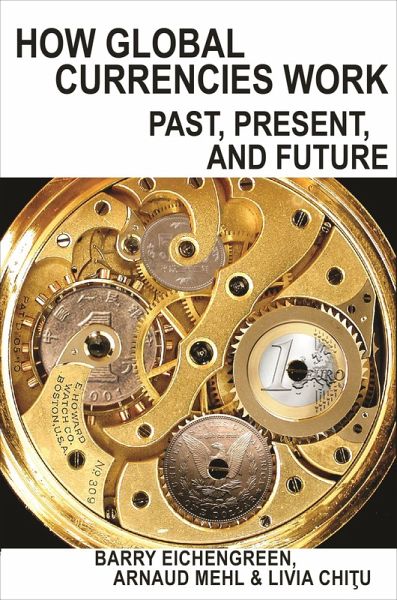
At first glance, the modern history of the global economic system seems to support the long-held view that the leading world power's currency-the British pound, the U.S. dollar, and perhaps someday the Chinese yuan-invariably dominates international trade and finance. In How Global Currencies Work, three noted economists provide a reassessment of this history and the theories behind the conventional wisdom.
Offering a new history of global finance over the past two centuries, and marshaling extensive new data to test established theories of how global currencies work, Barry Eichengreen, Arnaud Mehl, and Livia Chit¿u argue for a new view, in which several national monies can share international currency status, and their importance can change rapidly. They demonstrate how changes in technology and in the structure of international trade and finance have reshaped the landscape of international currencies so that several international financial standards can coexist. They show that multiple international and reserve currencies have in fact coexisted in the pastupending the traditional view of the British pound's dominance prior to 1945 and the U.S. dollar's dominance more recently.
Looking forward, the book tackles the implications of this new framework for major questions facing the future of the international monetary system, from whether the euro and the Chinese yuan might address their respective challenges and perhaps rival the dollar, to how increased currency competition might affect global financial stability.
At first glance, the modern history of the global economic system seems to support the long-held view that the leading world power's currency-the British pound, the U.S. dollar, and perhaps someday the Chinese yuan-invariably dominates international trade and finance. In How Global Currencies Work, three noted economists provide a reassessment of this history and the theories behind the conventional wisdom.
Offering a new history of global finance over the past two centuries, and marshaling extensive new data to test established theories of how global currencies work, Barry Eichengreen, Arnaud Mehl, and Livia Chit¿u argue for a new view, in which several national monies can share international currency status, and their importance can change rapidly. They demonstrate how changes in technology and in the structure of international trade and finance have reshaped the landscape of international currencies so that several international financial standards can coexist. They show that multiple international and reserve currencies have in fact coexisted in the pastupending the traditional view of the British pound's dominance prior to 1945 and the U.S. dollar's dominance more recently.
Looking forward, the book tackles the implications of this new framework for major questions facing the future of the international monetary system, from whether the euro and the Chinese yuan might address their respective challenges and perhaps rival the dollar, to how increased currency competition might affect global financial stability.
Dieser Download kann aus rechtlichen Gründen nur mit Rechnungsadresse in A, D ausgeliefert werden.