8,99 €
inkl. MwSt.
Sofort per Download lieferbar
0 °P sammeln

Andere Kunden interessierten sich auch für
") Chatter (eBook, ePUB)6,99 €
Chatter (eBook, ePUB)6,99 €") Dark Mirror (eBook, ePUB)9,49 €
Dark Mirror (eBook, ePUB)9,49 €") Ujasusi Ni Nini? Na Je Majasusi Wanafanya Kazi Gani Hasa? (eBook, ePUB)9,49 €
Ujasusi Ni Nini? Na Je Majasusi Wanafanya Kazi Gani Hasa? (eBook, ePUB)9,49 €") The New Spymasters (eBook, ePUB)9,49 €
The New Spymasters (eBook, ePUB)9,49 €") Shadow War 2025: Israel's Secret Army Inside Iran (eBook, ePUB)8,49 €
Shadow War 2025: Israel's Secret Army Inside Iran (eBook, ePUB)8,49 €") How America Lost Its Secrets (eBook, ePUB)3,99 €
How America Lost Its Secrets (eBook, ePUB)3,99 €") Russians Among Us (eBook, ePUB)10,99 €
Russians Among Us (eBook, ePUB)10,99 €







What turns a loyal citizen into a traitor? It isn't always money. It isn't always fear. Often, it is the invisible hand of a recruiter who understands your deepest needs better than you do yourself.
In the shadowy world of intelligence, the most sophisticated satellites and encrypted codes are worthless without the most basic resource of all: the human asset. But how does an intelligence agency convince a nuclear scientist, a military officer, or a diplomat to betray their country, their colleagues, and their identity?
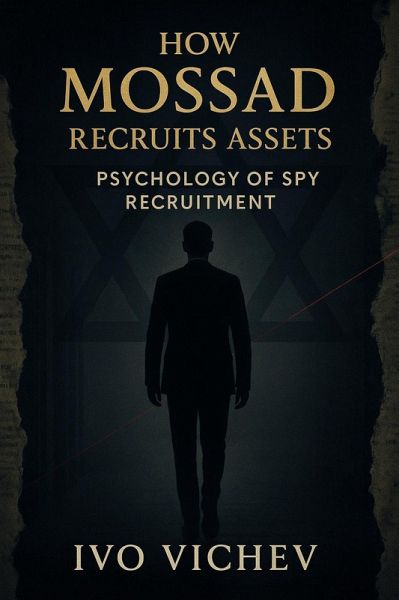
In How Mossad Recruits Assets, author Ivo Vichev provides a chilling, comprehensive examination of the psychology behind espionage. Moving beyond the glamour of James Bond fantasies, this book dissects the surgical precision of the MICE framework-Money, Ideology, Coercion, and Ego-to reveal how intelligence services map the hairline fractures in a person's loyalty and widen them until betrayal becomes inevitable.
Through gripping, narrative reconstructions and psychological analysis, you will step inside the mind of the Katsa (the case officer) and the target. You will witness the gradual seduction of "Amira," a desperate mother whose love for her daughter becomes her operational vulnerability; follow "David," a recruiter facing the moral erosion of his own humanity; and analyze the ego-driven fall of scientists who crave recognition their own governments deny them.
Inside this deep dive into the psychology of spy recruitment, you will discover:
How Mossad Recruits Assets is not just a manual on tradecraft; it is a profound study of human nature. It reveals that the line between patriot and traitor is thinner than we like to believe-and can be erased by anyone who holds the right key to the human heart.
In the shadowy world of intelligence, the most sophisticated satellites and encrypted codes are worthless without the most basic resource of all: the human asset. But how does an intelligence agency convince a nuclear scientist, a military officer, or a diplomat to betray their country, their colleagues, and their identity?
In How Mossad Recruits Assets, author Ivo Vichev provides a chilling, comprehensive examination of the psychology behind espionage. Moving beyond the glamour of James Bond fantasies, this book dissects the surgical precision of the MICE framework-Money, Ideology, Coercion, and Ego-to reveal how intelligence services map the hairline fractures in a person's loyalty and widen them until betrayal becomes inevitable.
Through gripping, narrative reconstructions and psychological analysis, you will step inside the mind of the Katsa (the case officer) and the target. You will witness the gradual seduction of "Amira," a desperate mother whose love for her daughter becomes her operational vulnerability; follow "David," a recruiter facing the moral erosion of his own humanity; and analyze the ego-driven fall of scientists who crave recognition their own governments deny them.
Inside this deep dive into the psychology of spy recruitment, you will discover:
- The MICE Framework: A detailed breakdown of the four pillars of motivation used by intelligence agencies worldwide to flip targets.
- The "David Complex": How Mossad specifically leverages historical trauma, ethnic solidarity, and the "underdog" narrative to recruit assets in the diaspora.
- The Art of Spotting: How recruiters identify the "grandiose narcissist," the "disgruntled professional," or the "financial drowning victim" in a crowded room.
- Seduction and the Honey Trap: The complex reality of romantic recruitment, where genuine emotion and calculated manipulation blur into a dangerous psychological weapon.
- The Digital Panopticon: How modern espionage has shifted from café meetings to algorithmic profiling, using social media metadata to identify vulnerabilities before a target is even approached.
- The Human Cost: A stark look at the "moral injury" suffered not just by the traitor, but by the handler who must systematically dismantle a human being's life for the sake of national security.
How Mossad Recruits Assets is not just a manual on tradecraft; it is a profound study of human nature. It reveals that the line between patriot and traitor is thinner than we like to believe-and can be erased by anyone who holds the right key to the human heart.
Dieser Download kann aus rechtlichen Gründen nur mit Rechnungsadresse in A, B, CY, CZ, D, DK, EW, E, FIN, F, GR, H, IRL, I, LT, L, LR, M, NL, PL, P, R, S, SLO, SK ausgeliefert werden.