0,00 €
inkl. MwSt.
Sofort per Download lieferbar
0 °P sammeln

Andere Kunden interessierten sich auch für
") Project Is Dead... Long Live The Project! (eBook, ePUB)11,95 €
Project Is Dead... Long Live The Project! (eBook, ePUB)11,95 €") Employment Is Dead (eBook, ePUB)17,95 €
Employment Is Dead (eBook, ePUB)17,95 €") Survival Guide: Shed or You're Dead - A Fast Acting Change Rx for Healthcare Professionals (eBook, ePUB)4,99 €
Survival Guide: Shed or You're Dead - A Fast Acting Change Rx for Healthcare Professionals (eBook, ePUB)4,99 €") Talent on Borrowed Time : How to Manage Employees Who Won't Stay Long (eBook, ePUB)17,49 €
Talent on Borrowed Time : How to Manage Employees Who Won't Stay Long (eBook, ePUB)17,49 €") Leadership Excellence - Strategies for Long-Term Success at the Highest Level (eBook, ePUB)9,99 €
Leadership Excellence - Strategies for Long-Term Success at the Highest Level (eBook, ePUB)9,99 €") Economic Development in the Long Run (eBook, ePUB)29,95 €
Economic Development in the Long Run (eBook, ePUB)29,95 €") Leading for the Long Run (eBook, ePUB)5,99 €
Leading for the Long Run (eBook, ePUB)5,99 €


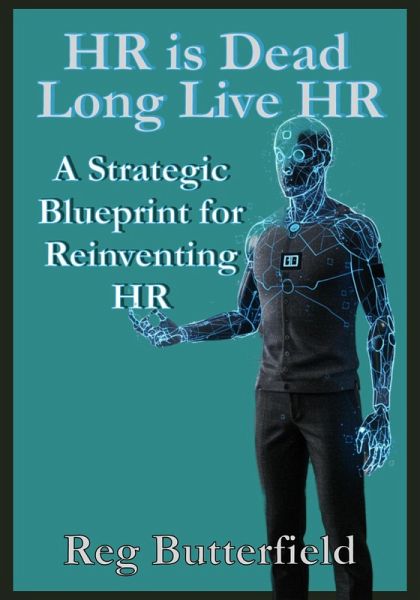
In an era of rapid technological advancement, the question "Does HR have a future?" is no longer speculative-it's urgent. As organisations increasingly adopt agentic AI systems capable of autonomous decision-making, workflow orchestration, and real-time adaptation, the traditional boundaries of Human Resources (HR) are being redefined. What was once seen as a support function focused on policy enforcement, compliance, and administrative efficiency is now at a crossroads: evolve into a strategic human-system design capability or risk obsolescence.
The emergence of agentic AI-autonomous, goal-oriented systems that can detect issues, initiate workflows, and adapt dynamically, marks a turning point. Unlike earlier generations of AI tools, which were largely passive and content-generating, agentic AI introduces a new paradigm: AI as a co-worker. These agents don't just assist humans; they collaborate, anticipate needs, and act proactively within organisational ecosystems.
This shift challenges the very definition of what constitutes the workforce. If AI agents can onboard employees, monitor sentiment, recommend learning paths, and even flag disengagement before managers do, then what does that mean for the future of HR professionals? Is HR still necessary, or will empowered line managers, outsourced specialists, and intelligent systems collectively assume its responsibilities?
This book explores HR's potential evolution over the next ten years, by 2035, through the lens of agentic AI, organisational intelligence, and stakeholder experience. We examine whether traditional HR functions are disappearing or transforming, who will lead this transition, and what skills and structures will be needed to ensure organisations remain both competitive and humane in an era of autonomous systems. We also identify what will likely be the situation post-2035.
Key takeaways include:
By embracing these shifts, HR can redefine its role as a strategic partner, not just a service provider. The future of HR is not about preserving what it has been, but about reimagining what it could become-a force that enables organisations to thrive in an age of continuous change, distributed decision-making, and network-based operating models.
Whether you're an HR professional, a manager, or someone curious about the future of work, this book offers practical guidance and actionable insights to navigate the evolving landscape of HR in the era of agentic AI and networked organisations.
The emergence of agentic AI-autonomous, goal-oriented systems that can detect issues, initiate workflows, and adapt dynamically, marks a turning point. Unlike earlier generations of AI tools, which were largely passive and content-generating, agentic AI introduces a new paradigm: AI as a co-worker. These agents don't just assist humans; they collaborate, anticipate needs, and act proactively within organisational ecosystems.
This shift challenges the very definition of what constitutes the workforce. If AI agents can onboard employees, monitor sentiment, recommend learning paths, and even flag disengagement before managers do, then what does that mean for the future of HR professionals? Is HR still necessary, or will empowered line managers, outsourced specialists, and intelligent systems collectively assume its responsibilities?
This book explores HR's potential evolution over the next ten years, by 2035, through the lens of agentic AI, organisational intelligence, and stakeholder experience. We examine whether traditional HR functions are disappearing or transforming, who will lead this transition, and what skills and structures will be needed to ensure organisations remain both competitive and humane in an era of autonomous systems. We also identify what will likely be the situation post-2035.
Key takeaways include:
- From Transactional to Strategic : HR must move from managing processes to orchestrating experiences across employees, customers, suppliers, and partners.
- Human-AI Collaboration : HR professionals must become designers of hybrid workflows where humans add judgment, empathy, and creativity, while AI handles execution and analysis.
- Ethical Governance : Embedding ethics and governance into AI-driven processes to ensure fairness and compliance.
- Manager-Led Change : Supporting manager-led change rather than trying to own it.
- Network Weaving : Facilitating connections between internal and external stakeholders to build agile, adaptive, and inclusive organisational ecosystems.
By embracing these shifts, HR can redefine its role as a strategic partner, not just a service provider. The future of HR is not about preserving what it has been, but about reimagining what it could become-a force that enables organisations to thrive in an age of continuous change, distributed decision-making, and network-based operating models.
Whether you're an HR professional, a manager, or someone curious about the future of work, this book offers practical guidance and actionable insights to navigate the evolving landscape of HR in the era of agentic AI and networked organisations.
Dieser Download kann aus rechtlichen Gründen nur mit Rechnungsadresse in A, B, CY, CZ, D, DK, EW, E, FIN, F, GR, H, IRL, I, LT, L, LR, M, NL, PL, P, R, S, SLO, SK ausgeliefert werden.