0,00 €
0,00 €
inkl. MwSt.
Erscheint vor. 12.12.25

0 °P sammeln
0,00 €
Als Download kaufen
0,00 €
inkl. MwSt.
Erscheint vor. 12.12.25
0 °P sammeln
Jetzt verschenken
Alle Infos zum eBook verschenken
0,00 €
inkl. MwSt.
Erscheint vor. 12.12.25
Alle Infos zum eBook verschenken
0 °P sammeln

Andere Kunden interessierten sich auch für
") Artificial Intelligence to Analyze Psychophysical and Human Lifestyle (eBook, PDF)104,95 €
Artificial Intelligence to Analyze Psychophysical and Human Lifestyle (eBook, PDF)104,95 €") Neuroscience for Artificial Intelligence (eBook, PDF)114,95 €
Neuroscience for Artificial Intelligence (eBook, PDF)114,95 €") Artificial Intelligence and Machine Learning in Healthcare (eBook, PDF)104,95 €
Artificial Intelligence and Machine Learning in Healthcare (eBook, PDF)104,95 €") An Analysis of Jean Lave and Etienne Wenger's Situated Learning (eBook, PDF)7,99 €
An Analysis of Jean Lave and Etienne Wenger's Situated Learning (eBook, PDF)7,99 €") An Introduction to Artificial Psychology (eBook, PDF)152,95 €
An Introduction to Artificial Psychology (eBook, PDF)152,95 €") The Legacy of Alexander Luria: Neuropsychology as a Humane Science (eBook, PDF)40,95 €
The Legacy of Alexander Luria: Neuropsychology as a Humane Science (eBook, PDF)40,95 €") A Morte Do Autor: Um Livro 100% Ia - Inteligência Artificial (eBook, PDF)4,49 €
A Morte Do Autor: Um Livro 100% Ia - Inteligência Artificial (eBook, PDF)4,49 €



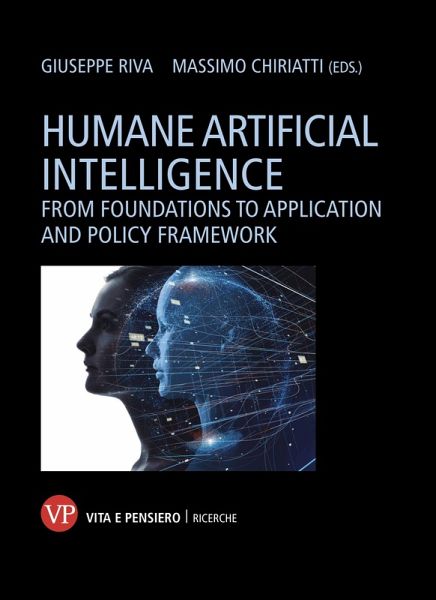
This book introduces the emerging field of "Humane Artificial Intelligence", emphasizing the crucial importance of interdisciplinarity in developing AI systems aligned with human values and well-being. While traditional AI development has often prioritized efficiency and optimization, the book advocates a paradigm shift toward frameworks that integrate ethical principles, transparency, and human considerations at the heart of AI systems. It synthesizes research across four interconnected dimensions. First, it establishes foundational frameworks for human-AI relationships, exploring models of cognitive extension and philosophical debates from Turing to contemporary questions about machine meaning and intentionality. Second, it explores human creativity, cognition, and enhancement, revealing when human-AI combinations prove most effective, while raising questions about artificial consciousness and well-being. Third, it explores professional applications, demonstrating how integrating AI into workplace governance, mental healthcare, and diagnostic imaging requires careful attention to human expertise. Fourth, it addresses legal and regulatory frameworks, examining both ambitious visions for human-AI legislation and the practical challenges of regulating rapidly evolving technologies. By understanding the interdisciplinary dimension of human-AI interaction, we can develop technologies that respect human autonomy, enhance capabilities, promote well-being, and reflect our highest values.
Dieser Download kann aus rechtlichen Gründen nur mit Rechnungsadresse in A, B, BG, CY, CZ, D, DK, EW, E, FIN, F, GR, H, IRL, I, LT, L, LR, M, NL, PL, P, R, S, SLO, SK ausgeliefert werden.