47,95 €
inkl. MwSt.
Sofort per Download lieferbar
24 °P sammeln

Andere Kunden interessierten sich auch für
") Humanitarian Rackets and their Moral Hazards (eBook, ePUB)47,95 €
Humanitarian Rackets and their Moral Hazards (eBook, ePUB)47,95 €") Routledge Handbook of Humanitarian Communication (eBook, PDF)43,95 €
Routledge Handbook of Humanitarian Communication (eBook, PDF)43,95 €") Conflict Sensitivity in Development, Humanitarian & Peacebuilding Practice (eBook, PDF)55,95 €
Conflict Sensitivity in Development, Humanitarian & Peacebuilding Practice (eBook, PDF)55,95 €") Citizen Science (eBook, PDF)70,95 €
Citizen Science (eBook, PDF)70,95 €") The Paradoxes of Aid Work (eBook, PDF)45,95 €
The Paradoxes of Aid Work (eBook, PDF)45,95 €") Corporate Management Of Health And Safety Hazards (eBook, PDF)41,95 €
Corporate Management Of Health And Safety Hazards (eBook, PDF)41,95 €") The Humanitarian Fix (eBook, PDF)38,95 €
The Humanitarian Fix (eBook, PDF)38,95 €





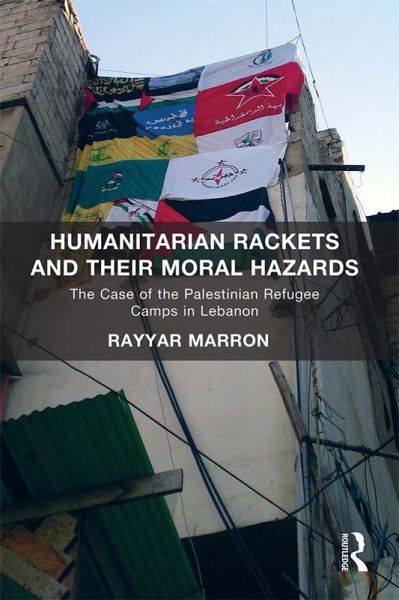
The humanitarian crisis in the Palestinian refugee camps of Lebanon has become one of the most populist causes in the world, yet the causes of the crisis have been misrepresented, whilst on-going humanitarian assistance could arguably be said to amplify problems that exist in the camps. Shedding light on the disturbing occurrence of corruption, rent-seeking and racketeering, together with the emergence of zones of privatised territory based on self-enrichment, this book challenges the conception of refugees in camps as helpless, vulnerable individuals.
Based on detailed and sustained research at the camp of Shatila in Beirut, Humanitarian Rackets and their Moral Hazards reveals that even the access of humanitarian agencies to the camp is determined by payment to certain refugee groups, whilst the degree of humanitarian interaction has created a sense of entitlement amongst some, based on a belief in their own exceptionalism as a displaced ethnic group.
Detailing the everyday economic transactions that transpire in refugee camps, this book shows that, far from being helpless victims with no power over their circumstances, many Palestinian refugees have created lucrative ventures from humanitarian assistance. A rich, yet troubling study of refugee life and the 'cartelisation' of camp space, this book will be of interest to sociologists, anthropologists and political scientists working in the fields of humanitarian intervention, development, criminology and informal economies.
Based on detailed and sustained research at the camp of Shatila in Beirut, Humanitarian Rackets and their Moral Hazards reveals that even the access of humanitarian agencies to the camp is determined by payment to certain refugee groups, whilst the degree of humanitarian interaction has created a sense of entitlement amongst some, based on a belief in their own exceptionalism as a displaced ethnic group.
Detailing the everyday economic transactions that transpire in refugee camps, this book shows that, far from being helpless victims with no power over their circumstances, many Palestinian refugees have created lucrative ventures from humanitarian assistance. A rich, yet troubling study of refugee life and the 'cartelisation' of camp space, this book will be of interest to sociologists, anthropologists and political scientists working in the fields of humanitarian intervention, development, criminology and informal economies.
Dieser Download kann aus rechtlichen Gründen nur mit Rechnungsadresse in A, B, BG, CY, CZ, D, DK, EW, E, FIN, F, GR, HR, H, IRL, I, LT, L, LR, M, NL, PL, P, R, S, SLO, SK ausgeliefert werden.