Sie sind bereits eingeloggt. Klicken Sie auf 2. tolino select Abo, um fortzufahren.
Bitte loggen Sie sich zunächst in Ihr Kundenkonto ein oder registrieren Sie sich bei bücher.de, um das eBook-Abo tolino select nutzen zu können.
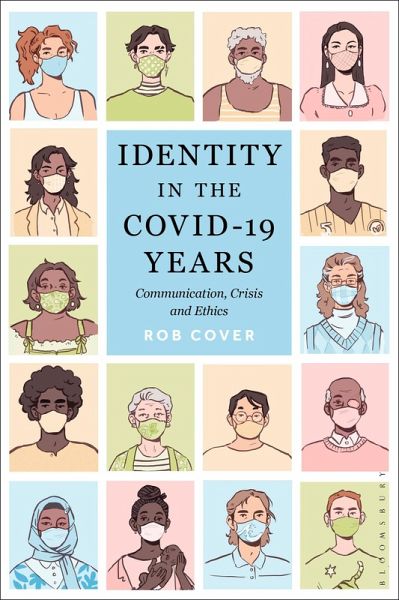
Identity in the Covid-19 Years explores the how the COVID-19 pandemic has been represented in media, communication and culture, and the role these changes have played in renewing how we understand identity, engage in social belonging and relate ethically to each other and the world. This book explores how the COVID-19 pandemic has had a significant impact on how we perform our identities, engage in social belonging, and communicate with each other. Understanding the onset of the pandemic as a moment experienced as cultural rupture, Cover provides a framework for understanding how selfhood,…mehr
Identity in the Covid-19 Years explores the how the COVID-19 pandemic has been represented in media, communication and culture, and the role these changes have played in renewing how we understand identity, engage in social belonging and relate ethically to each other and the world. This book explores how the COVID-19 pandemic has had a significant impact on how we perform our identities, engage in social belonging, and communicate with each other. Understanding the onset of the pandemic as a moment experienced as cultural rupture, Cover provides a framework for understanding how selfhood, belonging, relationships and perceptions of time and space have undergone a disruption that not only is damaging to continuity and stability but also provides positive value through renewal and the re-making of the self and ways of living ethically. Drawing on philosophic, media and cultural studies approaches, this book describes how networks of mutual care and global interdependency have been powerfully drawn out by the experience of the pandemic, yet also disavowed in some settings in favour of a problem individualism and sustained inequalities. The roles of disruption and interdependency are examined across an array of pandemic-related topics, including health communication, apocalyptic storytelling, lockdowns and immobilities, mask-wearing, social distancing and new practices touch, anti-vaccination discourses, and frameworks for mourning the lost past and the uncertain future. By focusing on the impact of the pandemic on identity, this work explains and revisits theories of belonging and ethics to help us understand how new ways of perceiving our vulnerability may lead to more positive, inclusive and ethical ways of living.
Die Herstellerinformationen sind derzeit nicht verfügbar.
Autorenporträt
Rob Cover is Professor of Digital Communication and Director of the Digital Ethnography Research Centre at RMIT University, Melbourne, Australia. He leads a number of major funded research projects on young people, health and wellbeing and digital and broadcast media. The author of around one hundred journal articles and chapters, he publishes widely on topics related to digital cultures in the context of social identities, young people, suicide prevention and resilience. Rob is the author of ten books, including: Identity in the COVID-19 Years (Bloomsbury, 2024), Identity and Digital Communication: Concepts, Theories, Practices (2023), Fake News in Digital Culture (2022), Emergent Identities: New Sexualities, Gender and Relationships in a Digital Era (2019), Digital Identities: Creating and Communicating the Online Self (2016), and Queer Youth Suicide, Culture and Identity: Unliveable Lives? (2016). He is a co-editor of several anthologies including: Queer Studies in Education (2024), The Routledge Handbook of Gender, Sexuality and Human Rights (2024) and is co-editor of The Elgar Encyclopedia of Queer Studies (2025).
Inhaltsangabe
Acknowledgements Introduction: Stories of Rupture and Resilience in a Pandemic 1 Media Discourses of Coronavirus: From Health Advisory to Conspiracy 2 Apocalyptic Fictions as a Roadmap for Crisis 3 Disrupted Identity: The Self in a Time of Radical Cultural Change, Anxiety, and Crisis 4 Disrupted Mobility: Lockdowns, Borders, and Movement 5 Disrupted Exposure: Ethics and the Face of the Other in the Time of Masks 6 Disrupted Touch: Hands, Bodies, and Social Distancing 7 Disrupted Corporealities: Vaccination and Anti-vaxxers 8 Disrupted Futurity: Mourning the Self and the Other Conclusion: COVID Futures: Ethical Care in Interdependency References Index
Acknowledgements Introduction: Stories of Rupture and Resilience in a Pandemic 1 Media Discourses of Coronavirus: From Health Advisory to Conspiracy 2 Apocalyptic Fictions as a Roadmap for Crisis 3 Disrupted Identity: The Self in a Time of Radical Cultural Change, Anxiety, and Crisis 4 Disrupted Mobility: Lockdowns, Borders, and Movement 5 Disrupted Exposure: Ethics and the Face of the Other in the Time of Masks 6 Disrupted Touch: Hands, Bodies, and Social Distancing 7 Disrupted Corporealities: Vaccination and Anti-vaxxers 8 Disrupted Futurity: Mourning the Self and the Other Conclusion: COVID Futures: Ethical Care in Interdependency References Index
Es gelten unsere Allgemeinen Geschäftsbedingungen: www.buecher.de/agb
Impressum
www.buecher.de ist ein Internetauftritt der buecher.de internetstores GmbH
Geschäftsführung: Monica Sawhney | Roland Kölbl | Günter Hilger
Sitz der Gesellschaft: Batheyer Straße 115 - 117, 58099 Hagen
Postanschrift: Bürgermeister-Wegele-Str. 12, 86167 Augsburg
Amtsgericht Hagen HRB 13257
Steuernummer: 321/5800/1497
USt-IdNr: DE450055826