
39,95 €
39,95 €
inkl. MwSt.
Sofort per Download lieferbar

20 °P sammeln
39,95 €
Als Download kaufen
39,95 €
inkl. MwSt.
Sofort per Download lieferbar
20 °P sammeln
Jetzt verschenken
Alle Infos zum eBook verschenken
39,95 €
inkl. MwSt.
Sofort per Download lieferbar
Alle Infos zum eBook verschenken
20 °P sammeln

Andere Kunden interessierten sich auch für
") Illiterate Geography in Classical Athens and Rome (eBook, PDF)39,95 €
Illiterate Geography in Classical Athens and Rome (eBook, PDF)39,95 €") Landscapes of Dread in Classical Antiquity (eBook, ePUB)42,95 €
Landscapes of Dread in Classical Antiquity (eBook, ePUB)42,95 €") Riverlands of the Anthropocene (eBook, ePUB)41,95 €
Riverlands of the Anthropocene (eBook, ePUB)41,95 €") Rural Settlement in Britain (eBook, ePUB)27,95 €
Rural Settlement in Britain (eBook, ePUB)27,95 €") Forgotten Africa (eBook, ePUB)44,95 €
Forgotten Africa (eBook, ePUB)44,95 €") The Space and Power of Young People's Social Relationships (eBook, ePUB)106,95 €
The Space and Power of Young People's Social Relationships (eBook, ePUB)106,95 €") Landscapes of Dread in Classical Antiquity (eBook, PDF)42,95 €
Landscapes of Dread in Classical Antiquity (eBook, PDF)42,95 €
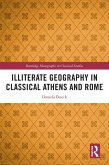

This study is devoted to the channels through which geographic knowledge circulated in classical societies outside of textual transmission. It explores understanding of geography among the non-elites, as opposed to scholarly and scientific geography solely in written form which was the province of a very small number of learned people.
It deals with non-literary knowledge of geography, geography not derived from texts, as it was available to people, educated or not, who did not read geographic works. This main issue is composed of two central questions: how, if at all, was geographic data available outside of textual transmission and in contexts in which there was no need to write or read? And what could the public know of geography? In general, three groups of sources are relevant to this quest: oral communications preserved in writing; public non-textual performances; and visual artefacts and monuments. All of these are examined as potential sources for the aural and visual geographic knowledge of Greco-Roman publics.
This volume will be of interest to anyone working on geography in the ancient world and to those studying non-elite culture.
It deals with non-literary knowledge of geography, geography not derived from texts, as it was available to people, educated or not, who did not read geographic works. This main issue is composed of two central questions: how, if at all, was geographic data available outside of textual transmission and in contexts in which there was no need to write or read? And what could the public know of geography? In general, three groups of sources are relevant to this quest: oral communications preserved in writing; public non-textual performances; and visual artefacts and monuments. All of these are examined as potential sources for the aural and visual geographic knowledge of Greco-Roman publics.
This volume will be of interest to anyone working on geography in the ancient world and to those studying non-elite culture.
Dieser Download kann aus rechtlichen Gründen nur mit Rechnungsadresse in A, B, BG, CY, CZ, D, DK, EW, E, FIN, F, GR, HR, H, IRL, I, LT, L, LR, M, NL, PL, P, R, S, SLO, SK ausgeliefert werden.
"Dueck's work conclusively demonstrates that a broad range of geographic information was available to the general populations of both Athens and Rome through aural and visual transmission. The main contributions of this work are the conceptual scope and the groundwork laid through the data collection: through an impressive collection of relevant geographic data from textual sources and surviving material culture, Dueck quantifies the information that could potentially have been absorbed visually and aurally by illiterate audiences and paves the way for future study into the worlds of non-elite cosmopolitan populations in the ancient Mediterranean." - Bryn Mawr Classical Review
"There has been much academic interest recently in ancient elite geographical treatises, such as that written by Strabo. This book attempts to combine this with the growing trend towards studying the non-elite in the ancient world. The result is a detailed investigation of the geographical knowledge displayed in a wide variety of popular texts and images that adds significantly to our understanding of non-elite ideas... D.'s detailed and thoughtful work will provide much of the groundwork for all such studies in this area." - Scripta Classica Israelica
"There has been much academic interest recently in ancient elite geographical treatises, such as that written by Strabo. This book attempts to combine this with the growing trend towards studying the non-elite in the ancient world. The result is a detailed investigation of the geographical knowledge displayed in a wide variety of popular texts and images that adds significantly to our understanding of non-elite ideas... D.'s detailed and thoughtful work will provide much of the groundwork for all such studies in this area." - Scripta Classica Israelica