27,95 €
27,95 €
inkl. MwSt.
Sofort per Download lieferbar

14 °P sammeln
27,95 €
Als Download kaufen
27,95 €
inkl. MwSt.
Sofort per Download lieferbar
14 °P sammeln
Jetzt verschenken
Alle Infos zum eBook verschenken
27,95 €
inkl. MwSt.
Sofort per Download lieferbar
Alle Infos zum eBook verschenken
14 °P sammeln

Andere Kunden interessierten sich auch für
") AI Futures (eBook, ePUB)5,99 €
AI Futures (eBook, ePUB)5,99 €") The Imaginary Institution of India (eBook, ePUB)25,95 €
The Imaginary Institution of India (eBook, ePUB)25,95 €") Disposable Futures (eBook, ePUB)9,95 €
Disposable Futures (eBook, ePUB)9,95 €") Futures of Socialism (eBook, ePUB)12,95 €
Futures of Socialism (eBook, ePUB)12,95 €") Indian Ocean Futures (eBook, ePUB)45,95 €
Indian Ocean Futures (eBook, ePUB)45,95 €") Hobbes and the Democratic Imaginary (eBook, ePUB)27,95 €
Hobbes and the Democratic Imaginary (eBook, ePUB)27,95 €") Uncertain Futures (eBook, ePUB)12,85 €
Uncertain Futures (eBook, ePUB)12,85 €







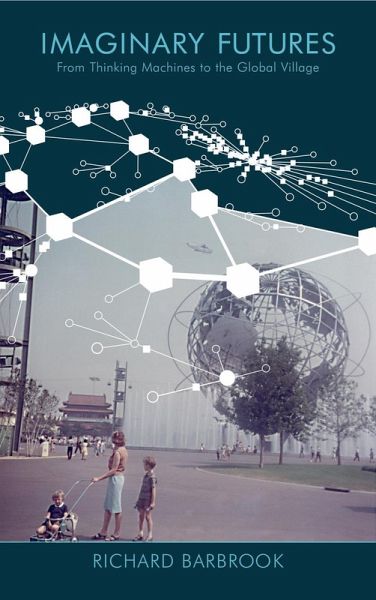
Winner of the MEA's 2008 Marshall McLuhan Award for Outstanding Book in the Field of Media Ecology. 'A compelling, authoritative, and painstakingly documented narrative, Imaginary Futures traces the emergence of the computer era in the context of desperately competing ideologies, economics, and empires. This is a work of passionate and persuasive scholarship by a contemporary social theorist at the top of his game.' Douglas Rushkoff, author, Coercion, Media Virus, Get Back in the Box. 'Imaginary Futures gives insight into how the dominant utopias of today were shaped in the time of the Cold War and served the ideological needs of the elites. While the Cold War West had a much better present, it was the Soviet East which had a vision of the future. The invention of a Western utopia became an important factor in the struggle for global power.' Boris Kagarlitsky, Senior Research Fellow, Institute for Comparative Political Studies, Russian Academy of Sciences -- The future is now-- Richard Barbrook argues that, at the height of the Cold War, the Americans invented a truly revolutionary tool: the Internet. Yet, for all of its libertarian potential, hi-tech science soon became a tool of geopolitical dominance. The rest of the world was expected to follow America's path into the networked future. Today, we're still told that the Net is creating the information society. Barbrook shows how we can reclaim its revolutionary purpose: how the DIY ethic of the internet can help people shape information technologies in their own interest and reinvent their own, improved visions of the future.
Dieser Download kann aus rechtlichen Gründen nur mit Rechnungsadresse in A, D ausgeliefert werden.