45,95 €
inkl. MwSt.
Sofort per Download lieferbar
23 °P sammeln

Andere Kunden interessierten sich auch für
") Imagining Ecocatastrophe (eBook, ePUB)45,95 €
Imagining Ecocatastrophe (eBook, ePUB)45,95 €") Global Youth Protest, Climate and Education (eBook, PDF)41,95 €
Global Youth Protest, Climate and Education (eBook, PDF)41,95 €") The Routledge Handbook of Ecomedia Studies (eBook, PDF)0,00 €
The Routledge Handbook of Ecomedia Studies (eBook, PDF)0,00 €") Film Ecology (eBook, PDF)22,95 €
Film Ecology (eBook, PDF)22,95 €") Film, Environment, Comedy (eBook, PDF)41,95 €
Film, Environment, Comedy (eBook, PDF)41,95 €") Ecocinema Theory and Practice 2 (eBook, PDF)0,00 €
Ecocinema Theory and Practice 2 (eBook, PDF)0,00 €") Cinema of/for the Anthropocene (eBook, PDF)45,95 €
Cinema of/for the Anthropocene (eBook, PDF)45,95 €

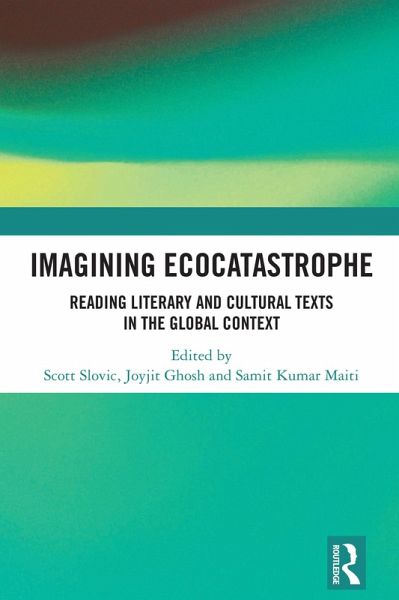
This volume examines scholarly perspectives on eco-imaginaries, focusing in particular on how eco-catastrophes have been represented in literature and different visual forms, including film, television and cartoons, among other cultural media. It draws on literary genres such as science fiction, climate fiction, speculative fiction, petrofiction, post-apocalyptic narratives and nuclear fiction to examine the role that literature plays in the dissemination of information about environmental crisis in the Anthropocene and in preparing mankind for a better and sustainable future. Deeply embedded in theoretical conceptualisations, the essays in this volume address issues of natural disasters, deforestation, nuclear disasters and pandemics, among others, which constitute the core subjects of environmental humanities.
A seminal study on the literary and cultural representations of ecodisaster in the global context, and with contributions from across the world, this book, truly interdisciplinary in nature, will be an invaluable read for students, academicians and researchers in literature, film studies, climate change studies, disaster studies, gender studies and cultural studies.
A seminal study on the literary and cultural representations of ecodisaster in the global context, and with contributions from across the world, this book, truly interdisciplinary in nature, will be an invaluable read for students, academicians and researchers in literature, film studies, climate change studies, disaster studies, gender studies and cultural studies.
Dieser Download kann aus rechtlichen Gründen nur mit Rechnungsadresse in A, B, BG, CY, CZ, D, DK, EW, E, FIN, F, GR, HR, H, IRL, I, LT, L, LR, M, NL, PL, P, R, S, SLO, SK ausgeliefert werden.