82,95 €
82,95 €
inkl. MwSt.
Sofort per Download lieferbar

41 °P sammeln
82,95 €
Als Download kaufen
82,95 €
inkl. MwSt.
Sofort per Download lieferbar
41 °P sammeln
Jetzt verschenken
Alle Infos zum eBook verschenken
82,95 €
inkl. MwSt.
Sofort per Download lieferbar
Alle Infos zum eBook verschenken
41 °P sammeln

Andere Kunden interessierten sich auch für
") Primer to the Immune Response (eBook, ePUB)54,95 €
Primer to the Immune Response (eBook, ePUB)54,95 €") Synthetic Vaccines (eBook, ePUB)121,95 €
Synthetic Vaccines (eBook, ePUB)121,95 €") Immunity and Inflammation in Health and Disease (eBook, ePUB)100,95 €
Immunity and Inflammation in Health and Disease (eBook, ePUB)100,95 €") The Innate Immune System (eBook, ePUB)52,95 €
The Innate Immune System (eBook, ePUB)52,95 €") Systemic Lupus Erythematosus (eBook, ePUB)146,95 €
Systemic Lupus Erythematosus (eBook, ePUB)146,95 €") Advances in Immunology (eBook, ePUB)118,95 €
Advances in Immunology (eBook, ePUB)118,95 €") Regulatory T-Cells (eBook, ePUB)121,95 €
Regulatory T-Cells (eBook, ePUB)121,95 €




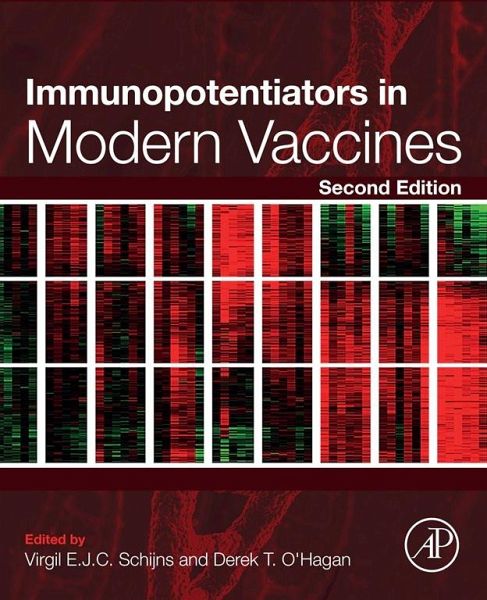
Immunopotentiators in Modern Vaccines, Second Edition, provides in-depth insights and overviews of the most successful adjuvants, those that have been included in licensed products, also covering the most promising technologies that have emerged in recent years. In contrast to existing books on the subject, the chapters here provide summaries of key data on the mechanisms of action of the individual vaccine adjuvants. In addition, the book covers key aspects of how the technologies might be further developed and what might be their limitations, while also giving an overview of what made the most advanced adjuvant technologies successful. - Provides contributions from leading international authorities in the field - Features immunopotentiators classified by function, with well-illustrated, informative figures presenting the interaction between the immunopotentiators and the host immune system - Lists advantages and potential hurdles for achieving a practical application for each specific immunopotentiator - Offers US FDA perspectives which highlight how future adjuvants will be approved for new generation vaccines
Dieser Download kann aus rechtlichen Gründen nur mit Rechnungsadresse in A, B, BG, CY, CZ, D, DK, EW, E, FIN, F, GR, HR, H, IRL, I, LT, L, LR, M, NL, PL, P, R, S, SLO, SK ausgeliefert werden.