0,00 €
0,00 €
inkl. MwSt.
Sofort per Download lieferbar

0 °P sammeln
0,00 €
Als Download kaufen
0,00 €
inkl. MwSt.
Sofort per Download lieferbar
0 °P sammeln
Jetzt verschenken
Alle Infos zum eBook verschenken
0,00 €
inkl. MwSt.
Sofort per Download lieferbar
Alle Infos zum eBook verschenken
0 °P sammeln

Andere Kunden interessierten sich auch für
") ReFocus: The Films of Kelly Reichardt (eBook, PDF)0,00 €
ReFocus: The Films of Kelly Reichardt (eBook, PDF)0,00 €") Puzzle Films (eBook, PDF)39,99 €
Puzzle Films (eBook, PDF)39,99 €") Genre, Authorship and Contemporary Women Filmmakers (eBook, PDF)0,00 €
Genre, Authorship and Contemporary Women Filmmakers (eBook, PDF)0,00 €") Extreme Asia (eBook, PDF)0,00 €
Extreme Asia (eBook, PDF)0,00 €") Slums on Screen (eBook, PDF)0,00 €
Slums on Screen (eBook, PDF)0,00 €") Two cines con nino (eBook, PDF)0,00 €
Two cines con nino (eBook, PDF)0,00 €") Eclipsed Cinema (eBook, PDF)0,00 €
Eclipsed Cinema (eBook, PDF)0,00 €


Using a cognitive film studies framework, this book explores how our minds engage with complex storytelling
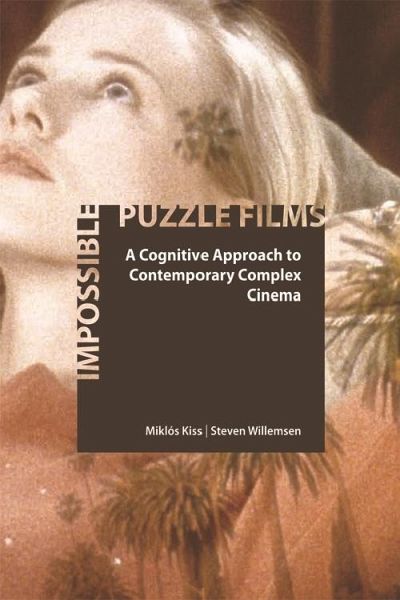
Narrative complexity is a trend in contemporary cinema. Since the late 1990s there has been a palpable increase in complex storytelling in movies. But how and why do complex movies create perplexity and confusion? How do we engage with these challenges? And what makes complex stories so attractive? By blending film studies, narrative theory and cognitive sciences, Kiss and Willemsen look into the relation between complex storytelling and the mind. Analysing the effects that different complex narratives have on viewers, the book addresses how films like Donnie Darko, Mulholland Drive or Primer strategically create complexity and confusion, and, by using the specific category of the 'impossible puzzle film', it examines movies that use baffling paradoxes, impossible loops, and unresolved ambiguities in their stories and storytelling. By looking at how these films play on our mind's blind spots, this innovative book explains their viewing effects in terms of the mental state of cognitive dissonance that they evoke.
Key Features
- Analyses the effects of complex narratives on viewers, including the psychological experience of puzzlement and perplexity
- Explores impossible puzzle films as a specific set of highly complex popular films
- Introduces cognitive dissonance as a key feature of these films
- Brings together literary theory, cognitive narratology and film studies
Read the introduction and first chapter for free on our website (pdf)
Dieser Download kann aus rechtlichen Gründen nur mit Rechnungsadresse in A, B, BG, CY, CZ, D, DK, EW, E, FIN, F, GR, HR, H, IRL, I, LT, L, LR, M, NL, PL, P, R, S, SLO, SK ausgeliefert werden.