0,99 €
inkl. MwSt.
Sofort per Download lieferbar
0 °P sammeln

Andere Kunden interessierten sich auch für
") In the Penal Colony (eBook, ePUB)0,99 €
In the Penal Colony (eBook, ePUB)0,99 €") In the Penal Colony (eBook, ePUB)1,99 €
In the Penal Colony (eBook, ePUB)1,99 €") In the Penal Colony (eBook, ePUB)1,99 €
In the Penal Colony (eBook, ePUB)1,99 €") In the Penal Colony (eBook, ePUB)2,99 €
In the Penal Colony (eBook, ePUB)2,99 €") In The Penal Colony (eBook, ePUB)2,99 €
In The Penal Colony (eBook, ePUB)2,99 € (eBook, ePUB)") Collected Works (Complete Editions: The Metamorphosis, In the Penal Colony, The Trial, ...) (eBook, ePUB)1,99 €
Collected Works (Complete Editions: The Metamorphosis, In the Penal Colony, The Trial, ...) (eBook, ePUB)1,99 €") In the Penal Colony (eBook, ePUB)3,99 €
In the Penal Colony (eBook, ePUB)3,99 €



In the Penal Colony (In der Strafkolonie) (also translated as In the Penal Settlement) is a short story by Franz Kafka written in German in October 1914, revised in November 1918, and first published in October 1919. The story is set in an unnamed penal colony. Internal clues and the setting on an island suggest Octave Mirbeau's The Torture Gardenas an influence. As in some of Kafka's other writings, the narrator in this story seems detached from, or perhaps numbed by, events that one would normally expect to be registered with horror. In the Penal Colony describes the last use of an elaborate torture and execution device that carves the sentence of the condemned prisoner on his skin before letting him die, all in the course of twelve hours. As the plot unfolds, the reader learns more and more about the machine, including its origin and original justification.
Dieser Download kann aus rechtlichen Gründen nur mit Rechnungsadresse in A, B, BG, CY, CZ, D, DK, EW, E, FIN, F, GR, HR, H, IRL, I, LT, L, LR, M, NL, PL, P, R, S, SLO, SK ausgeliefert werden.
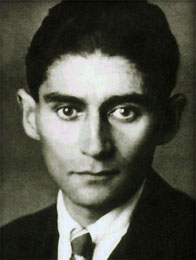
Franz Kafka, born in 1883 in Prague, was a Czech writer known for his surreal and existential storytelling. His most famous works, like "The Metamorphosis" and "The Trial," explore themes of alienation and the absurdity of modern life. Despite publishing only a few pieces during his lifetime, Kafka's precise prose and profound insights into the human condition have made him a cornerstone of 20th-century literature. After his death in 1924, his friend Max Brod defied Kafka's wishes to destroy his unpublished works, ensuring his lasting influence on literature and philosophy.