Sie sind bereits eingeloggt. Klicken Sie auf 2. tolino select Abo, um fortzufahren.
Bitte loggen Sie sich zunächst in Ihr Kundenkonto ein oder registrieren Sie sich bei bücher.de, um das eBook-Abo tolino select nutzen zu können.
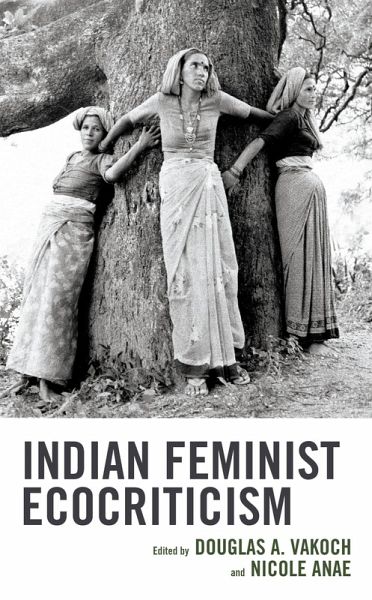
Following Françoise d'Eaubonne's creation of the term "ecofeminism" in 1974, scholars around the world have explored ways that the degradation of the environment and the subjugation of women are linked. In the nearly three decades since the publication of the classical work Ecofeminism by Maria Mies and Vandana Shiva in 1993, several collections have appeared that apply ecofeminism to literary criticism, also known as feminist ecocriticism. The most recent of these include anthologies that emphasize international perspectives, furthering the comparative task launched by Mies and Shiva. To…mehr
Following Françoise d'Eaubonne's creation of the term "ecofeminism" in 1974, scholars around the world have explored ways that the degradation of the environment and the subjugation of women are linked. In the nearly three decades since the publication of the classical work Ecofeminism by Maria Mies and Vandana Shiva in 1993, several collections have appeared that apply ecofeminism to literary criticism, also known as feminist ecocriticism. The most recent of these include anthologies that emphasize international perspectives, furthering the comparative task launched by Mies and Shiva. To date, however, there have been no books devoted to gaining a broad-based understanding of feminist ecocriticism in India, understood in its own terms. Our new volume Indian Feminist Ecocriticism offers a survey of literature as seen through an ecofeminist lens by Indian scholars, which places contemporary literary analysis through a sampling of its diverse languages and in the context of millennia-old mythic traditions of India.
Die Herstellerinformationen sind derzeit nicht verfügbar.
Autorenporträt
Douglas A. Vakoch is president of METI, dedicated to Messaging Extraterrestrial Intelligence and sustaining civilization on multigenerational timescales. As director of Green Psychotherapy, PC, he helps alleviate environmental distress through ecotherapy. Nicole Anae is senior lecturer in literary and cultural studies at Central Queensland University, Australia, where she also holds the position as head of course for the Master of Creative Writing degree.
Inhaltsangabe
Introduction Nicole Anae and Douglas A. Vakoch Part 1. Ecofeminist Literature across India Chapter 1. Reading Ecofeminist Approaches: Postcolonial Women's Writing in Hindi Literature Prachi Priyanka Chapter 2. Ecofeminist Consciousness in Select Folktales of the Dungri Garasiya Bhils Pronami Bhattacharyya Chapter 3. Spiritual Ecology: An Ecofeminist Study of the Jhumur Songs of Tribal Bengal Anindita Chatterjee Part 2. North East Indian Perspectives Chapter 4. Ecofeminism in Assamese Literature Nibedita Mukherjee Chapter 5. Violence in the Literature of North East India: An Ecofeminist Perspective Shibani Phukan and Triveni Goswami Vernal Chapter 6. Indigenous Ecofeminism and Contemporary North East Indian Literature: Lessons in Eco-Swaraj Panchali Bhattacharya Chapter 7. Ecofeminism and Bodo Folktales and Folksongs Esther Daimari and Ivy Daimary Chapter 8. Women and Natural Resource Management in Naga Folktales and Peoplestories: Situating Easterine Kire's Fiction Nilanjana Chatterjee
Es gelten unsere Allgemeinen Geschäftsbedingungen: www.buecher.de/agb
Impressum
www.buecher.de ist ein Internetauftritt der buecher.de internetstores GmbH
Geschäftsführung: Monica Sawhney | Roland Kölbl | Günter Hilger
Sitz der Gesellschaft: Batheyer Straße 115 - 117, 58099 Hagen
Postanschrift: Bürgermeister-Wegele-Str. 12, 86167 Augsburg
Amtsgericht Hagen HRB 13257
Steuernummer: 321/5800/1497
USt-IdNr: DE450055826