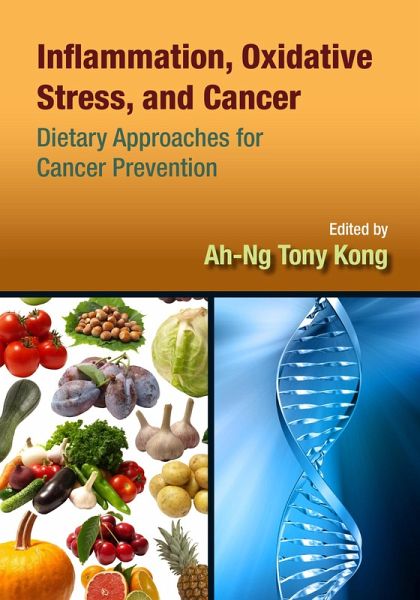
82,95 €
82,95 €
inkl. MwSt.
Sofort per Download lieferbar

41 °P sammeln
82,95 €
Als Download kaufen
82,95 €
inkl. MwSt.
Sofort per Download lieferbar
41 °P sammeln
Jetzt verschenken
Alle Infos zum eBook verschenken
82,95 €
inkl. MwSt.
Sofort per Download lieferbar
Alle Infos zum eBook verschenken
41 °P sammeln

Andere Kunden interessierten sich auch für
") Cancer Prevention and Management through Exercise and Weight Control (eBook, PDF)63,95 €
Cancer Prevention and Management through Exercise and Weight Control (eBook, PDF)63,95 €") Inflammation, Oxidative Stress, and Cancer (eBook, ePUB)82,95 €
Inflammation, Oxidative Stress, and Cancer (eBook, ePUB)82,95 €") Canola and Rapeseed (eBook, PDF)66,95 €
Canola and Rapeseed (eBook, PDF)66,95 €") Bioactive Foods and Extracts (eBook, PDF)201,95 €
Bioactive Foods and Extracts (eBook, PDF)201,95 €") Anthocyanins in Health and Disease (eBook, PDF)56,95 €
Anthocyanins in Health and Disease (eBook, PDF)56,95 €") Fiber Ingredients (eBook, PDF)186,95 €
Fiber Ingredients (eBook, PDF)186,95 €") Nutrition-Infection Interactions and Impacts on Human Health (eBook, PDF)61,95 €
Nutrition-Infection Interactions and Impacts on Human Health (eBook, PDF)61,95 €

Increasing scientific evidence suggests that the majority of diseases including cancer are driven by oxidative stress and inflammation, attributed to environmental factors. These factors either drive genetic mutations or epigenetically modify expression of key regulatory genes. These changes can occur as early as gestational fetal development, and
Dieser Download kann aus rechtlichen Gründen nur mit Rechnungsadresse in A, B, BG, CY, CZ, D, DK, EW, E, FIN, F, GR, HR, H, IRL, I, LT, L, LR, M, NL, PL, P, R, S, SLO, SK ausgeliefert werden.