63,95 €
inkl. MwSt.
Sofort per Download lieferbar
32 °P sammeln

Andere Kunden interessierten sich auch für
") Academic Librarianship Today (eBook, PDF)47,95 €
Academic Librarianship Today (eBook, PDF)47,95 €") School Librarianship (eBook, PDF)60,95 €
School Librarianship (eBook, PDF)60,95 €") A History of Modern Librarianship (eBook, PDF)40,95 €
A History of Modern Librarianship (eBook, PDF)40,95 €") Rethinking Library Technical Services (eBook, PDF)47,95 €
Rethinking Library Technical Services (eBook, PDF)47,95 €") Law Librarianship in the Twenty-First Century (eBook, PDF)48,95 €
Law Librarianship in the Twenty-First Century (eBook, PDF)48,95 €") Law Librarianship in the Digital Age (eBook, PDF)70,95 €
Law Librarianship in the Digital Age (eBook, PDF)70,95 €") Rural Public Librarianship (eBook, PDF)23,95 €
Rural Public Librarianship (eBook, PDF)23,95 €







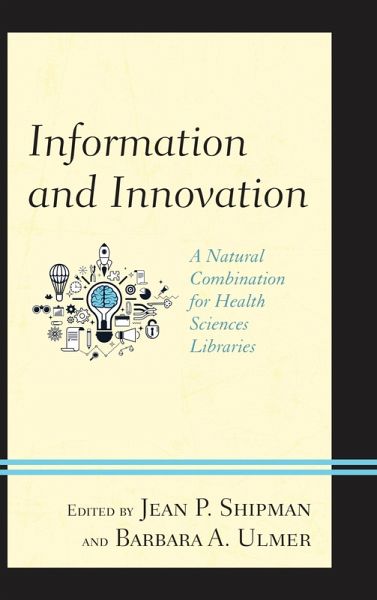
As academic health sciences centers look toward innovative product development as their new income source with the decline of clinical income and research dollars, health sciences librarians and libraries can partner with these revenue-generating innovators to offer invaluable services, evidence, training, dissemination venues and attractive collaborative physical spaces equipped with the latest tools, such as 3-D printers, body scanners, models and video-monitors. This book uses case examples, including perspectives from both librarians and innovators, to illustrate how various health sciences libraries have partnered with innovators by offering valuable services and creative products and spaces- especially innovators who create medical digital therapeutics devices and apps. Many health sciences libraries are transforming their physical spaces into collaboration or maker spaces to spark innovation and discoveries. Key health sciences libraries that have done so to enable others to learn more about what professional benefits result from such collisions of information and innovation are highlighted here. Also included in the book are chapters that describe various innovation competitions and products that help to showcase the unique scholarly output that is generated by innovators. Transferring the knowledge of librarians who have progressed down this path to others is the key goal of this book.